Best Photo Spots in Tokyo: Shibuya after dark, Asakusa at dawn and the lanes in between
Tokyo is not one backdrop but about a dozen, twenty minutes apart on the Yamanote line. The question is never where — almost every frame below is minutes from a station — but which hour belongs to which district. The old city, Asakusa and Yanaka, is yours before eight and gone by ten; the neon city does not exist until the sky goes dark and is at its best in the twenty minutes after it. In between is the weakest light Tokyo has and the fullest pavement.
4 photo spots in Tokyo — click a pin to open the full guide
Real shots from Tokyo
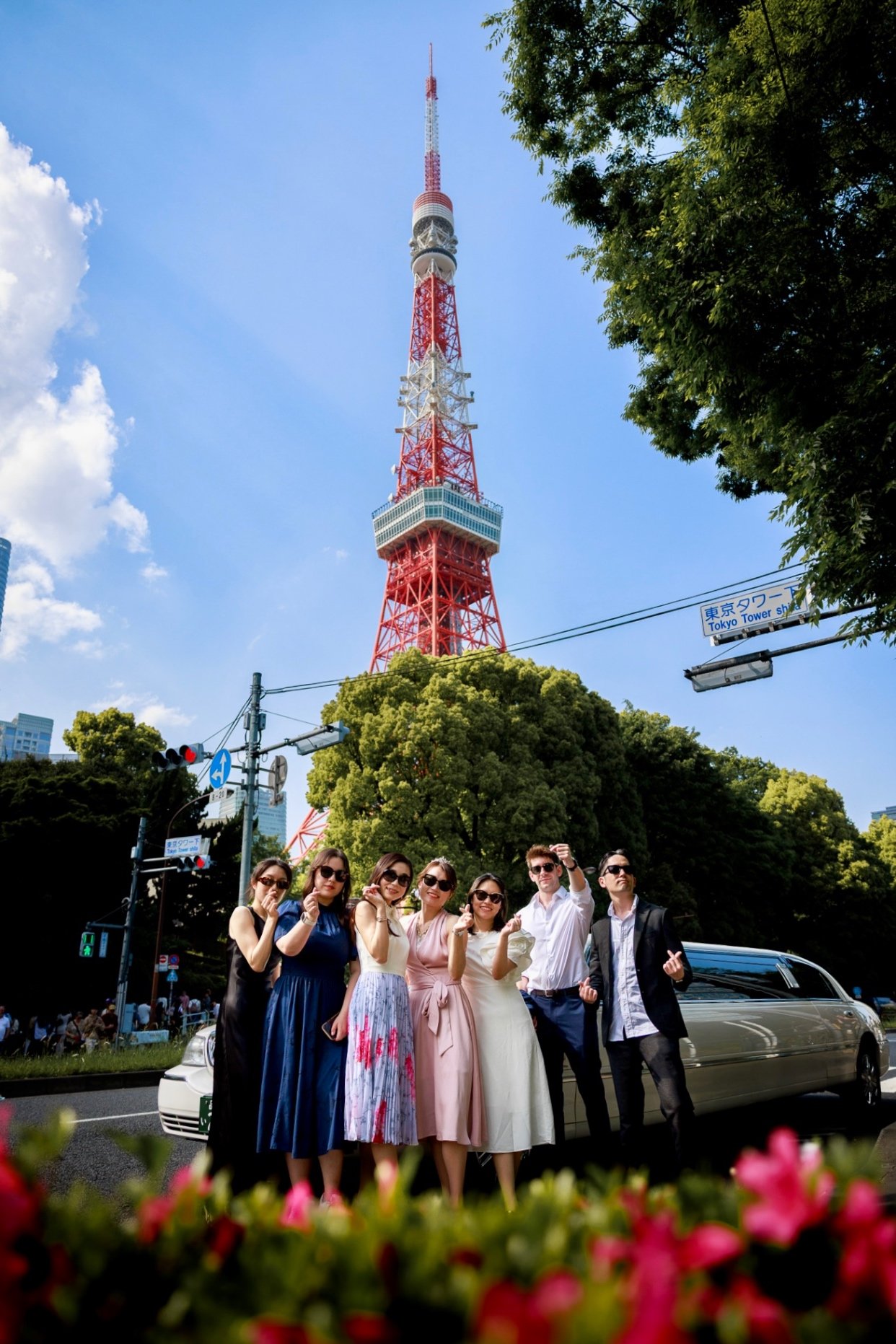
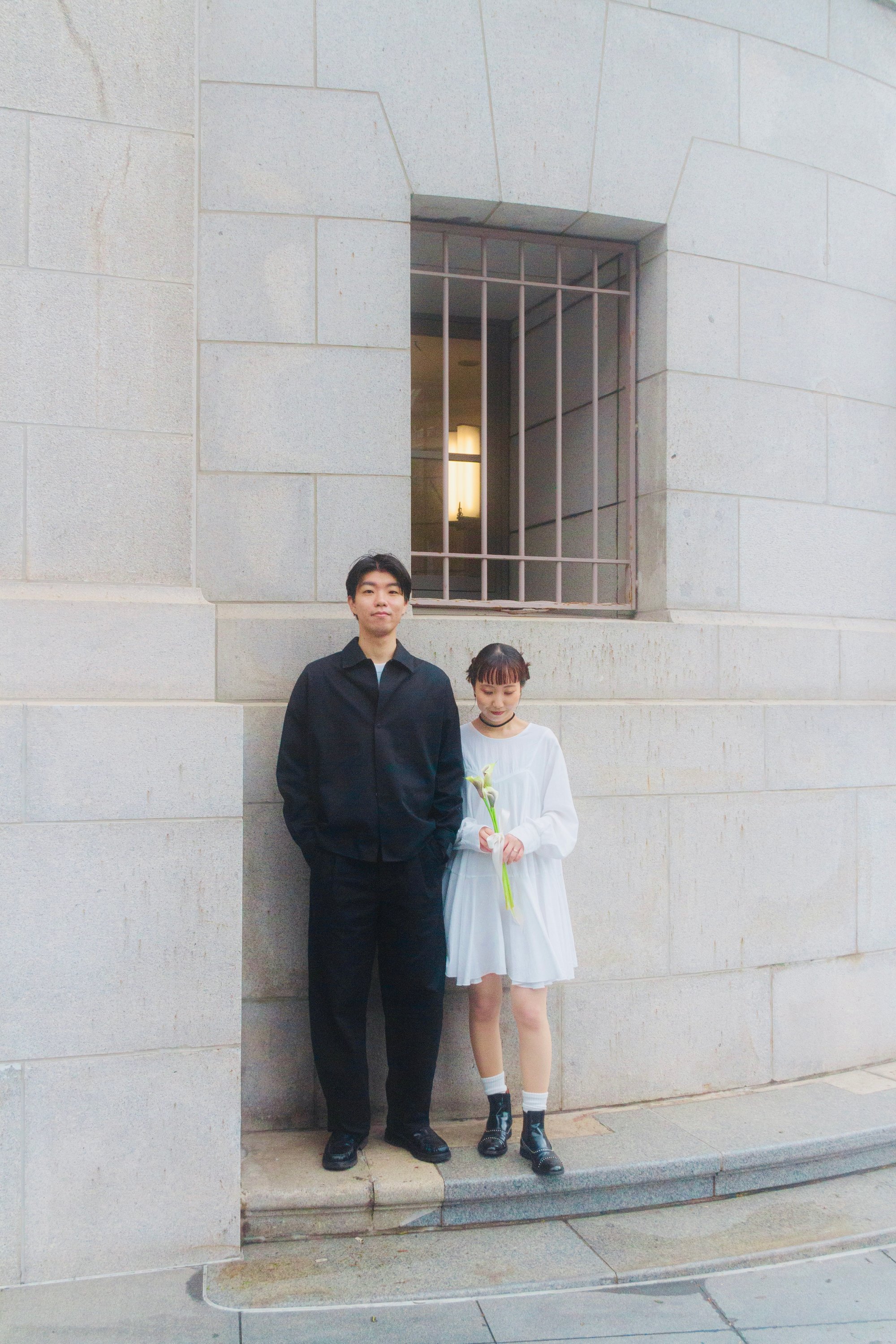
Senso-ji, Asakusa and the river before eight
Asakusa is the strongest argument in Tokyo for a dawn start. The Kaminarimon with its huge red lantern, the approach of Nakamise-dori, the Hozomon gate and the five-storey pagoda stand on one straight axis, and before the shops open that axis is empty. The stalls are shuttered then, and the shutters are painted with old scenes of the district, so the street reads as a corridor of panels rather than a souvenir market.
Take the Ginza line to Asakusa and use exit 1, half a minute from the Kaminarimon. First services and the temple's own hours move with the season, so check them the night before. Senso-ji is a working temple: walk to the side of the gate path rather than down the middle, do not point a camera into the main hall where the signs ask you not to, and stay clear of the incense burner. An arranged shoot on temple ground usually needs the temple's own permission — ask before the day, not on it.
Five minutes east the district opens onto the Sumida. From either bank the Skytree stands clear above a low roofline and the red span of Azumabashi gives you a foreground; Sumida Park runs under cherry trees on both sides, so for a week in late March or early April the walk becomes a blossom frame with the tower behind it. The riverside is flat, wide, quiet at both ends of the day — and windy.
Yanaka: the lanes the war missed
Two stops up the Yamanote line, Nippori opens onto the other old Tokyo — low wooden houses, temple walls, cats, a shopping street nobody has smartened up. Leave by the west exit and walk to the top of Yanaka Ginza, where a flight of steps called Yuyake Dandan drops into it. The name means sunset stairs and it is literal: the street runs west, so on a clear evening the sun sits at the end of it and the lane goes gold for about fifteen minutes.
The side lanes are narrow enough that direct sun rarely reaches the ground, so they hold soft light all day — the sane answer to what to shoot at noon. Yanaka Cemetery, five minutes away, is an avenue of cherry trees in spring and a burial ground all year, so keep it low-key. This is a residential neighbourhood: ask before photographing inside a shop.
Shinjuku Gyoen and the green hours
The best large garden in central Tokyo for a session is also the one with the most rules. It is ticketed, it closes one day a week — normally Monday, shifting to Tuesday when a public holiday lands on one — and its hours change with the season. Tripods are restricted on narrow paths and in peak weeks.
Most importantly, commercial photography inside is not something you turn up and do: professional shoots go through an application submitted days in advance, so ask early and hold a fallback. What you get for the trouble is space — landscape lawns with the Shinjuku towers behind them, a formal French section, a Japanese garden with a teahouse, a greenhouse for a wet day. Late-flowering cherry varieties push blossom here into the second half of April, and the colour runs into early December.
Blossom on water: Chidorigafuchi and Nakameguro
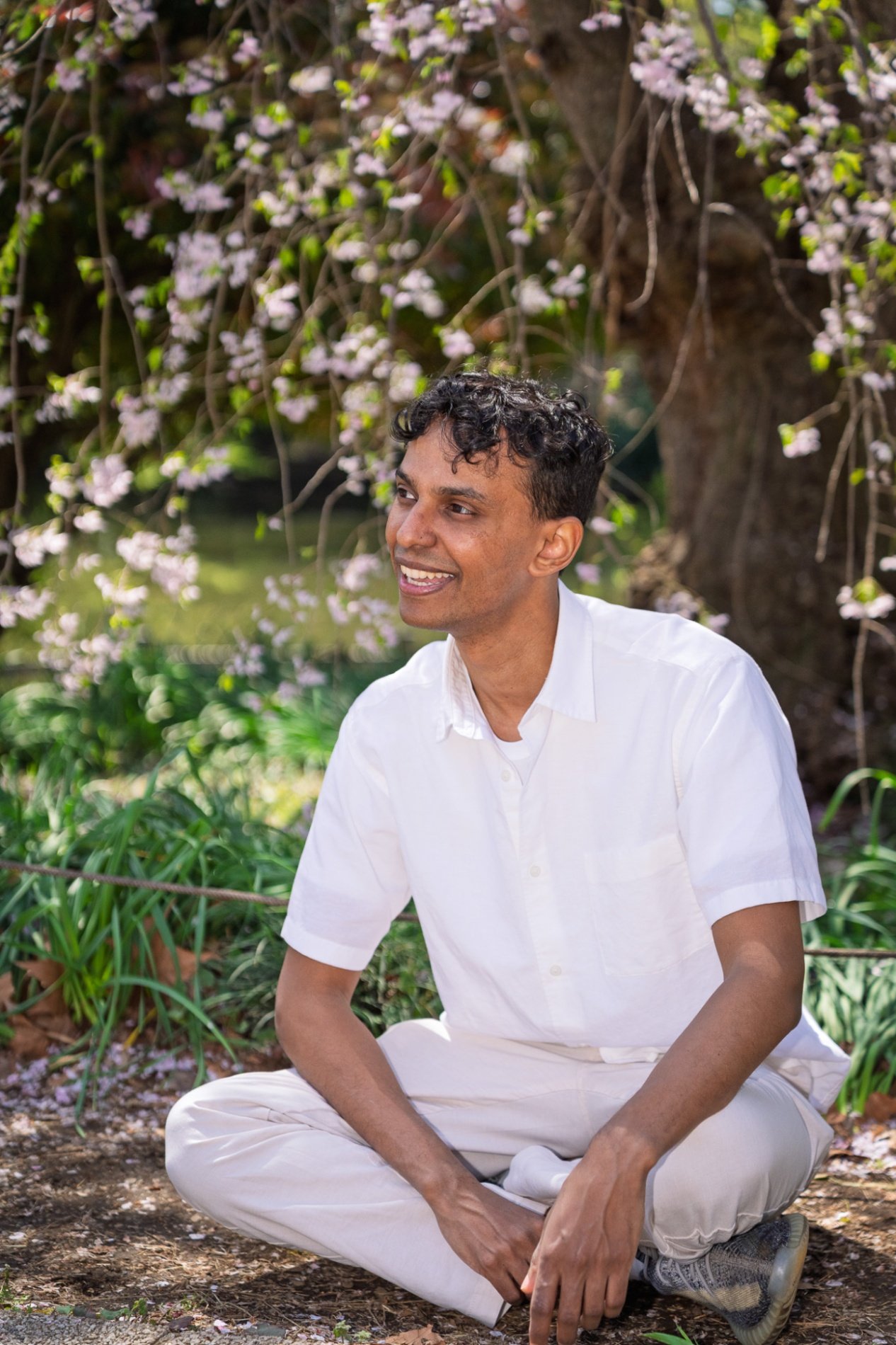
For the ten days the cherry trees hold, the two frames worth the crowd are both on water. Chidorigafuchi is the moat on the north-west side of the Imperial Palace, where the trees lean out over the water and rowing boats sit under them — petals above and below the frame. Kudanshita station, exit 2, is a few minutes away past the Budokan. The boats are ticketed, the queue at peak bloom can run to hours, and the trees are lit in the evening during the festival period — all of it moves from year to year, so check.
Nakameguro is the other: a narrow canal with cherry trees meeting overhead for kilometres, on the Hibiya and Tokyu Toyoko lines, and the most heavily managed blossom spot in the city — one-way walking at peak times, no picnicking, volunteers moving people on. That rules out a static session at midday and rules in the last hour before dark at the quieter upstream end.
What clients say about this kind of shoot
Marvin is so nice ! and also knows good spots where to take photos ✨✨✨ I RECOMMEND
— Btihal on Marvin T.
Working with Deniz was such a pleasure! He knew great spots to photograph that made the photoshoot exactly how I envisioned. I would certainly recommend this to any tourist or any local to Tokyo looking to elevate their images while in Japan. He was professional, kind, & extremely friendly. He gave direction when needed and communicated effectively. 10/10!! 😊
— Rebecca R. on Deniz D.
Deniz did an exceptional job with my shoot, customized it to my liking, and made me feel comfortable throughout the whole process. Highly recommend him for indoor/outdoor shoots around Tokyo!
— Molly C. on Deniz D.
A lovely experience. Marvin knew all the good spots and led the way. No thinking necessary on my part, which I loved. A pleasure to work with.
— Siobhan on Marvin T.
Marvin is FANTASTIC! He captured amazing photos of us and they were exactly what we were wanting from the session. Marvin knows all the best spots and ensures you have the best experience. Highly recommend Marvin’s photography services.
— Sara on Marvin T.
We had such a great photography experience with OKINI PHOTO TOUR! If you’re looking for an Osaka photographer, especially for a couple photoshoot in Osaka, I would definitely recommend them. The photographer made us feel comfortable from the beginning and guided us naturally with poses, so even if you’re not used to being in front of a camera, the experience is very relaxed and fun. What I really liked was that this wasn’t just a typical photoshoot. We walked around Osaka and enjoyed the city while taking photos, so it felt like both a photo tour and a local Osaka experience. The photos around Dotonbori and Osaka’s neon streets were especially beautiful. The photographer knew where to shoot, how to use the city lights, and how to capture natural moments between us. For couples traveling in Japan, honeymooners, or anyone searching for couple photography in Osaka, an Osaka travel photographer, or a Dotonbori photoshoot, OKINI PHOTO TOUR is a great choice. A wonderful way to keep memories from our trip to Osaka. Highly recommended!
— 伊藤尚也 on Soh
The ginkgo avenue and Tokyo's autumn
Tokyo's autumn is late and short. The set piece is the ginkgo avenue at Meiji Jingu Gaien: four rows of trees on a straight avenue that turn together and hold for roughly ten days from late November, with a yellow carpet underneath once they start to drop. Gaienmae on the Ginza line and Aoyama-itchome are the stations.
Redevelopment around the Gaien has been running for years — the avenue itself is being kept, but fencing and building work change what stands behind it and how you walk in, so check what is open. The city's maples run a couple of weeks behind, and the classical gardens carry colour into early December, each with its own hours and evening openings.
Shibuya: the neon half
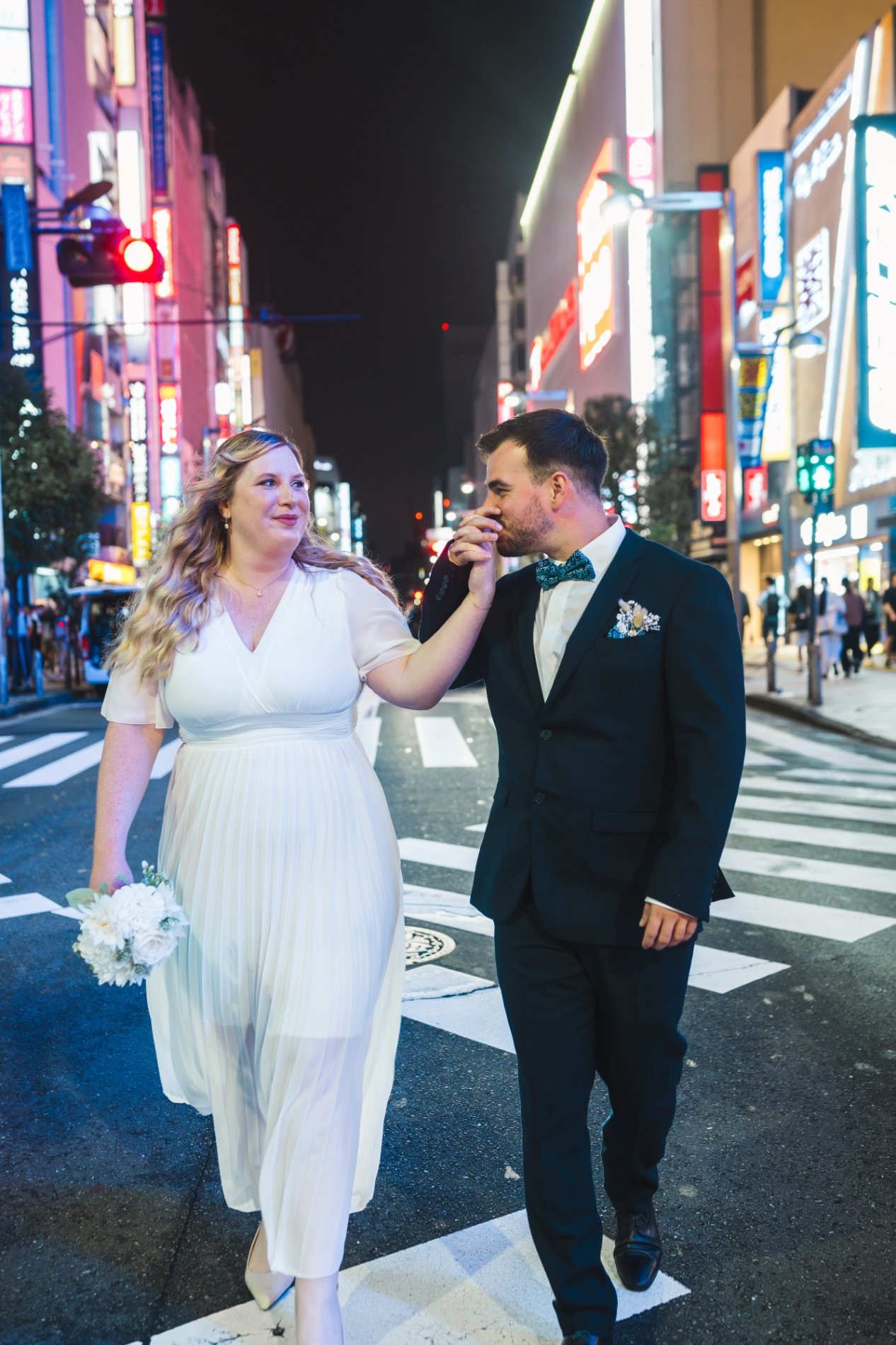
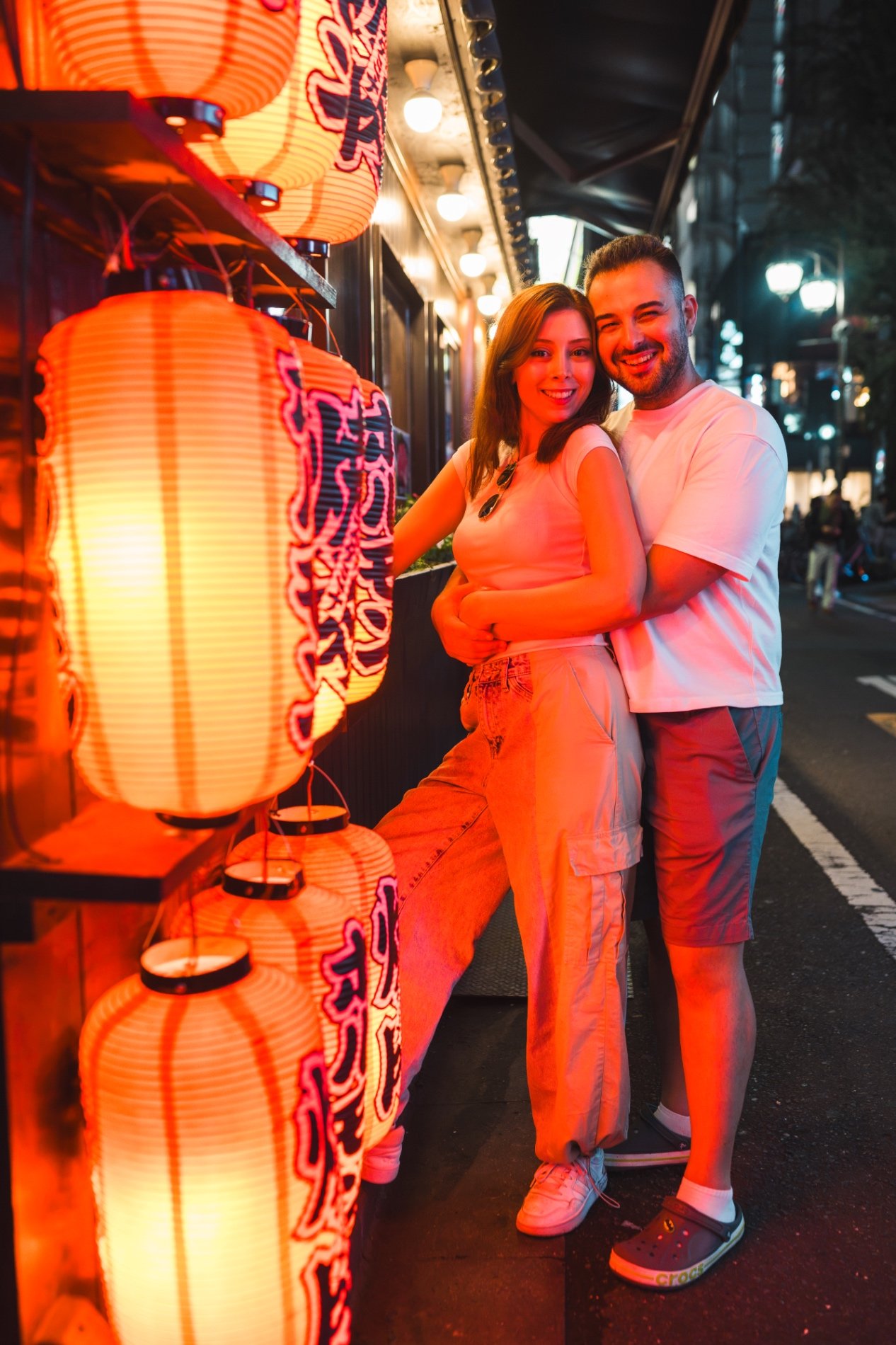
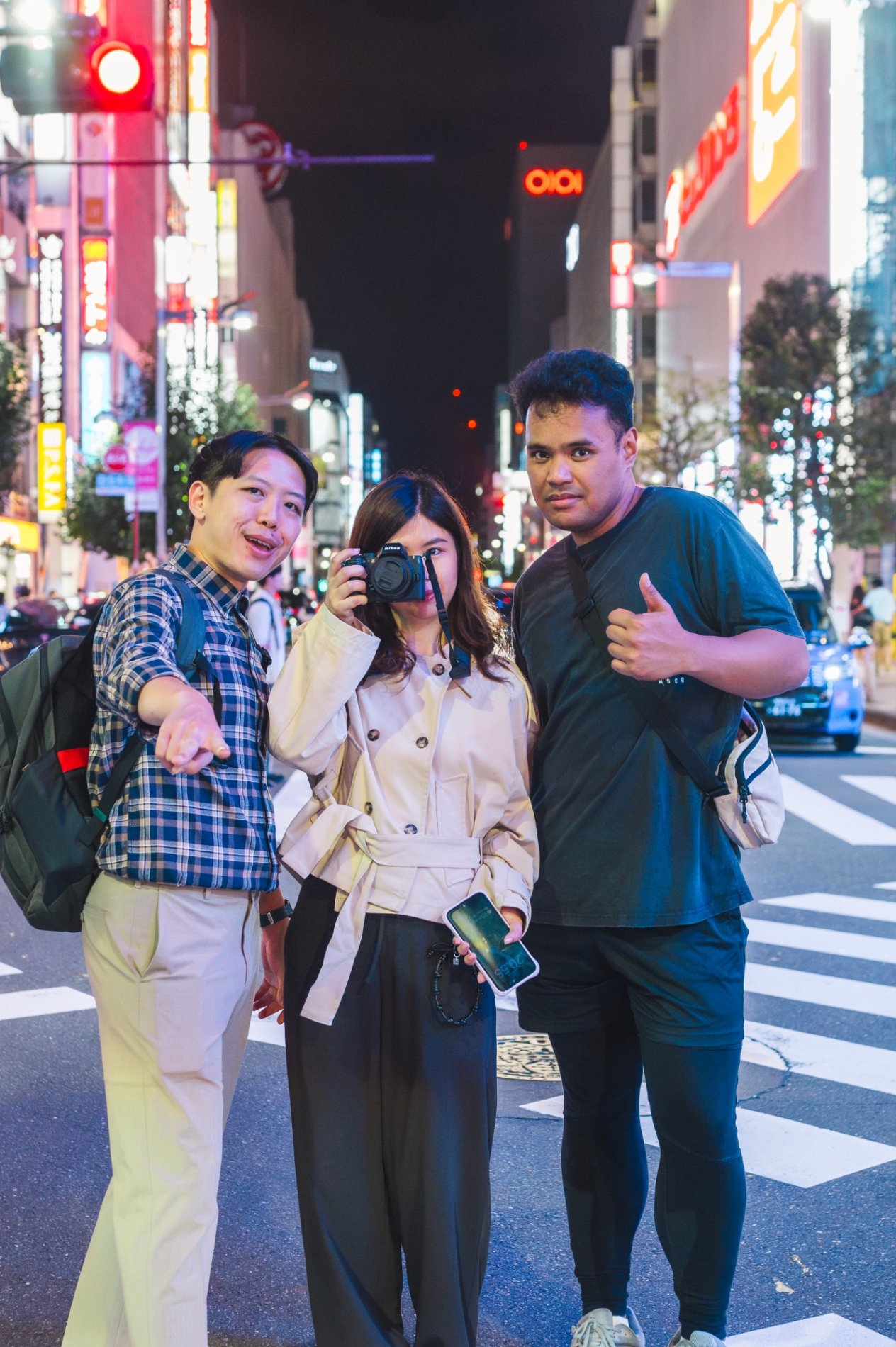
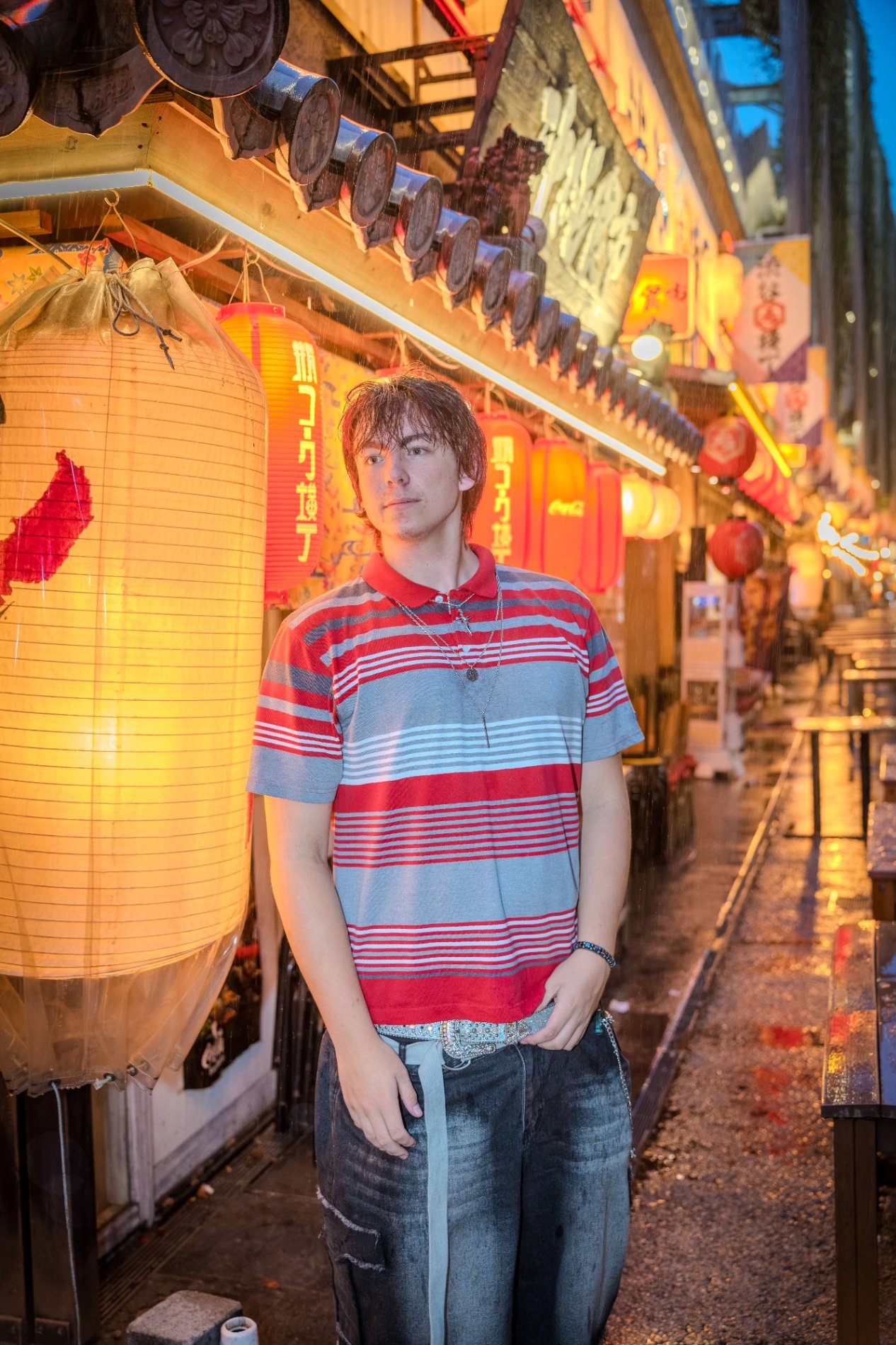
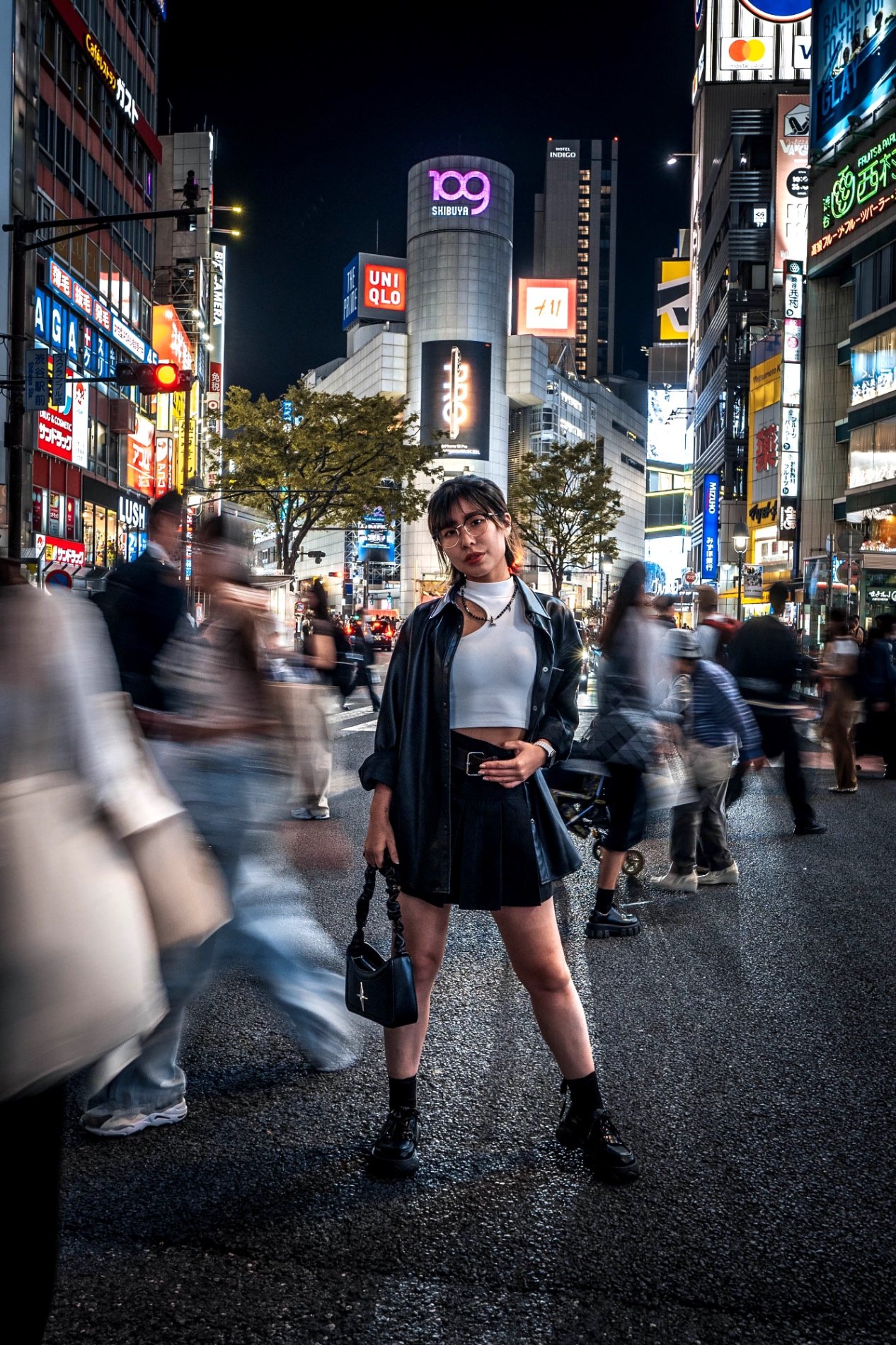
Shibuya is the frame everyone comes for and it is genuinely better in bad weather. The crossing works from the pavement on the Hachiko side, where the crowd comes at the camera in a wave every couple of minutes; the elevated station walkways give a cleaner line down onto it; the café windows above it are the classic vantage, on the understanding that you buy something and wait for a seat. Rain is the improvement — the road becomes a mirror of the signs. A couples photoshoot here is one of the few in Japan that is easier at nine in the evening than at nine in the morning.
The rooftop above the station, Shibuya Sky, is timed entry and the slot is the whole decision; sunset slots go first, weeks ahead. Tripods, selfie sticks and bags are not allowed on the open deck; lockers are a floor below. It is open air, so it can shut at short notice for rain, wind or lightning, with everyone moved to the enclosed floor — the same view, through glass. Treat it as a bonus rather than the plan.
Shinjuku's alleys, and what the signs say
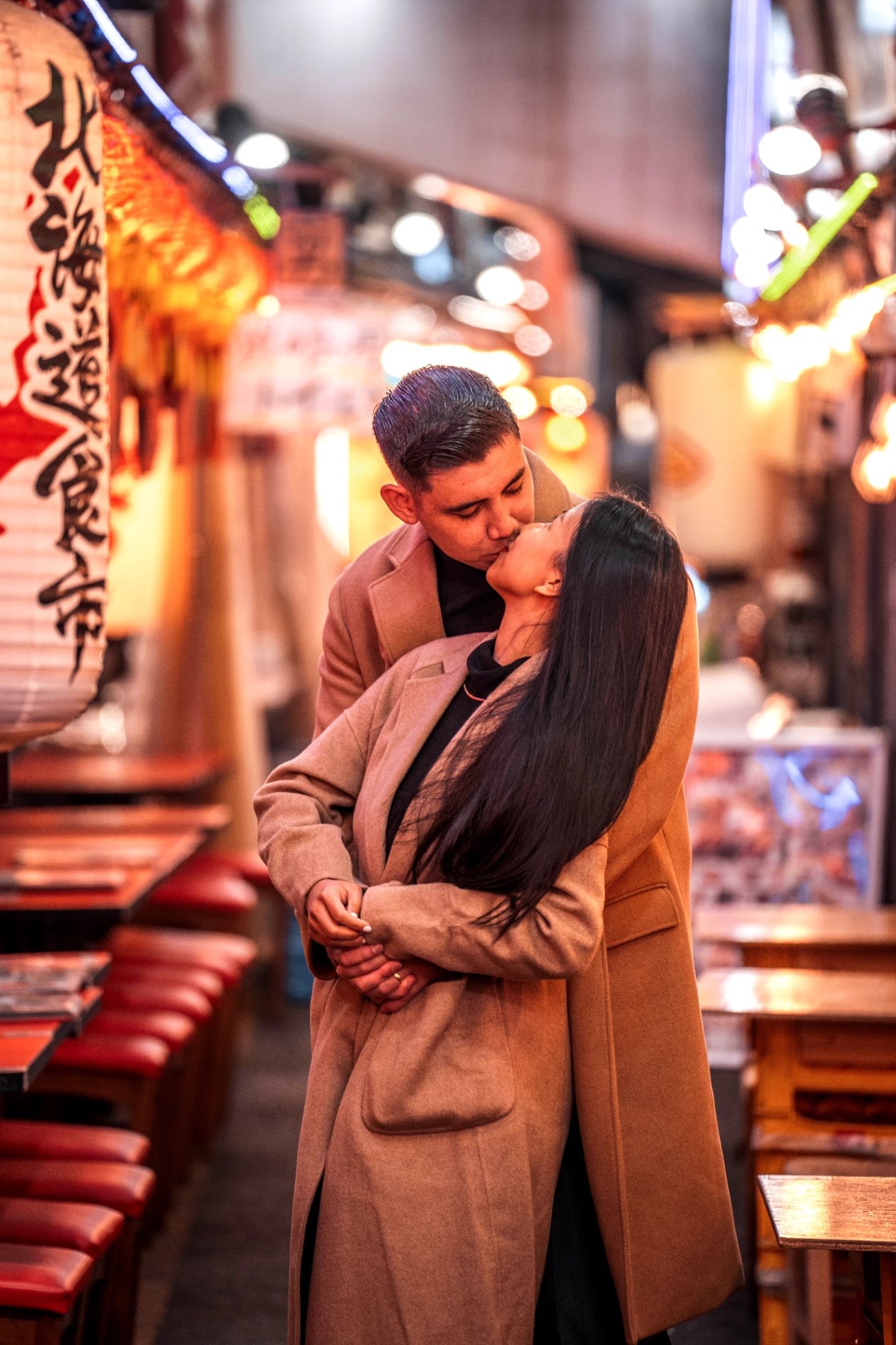
Omoide Yokocho, the lane of tiny grill bars beside Shinjuku station, and Golden Gai, six alleys of one-room bars behind Kabukicho, are the most photogenic and most rule-bound corners in Tokyo. Golden Gai's alleys are private ground and its business association has banned photography there without consent; there are signs with a crossed-out camera at the entrances, and individual bars refuse cameras outright.
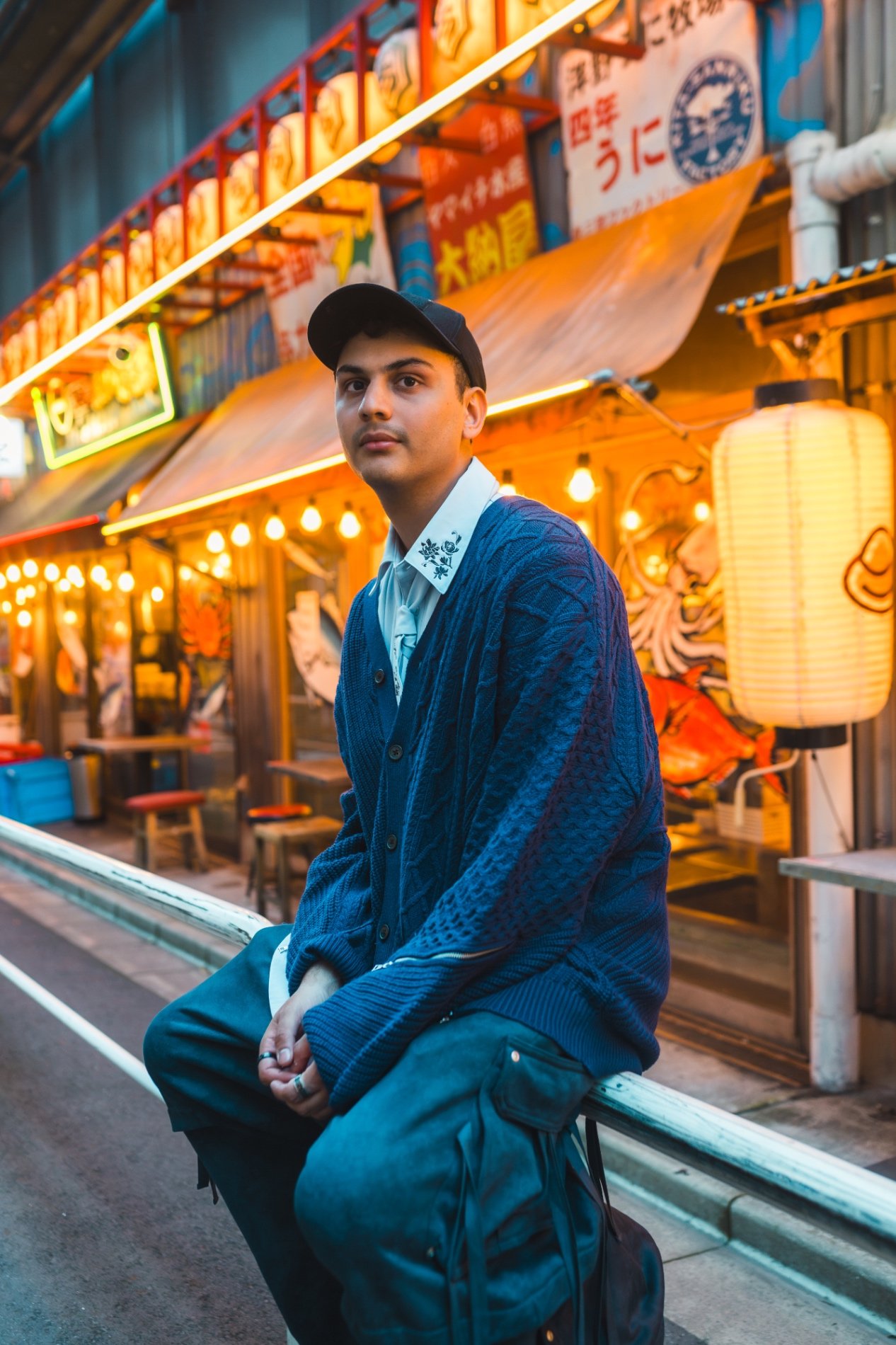
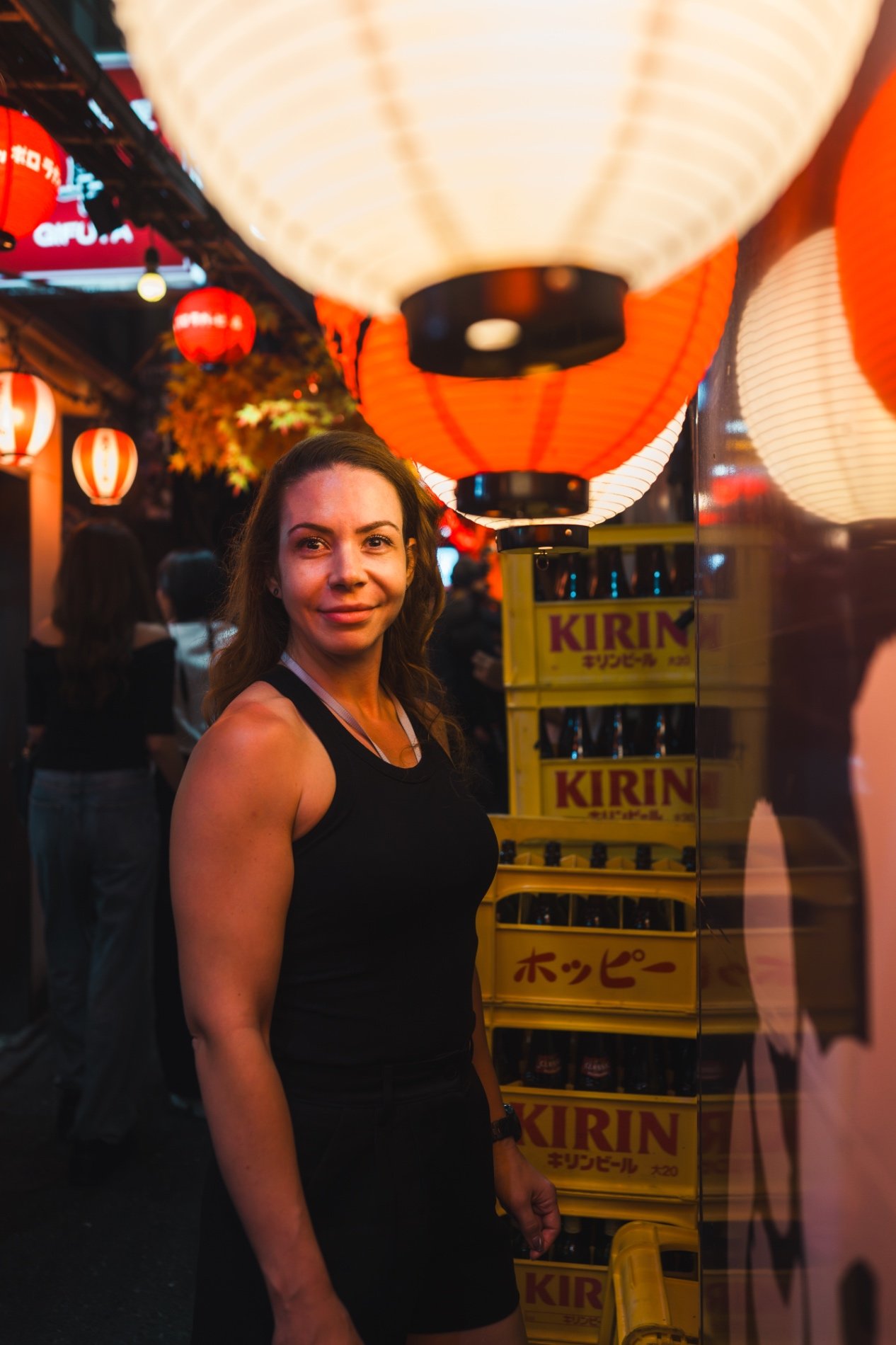
At Omoide Yokocho the mood is looser and the principle identical: never shoot inside a bar, or the people in it, without asking the owner, and expect a no. That still leaves the signage, the lanterns, the steam and the mouth of the alley. Assume drones are not an option anywhere in the twenty-three wards, and assume these rules can tighten again — they have before.
What the seasons actually change
Blossom opens from late March and peaks into the first days of April; full bloom lasts about a week and the date moves by up to a fortnight, so treat it as a window rather than a booking. The rainy season from early June to mid-July is not the write-off it sounds — wet pavement is what makes the neon work. July and August are hot, humid and hazy, which is why the mountains vanish; typhoon season runs July to October.
Winter is the connoisseur's season: the clearest air of the year, blue hour from around half past four in December, Fuji visible from high floors on a clear morning. Three windows turn a dawn start into the only option — Golden Week from late April into the first week of May, Obon in mid-August, and the New Year days around 1 January, when shrines are at their fullest and many small businesses close.
Planning a Tokyo photoshoot
The start time is the decision. A session that begins at seven in Asakusa or Yanaka gives you an empty city; the same session at eleven gives you a queue. An evening session should begin while the sky still holds blue: the overlap between the signs coming on and the daylight going is the picture.
Sixty minutes covers one district done properly. Two hours covers the old city and the neon city with a train hop in between. Three districts in an hour does not work: the trains are fast, the walking between station exits is not.
A photographer who works here regularly knows which station exit puts you where the light is, which lane is still shaded at six in the evening and which alley will say no. Read the destination page for Tokyo, see what a family photoshoot usually covers, check how it works, and browse photographers online.
Want professional photos in Tokyo?
Browse portfolios, compare packages, and book a verified local photographer in minutes.