Winter Elopement in Japan: snow at Shirakawa-go, Takayama and the Hokkaido weeks
Snow changes the arithmetic of a Japanese elopement. The valleys that hold a metre of it — Shirakawa-go, the Hida hills around Takayama, most of Hokkaido — are emptier in January and February than at any other point in the year, and the flat light of a snowy northern morning is the kindest this country gives you. What you give up is the day itself: the sun clears the ridge late and drops behind it again in mid-afternoon. A winter elopement is not one long day of photographs but two short windows with a warm room in between.
The case for the snow weeks
The Japanese travel year has two spikes that flatten everything else: blossom from late March, autumn colour from mid-November. Winter sits outside both. Apart from the New Year days, when shrines are at their fullest and small businesses close, and the February festival week in Sapporo, the old towns belong to whoever gets up. Snow is also the only weather that improves a crowded place — it covers the car park, mutes the wires and falls on you inside the frame.
The price is daylight and grey: overcast is the normal state of a Sea of Japan winter, and a dress in falling snow is a fifteen-minute proposition rather than an afternoon. Deep snow is reliable in these towns from late December into March. In Kyoto and Tokyo it is a rumour that melts by noon, so if snow is the point, go north rather than hope. And if it is the mountain you want rather than snow, that is another trip: Hakone has the clearest Fuji mornings of the year between November and February, a lake with a torii standing in the water, and a shrine that posts its own rules at that gate.
Shirakawa-go: thatch under a metre of snow
The gassho-zukuri farmhouses in the Shogawa valley were built for this load: steep roofs so the snow slides off, thatch a metre thick, and after a fresh fall the village reads as white triangles over black timber. It is a UNESCO site and a working village — people live in these houses, the lanes are their driveways, and the flat white ground between them is rice paddy with ditches in it. Stay on the cleared paths, and do not frame somebody's doorway without asking.
The elevated view is the Shiroyama viewpoint on the old castle site, fifteen to twenty minutes uphill on foot. A shuttle runs during the day, stops long before dusk, and can be suspended in heavy snow along with the footpath, so check the current timetable. In the valley the ridge holds the sun off well past sunrise and takes it back early, which makes midday soft rather than harsh. Day buses arrive mid-morning, and the lanes go quiet when they leave, not at sunset.
On a handful of evenings in January and early February the village is lit after dark. Entry is by advance reservation, passes are checked, and there is no same-day admission; parking, buses and tours go within hours of booking opening, months ahead. The dates are published each year, so check early and build the trip around that evening.
Takayama: dark timber before the buses
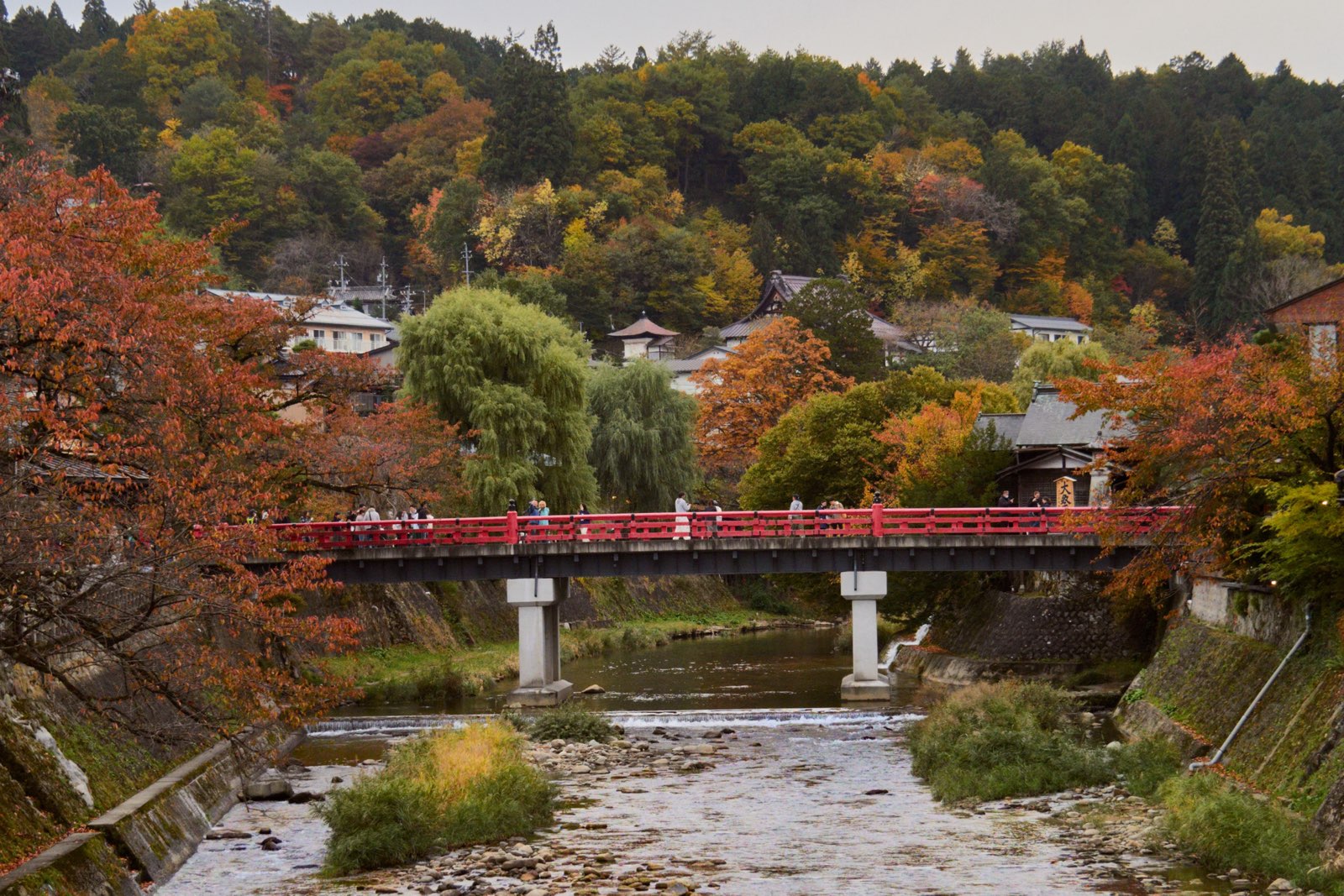
Half an hour away by road, Takayama is the warm half of this pairing: three streets of Edo-period merchant houses in dark timber and white plaster, sake breweries marking their doors with cedar balls, snow on every eave and lantern. The old town, Sanmachi Suji, walks in an hour and is empty before nine. The coaches arrive mid-morning here too.
The streets are narrow enough that direct sun barely reaches the ground, which makes this the rare place where the middle of a winter day is usable. The morning markets along the Miyagawa keep shorter hours in winter, so check before you hang a start time on them. For height, the Higashiyama temple walk climbs the hill behind the town in about forty minutes; at dusk the canal lanterns come on and the wet timber goes black.
Kanazawa and the roped pines of Kenroku-en
Kanazawa is the easiest of the snow towns to reach and the most formal-looking. In Kenroku-en the gardeners raise conical rope structures over the pines from around the start of November and leave them until mid-March; they hold the branches against wet coastal snow and photograph like rigging. The stone lantern by Kasumi pond usually has a queue — the pines, the bridges and the plum grove are where a session works.
The garden opens early and closes at an hour that shifts through the year, and there are night openings in winter on dates set each season: check both. Ten minutes away, the Higashi Chaya teahouse district gives dark lattice and gold leaf behind glass, quiet before the shops open. Snow here is heavy and wet, so an umbrella is part of the outfit.
Hokkaido: the shrine approach and the Otaru canal
The north runs on its own calendar. Sapporo has deep, dry, reliable snow from December to March and a cold that is sharper but easier to stand in than the damp of the west coast. Hokkaido Jingu sits inside Maruyama Park, ten to fifteen minutes on foot from Maruyama-koen on the Tozai subway line, and the tree-lined approach under snow is the picture. It is an active shrine: an arranged shoot on its ground needs the shrine's own permission, and the answer can be no.
Thirty to forty minutes west on the JR line, Otaru puts a canal, stone warehouses and a row of gas lamps together, and the lamps come on absurdly early — blue hour reaches Hokkaido while the rest of the country is at lunch. One warning: in February the Sapporo snow festival and Otaru's lantern week land close together, hotels in both cities fill, and the dates move every year.
Two windows, and the timetable that shapes them
In January the light is gone from a Hokkaido street before half past four and from a Gifu valley not long after. So: a first window from first light until the village wakes, a long warm middle, and a second from mid-afternoon into blue hour. Sixty minutes outdoors at a stretch is a sensible unit — cold makes a long session worse, and it shows in faces before it shows on a thermometer.
The timetable is the other constraint. The bus from Takayama to Shirakawa-go takes about fifty minutes and some departures need a reserved seat; from Kanazawa it is about seventy-five minutes and reserved throughout. Winter weekends sell out, and booking opens a month ahead. Snow delays trains and buses, so leave an hour between a connection and a session. Nothing here needs a hire car, and in January not having one is an advantage.
The dress, the hands and the walk from the car
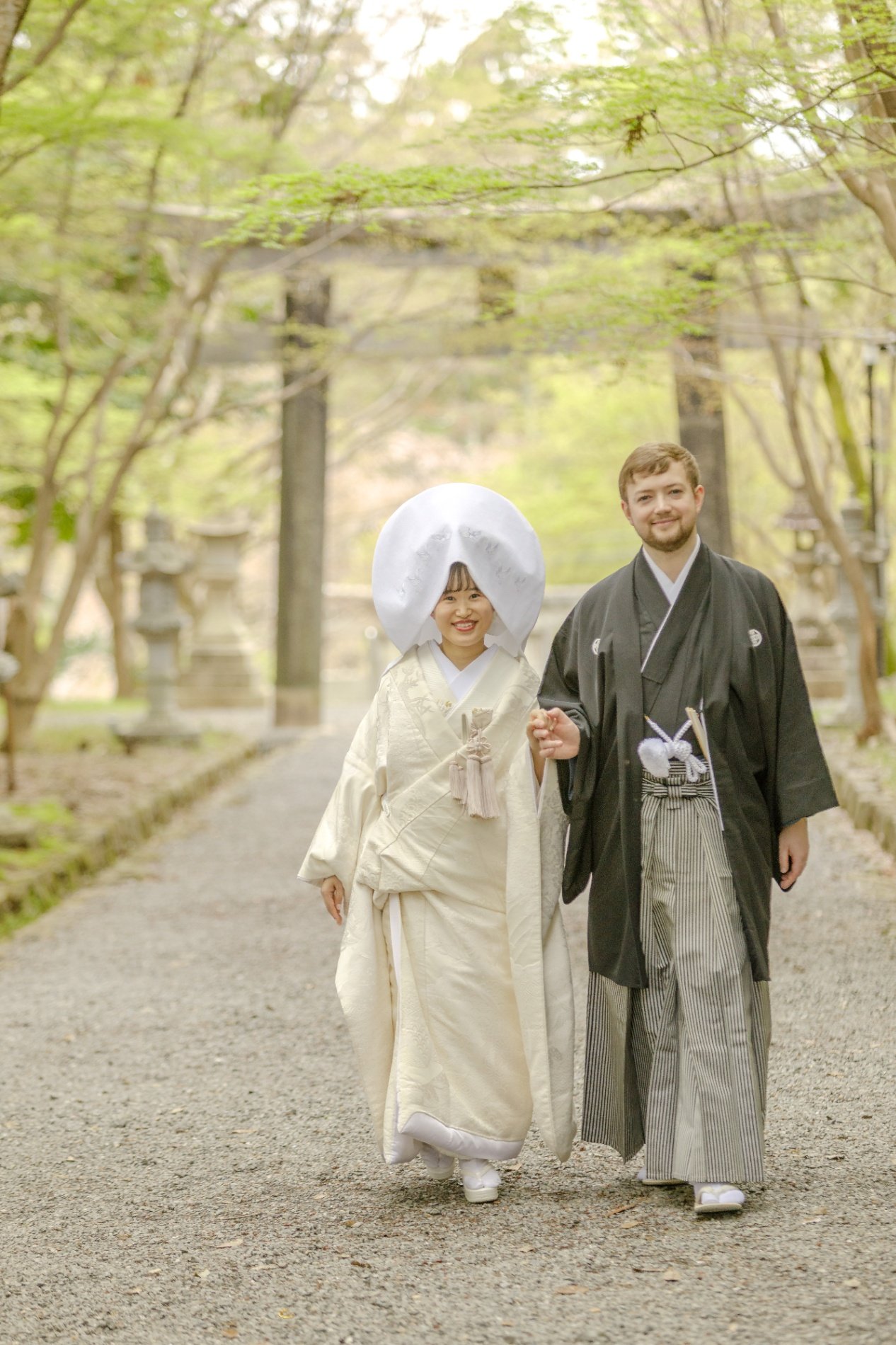
A hem that touches snow is wet within a minute and stays wet all day, so put the frames where the dress is lifted and moving first and the ones where it drags last. Walk to the spot in boots and change at the frame. A coat that belongs in the picture — wool, a fur-collar stole, a wrap in a colour that is not white — is worth more than any amount of shivering, and a bride in white silk with a hood against falling snow is the version this country invented.
Cold is a timer. At minus five with bare hands, twenty minutes is honest; after that nobody looks relaxed, and it is visible. Hand warmers in both pockets, a second pair of shoes, hair that survives a hood, and a day built as short outdoor pushes with a car or a cafe between them.
Ryokan, onsen and the warm half of the day
The warm middle wants to be somewhere worth photographing, which is what a ryokan is for: a tatami room, a low table, a window with snow falling past it. But it is a business with other guests in it. Ask at booking whether a photographer may work in your room and in the common areas, and at what hours — usually yes to the room, no to the public spaces at dinner time. Photography in the bathing areas is out; the answer there is a private bath booked as a slot.
Planning a winter elopement in Japan
Pick one base and two nights rather than three towns in three days. Takayama with Shirakawa-go, Kanazawa with a day up the valley, Sapporo with Otaru — each is a complete trip in winter, and moving less means the light you get goes into pictures instead of platforms.
Only two things have to be locked months ahead: the reserved light-up evenings and the February festival weeks. Everything else in January is quietly available. Sixty to ninety minutes covers one place properly in this cold, and two short sessions at opposite ends of the light beat one long one.
One practical note: a shrine or chapel ceremony in Japan is not a legal marriage. That happens when the paperwork is filed and accepted at a municipal office, which for foreign nationals means embassy documents and translations, so most couples who come for the photographs do it at home.
A photographer who works these towns in winter knows which lane the plough clears first and which viewpoint is shut. Start with the destination page for Takayama, read what an elopement session usually covers, and book a photographer online.
Want professional photos in Takayama?
Browse portfolios, compare packages, and book a verified local photographer in minutes.