Couples Photoshoot in Tokyo at Night: Shibuya, Shinjuku and the neon backstreets
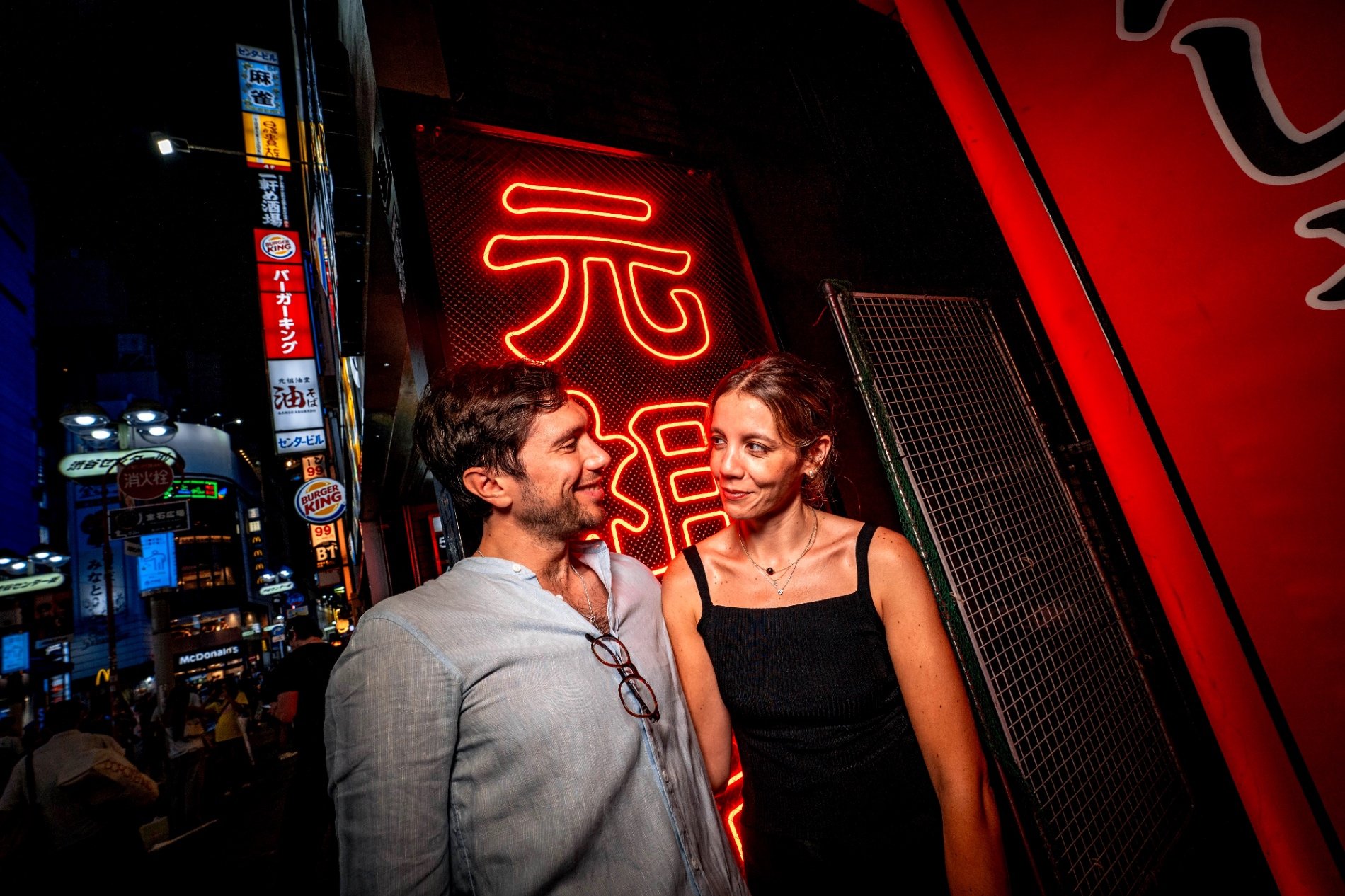
Tokyo after dark is the one city where the advertising does the lighting. The signs above Shibuya and Shinjuku throw more light onto two faces, from more directions and in more colours, than anything a photographer could reasonably carry, and a night session here is built around using them rather than fighting them. Two things ruin it. Arriving after the sky has gone black, which costs you the best twenty minutes. And dressing for daylight, which is how a white shirt turns magenta on one side and green on the other.
Real shots from Tokyo
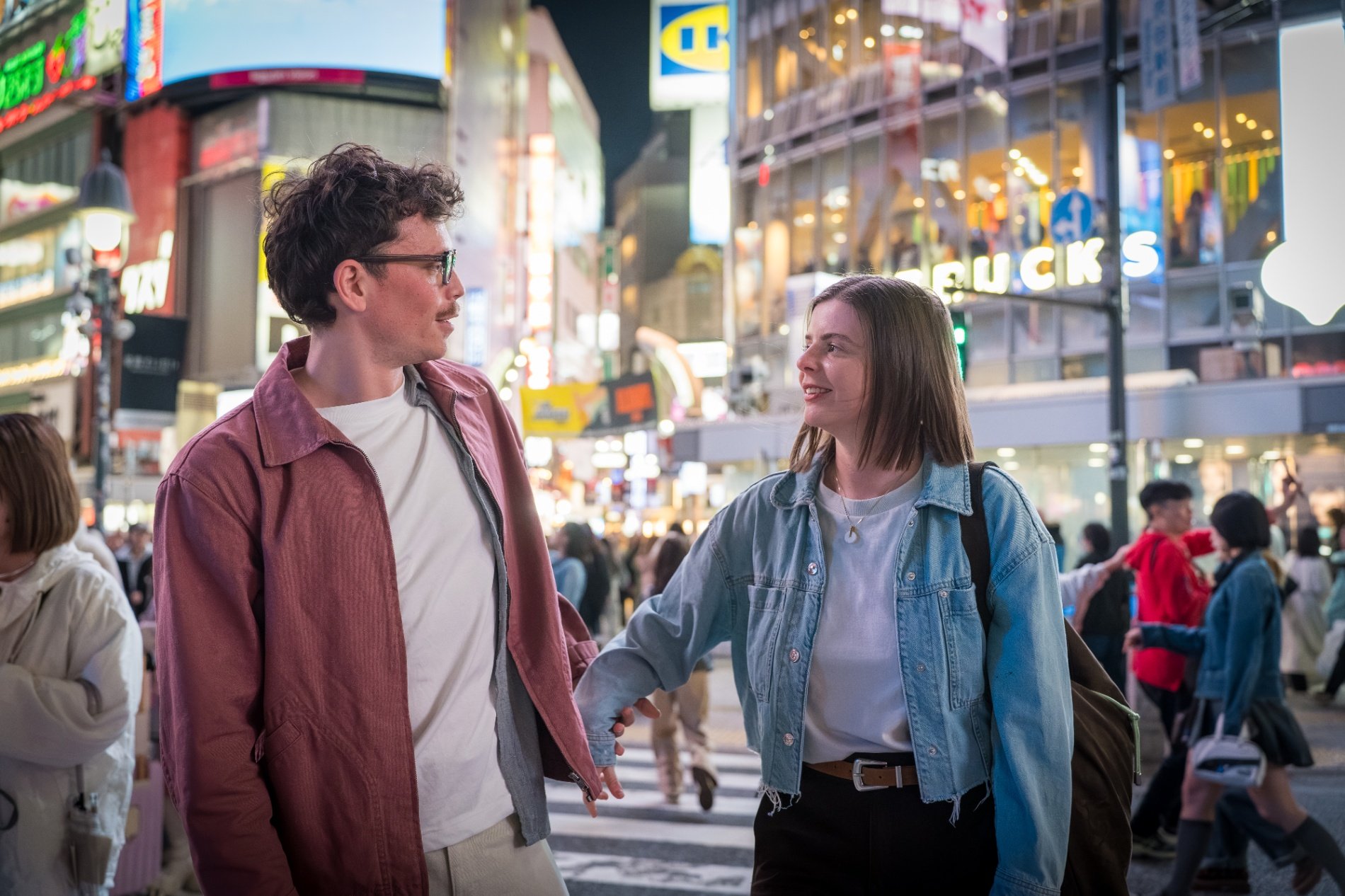
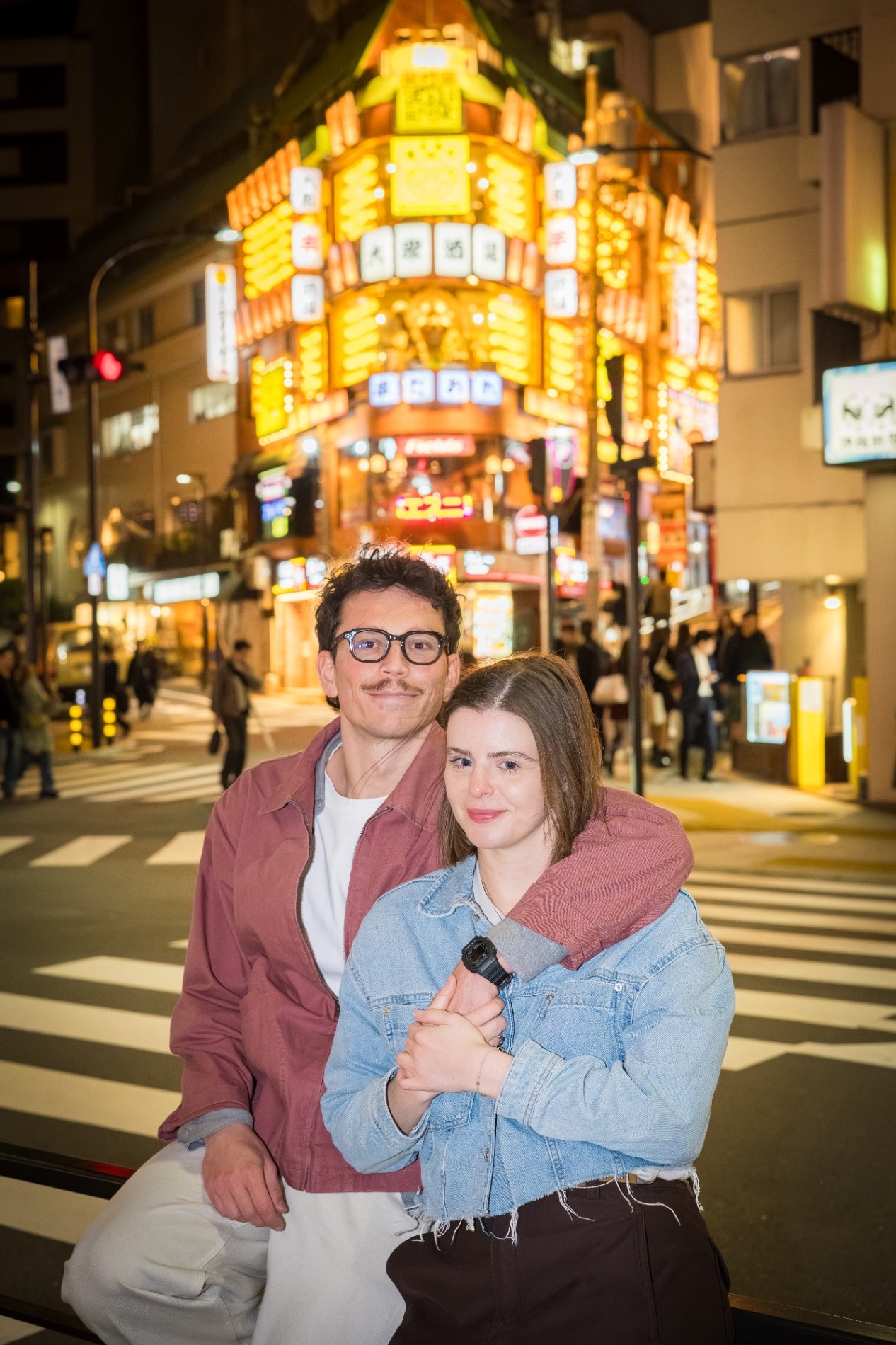
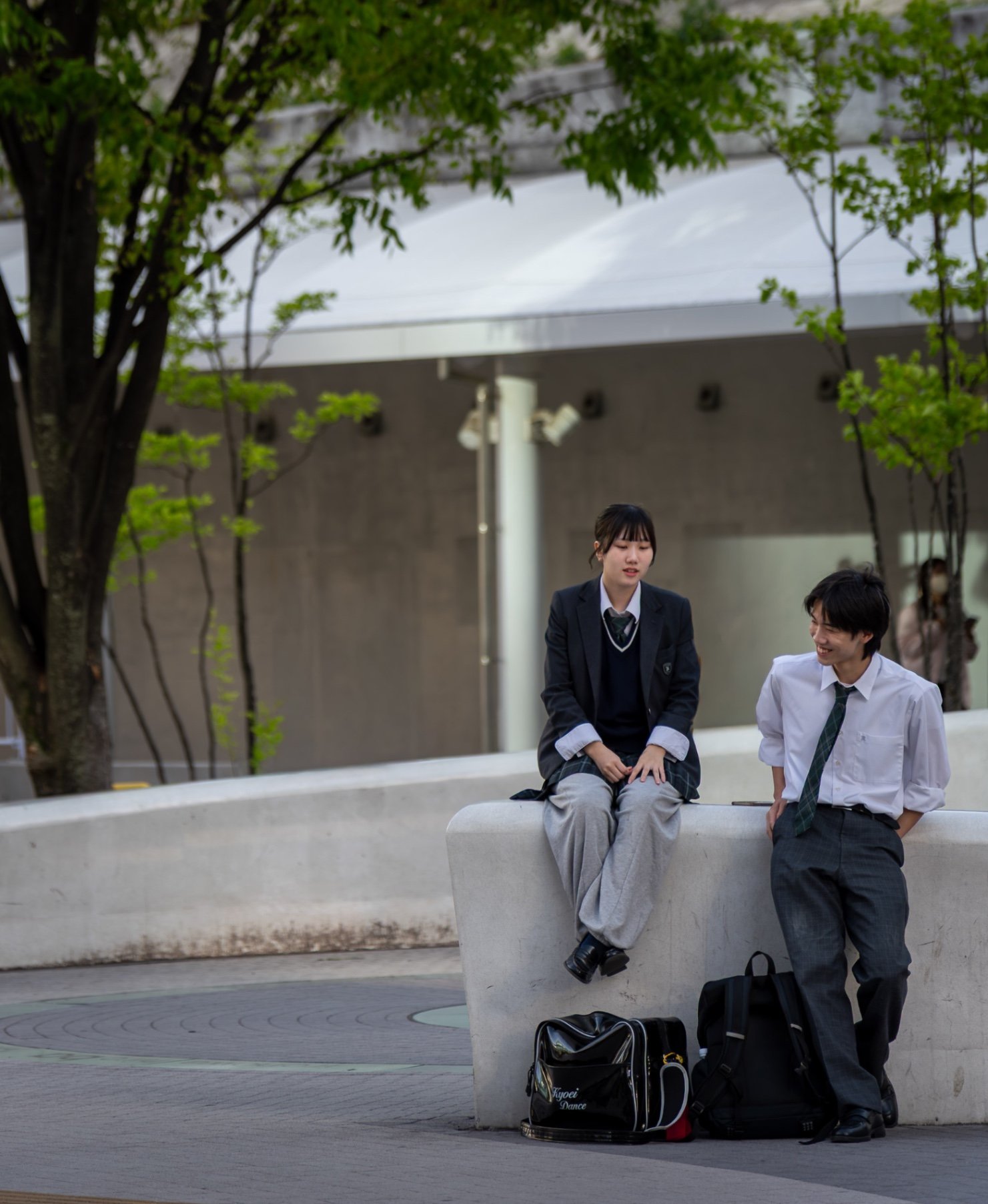
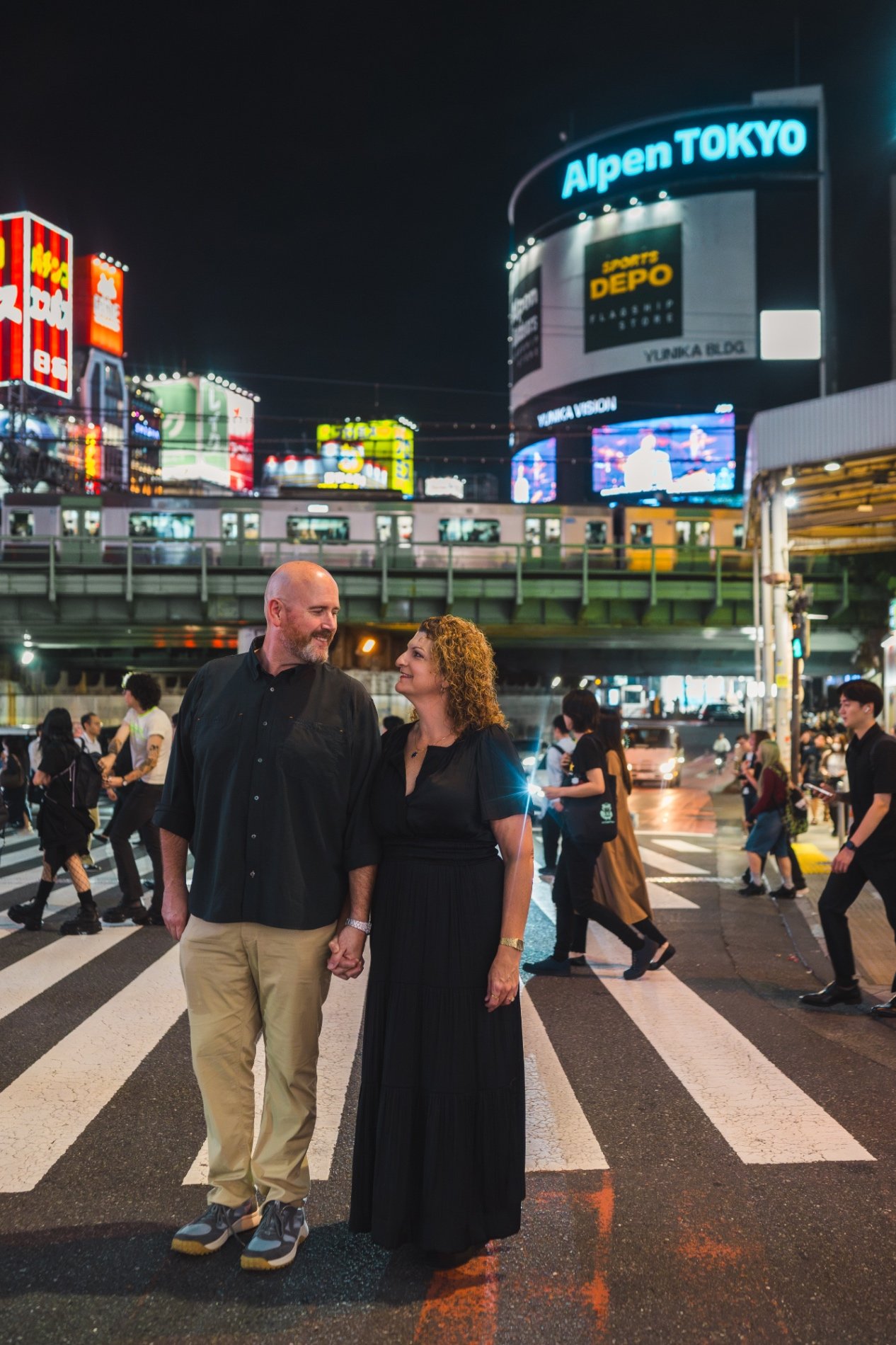
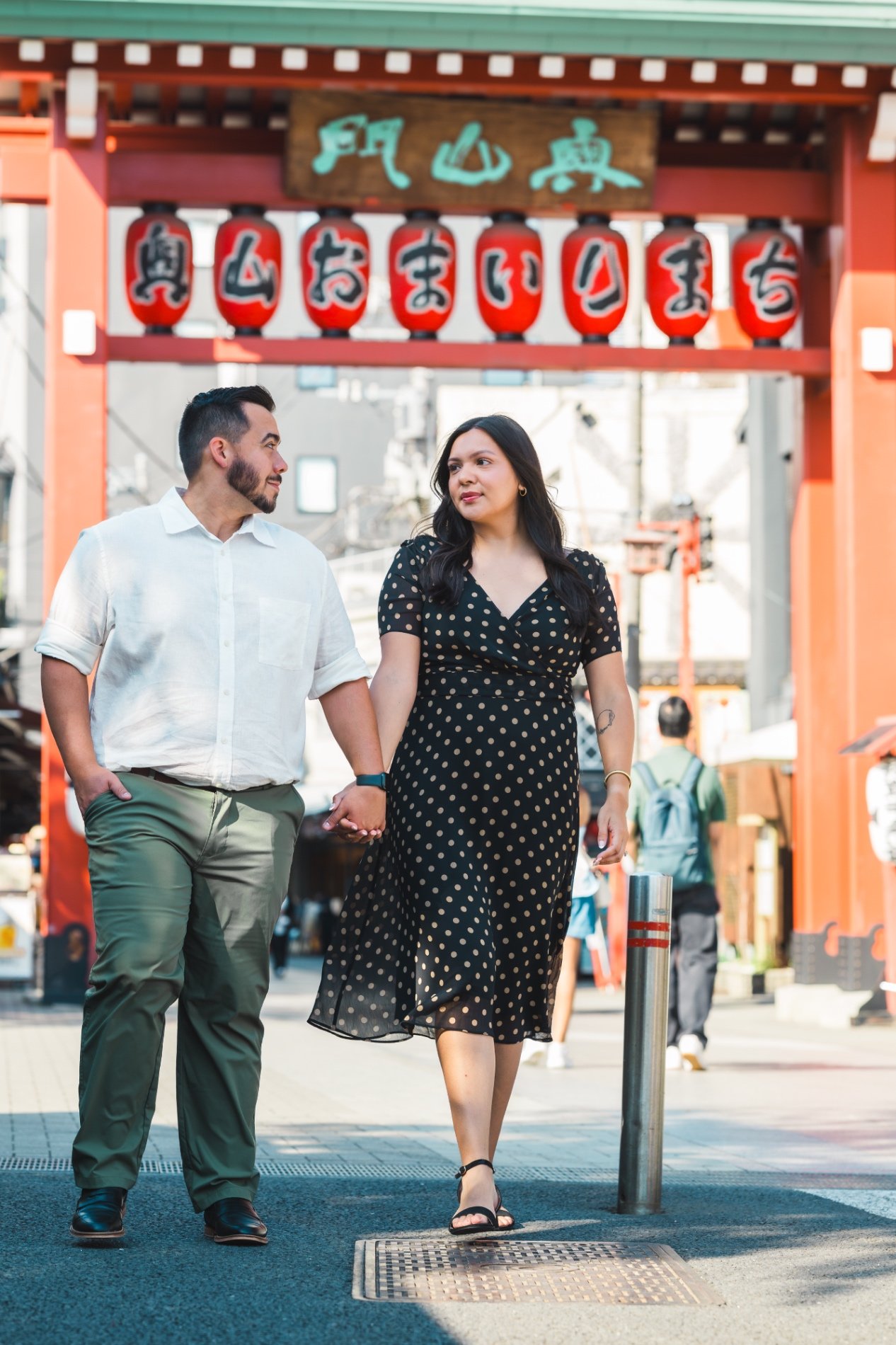
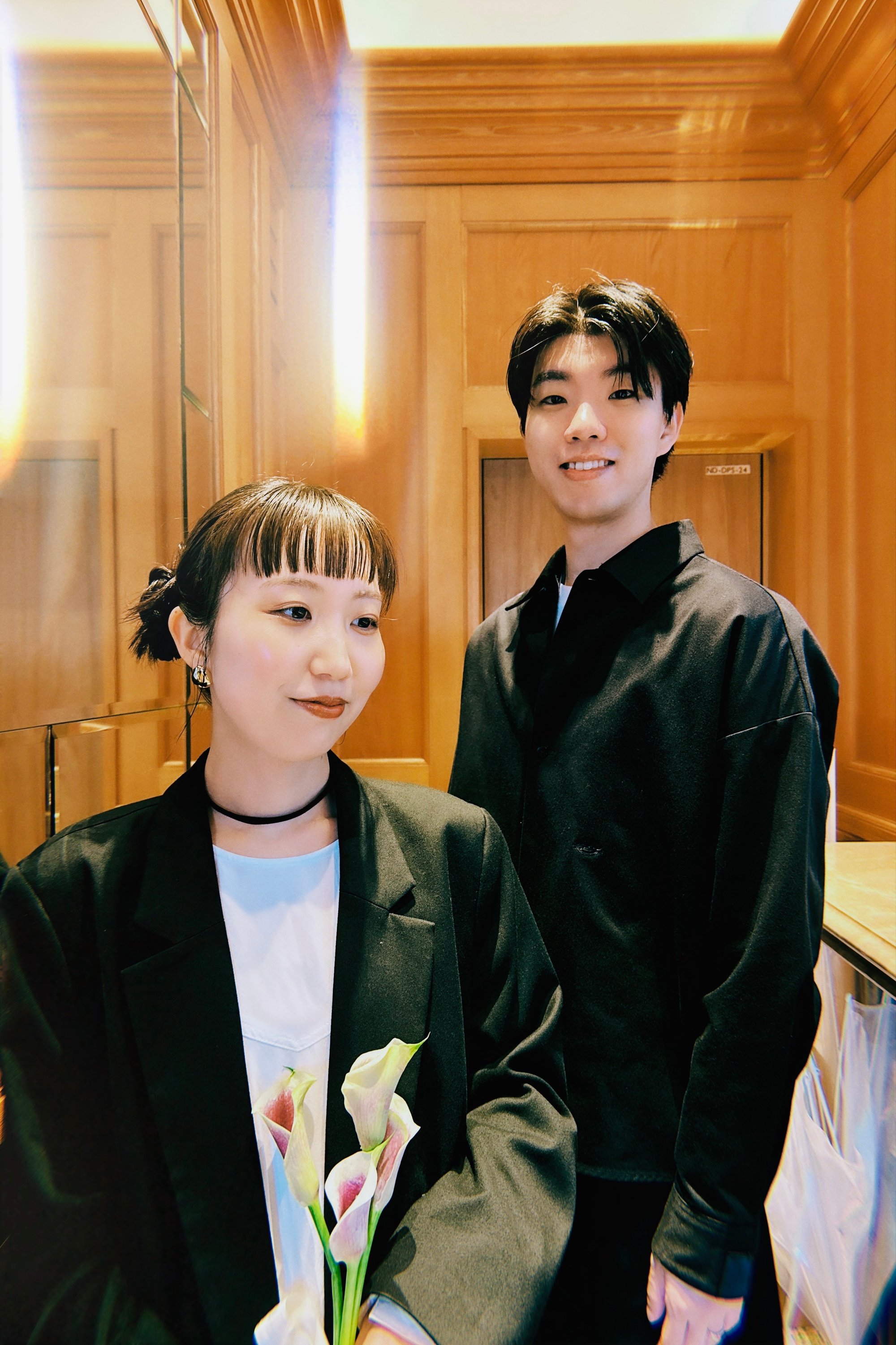
The window: blue hour, then neon
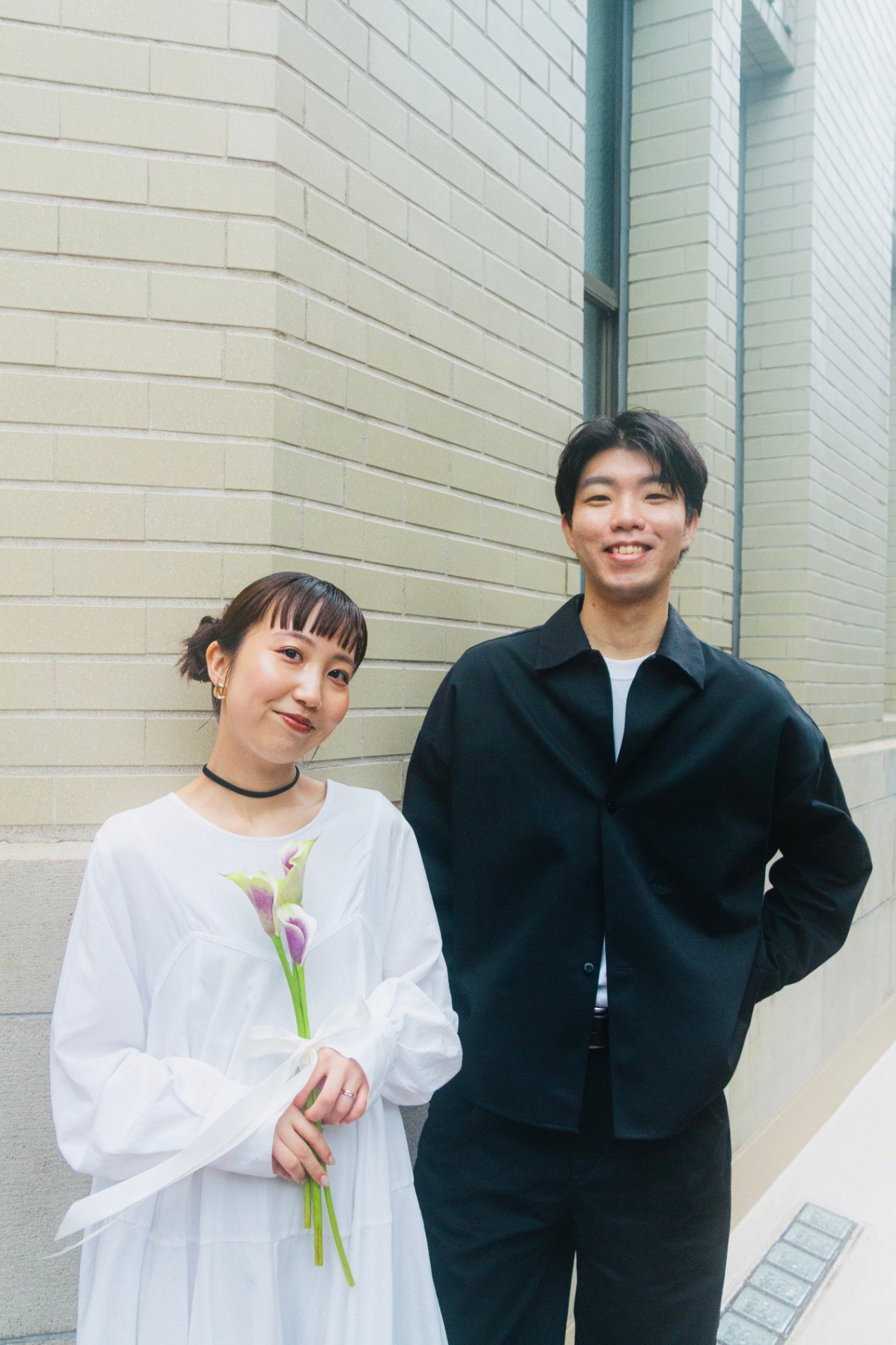
Sunset in Tokyo runs from a little after half past four in December to around seven at the end of June, so check the time for your date and build backwards from it. What matters is the overlap: the signs switch on before the sky has finished going out, and for roughly half an hour afterwards the city is lit and the sky is still a deep blue rather than black. That half hour is the best part of the session — faces lit by the signs, sky with colour in it, buildings still readable.
After that comes pure neon, which is a different and harder look: black sky, high contrast, colour casts from every direction. It is also excellent, and it is what most people picture when they imagine Tokyo at night. The practical consequence is simply that a night session should begin before sunset, not after it. Start at full dark and you have skipped the easy half of the evening.
Start high, on a timed slot
The clean opening is above the city. Shibuya's ticketed observation deck looks straight down on the Scramble Crossing and west towards Fuji's silhouette on a clear evening, and entry is by timed slot booked in advance — the sunset slots go first, often days ahead. The open rooftop closes in rain and high wind, with an enclosed floor below it that stays open, so a wet evening is a change of plan rather than a cancellation. The rooftop also has firm rules of its own: tripods and selfie sticks are not permitted, loose items go into a locker before you go up, and anything that looks like a professional production needs the operator's agreement. Those rules change, so check them when you book rather than at the barrier.
The free alternative is the observatory in the Tokyo Metropolitan Government Building in Shinjuku, which costs nothing and stays open into the evening. Outside on the plaza, a projection-mapping show runs on the building's east face on a published schedule several nights a week — worth checking if you want it, and not worth building the evening around, because the schedule moves.
Shibuya: the Crossing and the streets behind it
Come down for the Crossing once the signs have beaten the sky. The Hachiko exit puts you on the corner everyone knows, and the important thing to accept is that the Crossing never empties. Hundreds of people cross at every change of the lights, from morning to past midnight, and any plan that involves waiting for a gap is a plan to stand there until the batteries die. The crowd is the picture: two people still in the middle of it, everyone else moving, is the frame this place exists for. It works from inside the crossing during a green — about forty seconds, so three or four passes rather than one — and from the walkways and upper floors around it, where a ticketed rooftop terrace above one of the corner buildings looks straight down on the whole thing. A tripod in the middle of the road is not going to happen, and nobody should try.
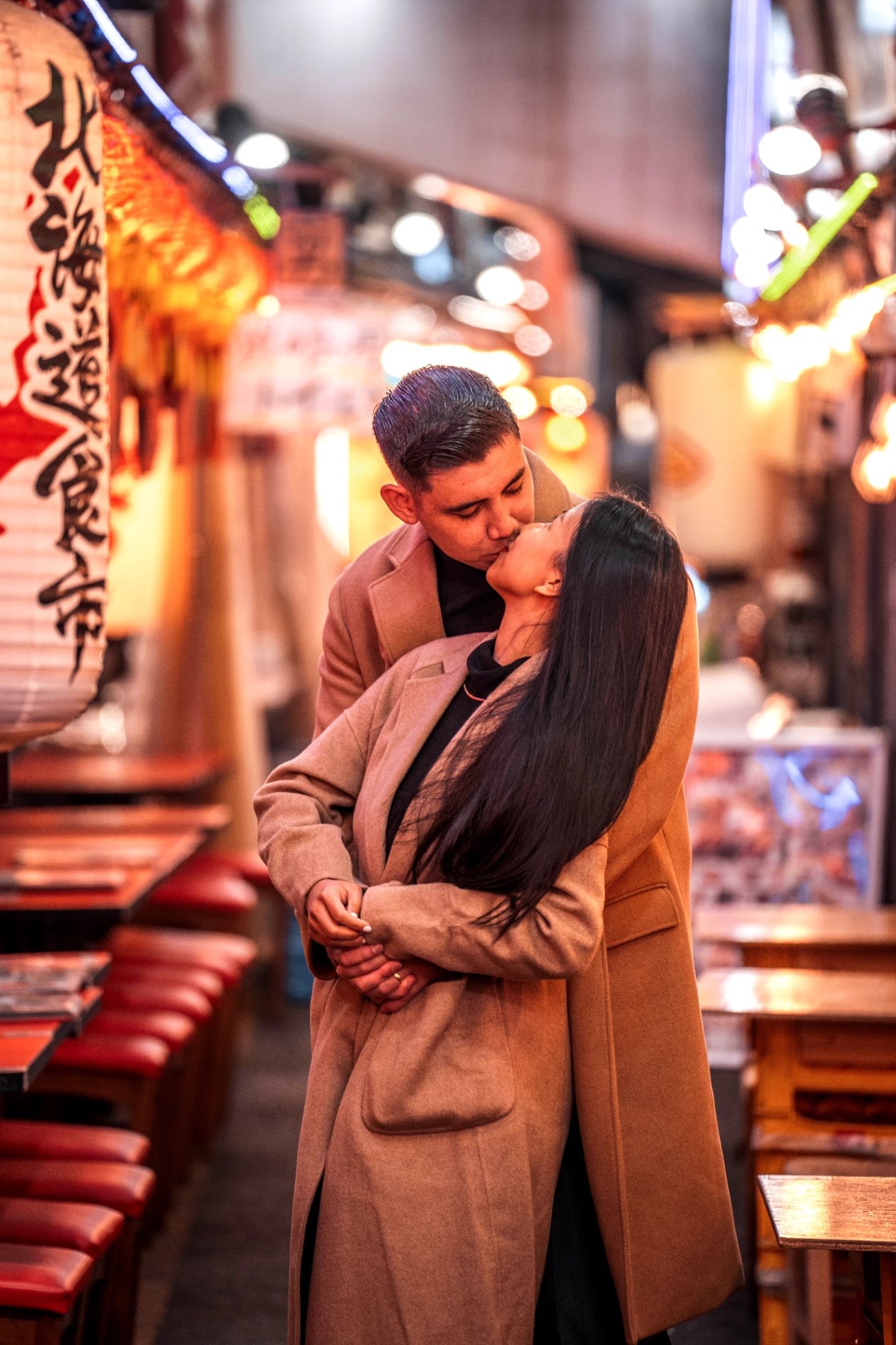
Behind Center Gai the scale drops immediately. Narrow streets, signage stacked four storeys high, vending machines throwing their own light, wet asphalt doing the rest. Nonbei Yokocho, a two-lane cluster of tiny bars beside the railway, is the most atmospheric corner in Shibuya and also the most private: these are six-seat businesses, so ask before photographing anybody or any doorway, and accept a no. One local rule worth knowing: since autumn 2024 Shibuya ward has banned drinking on the street in the station area during the evening, all year round, so keep cans and cups out of the session.
Shinjuku: Omoide Yokocho, Kabukicho and the alleys that say no
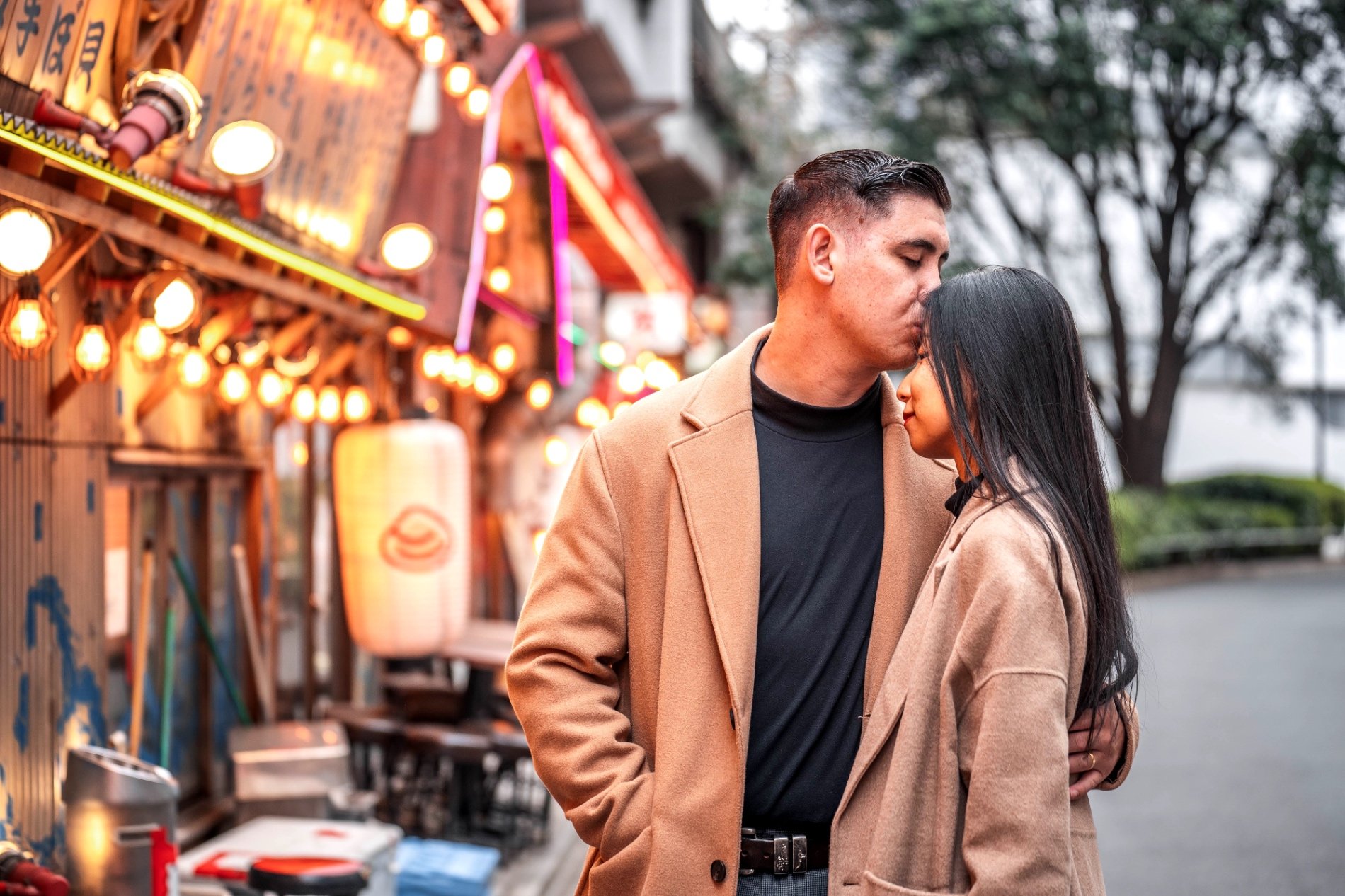
Five minutes north on the Yamanote line, Shinjuku gives you a denser version of the same thing. On the west side, Omoide Yokocho is a warren of grill counters under paper lanterns, thick with smoke and very narrow; it is more relaxed about cameras than Golden Gai but the people at the counters are eating dinner, so ask first and keep the session moving through rather than parked in it.
East of the station, Kabukicho is the loudest light in the city: the red gate on Yasukuni-dori, the tower at the top of the street, and the Godzilla head looking down over a hotel roof mid-district. It is busy and it is worked by touts, who can be ignored politely and completely.
Golden Gai, just beyond, is the one place to leave the camera down. Its lanes are private roads, and the district's own association has banned photographing in them without consent. That is not a grey area and not a matter of being discreet. Go for a drink afterwards; do not put it in the session.
What clients say about this kind of shoot
Marvin is so nice ! and also knows good spots where to take photos ✨✨✨ I RECOMMEND
— Btihal on Marvin T.
Working with Deniz was such a pleasure! He knew great spots to photograph that made the photoshoot exactly how I envisioned. I would certainly recommend this to any tourist or any local to Tokyo looking to elevate their images while in Japan. He was professional, kind, & extremely friendly. He gave direction when needed and communicated effectively. 10/10!! 😊
— Rebecca R. on Deniz D.
Deniz did an exceptional job with my shoot, customized it to my liking, and made me feel comfortable throughout the whole process. Highly recommend him for indoor/outdoor shoots around Tokyo!
— Molly C. on Deniz D.
A lovely experience. Marvin knew all the good spots and led the way. No thinking necessary on my part, which I loved. A pleasure to work with.
— Siobhan on Marvin T.
Marvin is FANTASTIC! He captured amazing photos of us and they were exactly what we were wanting from the session. Marvin knows all the best spots and ensures you have the best experience. Highly recommend Marvin’s photography services.
— Sara on Marvin T.
We had such a great photography experience with OKINI PHOTO TOUR! If you’re looking for an Osaka photographer, especially for a couple photoshoot in Osaka, I would definitely recommend them. The photographer made us feel comfortable from the beginning and guided us naturally with poses, so even if you’re not used to being in front of a camera, the experience is very relaxed and fun. What I really liked was that this wasn’t just a typical photoshoot. We walked around Osaka and enjoyed the city while taking photos, so it felt like both a photo tour and a local Osaka experience. The photos around Dotonbori and Osaka’s neon streets were especially beautiful. The photographer knew where to shoot, how to use the city lights, and how to capture natural moments between us. For couples traveling in Japan, honeymooners, or anyone searching for couple photography in Osaka, an Osaka travel photographer, or a Dotonbori photoshoot, OKINI PHOTO TOUR is a great choice. A wonderful way to keep memories from our trip to Osaka. Highly recommended!
— 伊藤尚也 on Soh
What to wear under neon
Solid colours. Neon supplies all the pattern and all the text an image can hold, so a logo, a slogan or a busy print simply fights the background. Deep colours hold up best — black, navy, oxblood, forest green — while pure white picks up whatever colour is nearest and goes magenta on one side and cyan on the other. A coat with a shape reads better than a soft layer, because most of the light here is coming from the side and from above. Heels and wet tiles are a bad combination; bring something to change into if the plan includes an observation deck, where it is several degrees colder and much windier than the street.
Two smaller things. Night frames are made at wide apertures and high sensitivity, so a couple standing still for a beat gets sharper pictures than a couple in constant motion — your photographer will ask for both. And a clear umbrella, if it is raining, is a light source rather than a problem.
Rain makes it better
Rain is the best thing that can happen to this session. Wet asphalt doubles every sign in the street, puddles put the whole skyline at your feet, and and the Crossing seen from above, filled with moving umbrellas, is the best version of that picture by a distance. The one thing rain takes away is the open rooftop, which closes — so do the deck first and the streets afterwards, or drop the deck and spend the evening at ground level, where the reflections are.
Quiet alternatives for couples who dislike crowds
Not everyone wants the Crossing. Nakameguro, two stops out, is the opposite in every way: the Meguro River runs between low bridges and small lit cafés, the water holds the light, and the whole area is walkable in an hour. The exception is cherry season, when this canal becomes one of the busiest places in the city after dark — if that is your week, go early or go elsewhere.
Yanaka, on the north side, is old Tokyo: low wooden houses, temple walls and the sunset steps at the top of Yanaka Ginza, where the lane runs west and goes gold for about a quarter of an hour before dusk. It is residential, and quiet in a way the rest of this article is not.
On the east side, the Sumida riverside gives you the Skytree standing clear above a low roofline, with the red span of Azumabashi as a foreground and a long, flat, empty walkway on both banks. The tower's lighting alternates between designs on a schedule the operator publishes, so check it if a particular colour matters to you. It is windier down there than anywhere else on this list.
Planning a Tokyo night photoshoot
Fix the start time against sunset, not against dinner. Beginning thirty to forty minutes before the sun goes down puts the whole blue window inside the session instead of behind it, and a session booked for eight o'clock in winter has missed the evening entirely.
Sixty minutes covers one district properly: a deck and the Crossing, or the Crossing and the backstreets, or Shinjuku on its own. Two hours covers two districts with a train hop between them. Four districts in an evening is a train ride with photographs attached — the trains are fast, but the walk from a station exit to the right corner is not.
If the evening is also a proposal, do not do it on the Crossing. Pick the riverside, a quiet bridge in Nakameguro or the deck at a booked slot, tell the photographer exactly where and when, and let them be in position first. Read the destination page for Tokyo, see what a couples photoshoot or a proposal shoot usually covers, check how it works, and browse photographers online.
Want professional photos in Tokyo?
Browse portfolios, compare packages, and book a verified local photographer in minutes.