Family Photoshoot in Tokyo: parks, Asakusa and the hours that work with small children
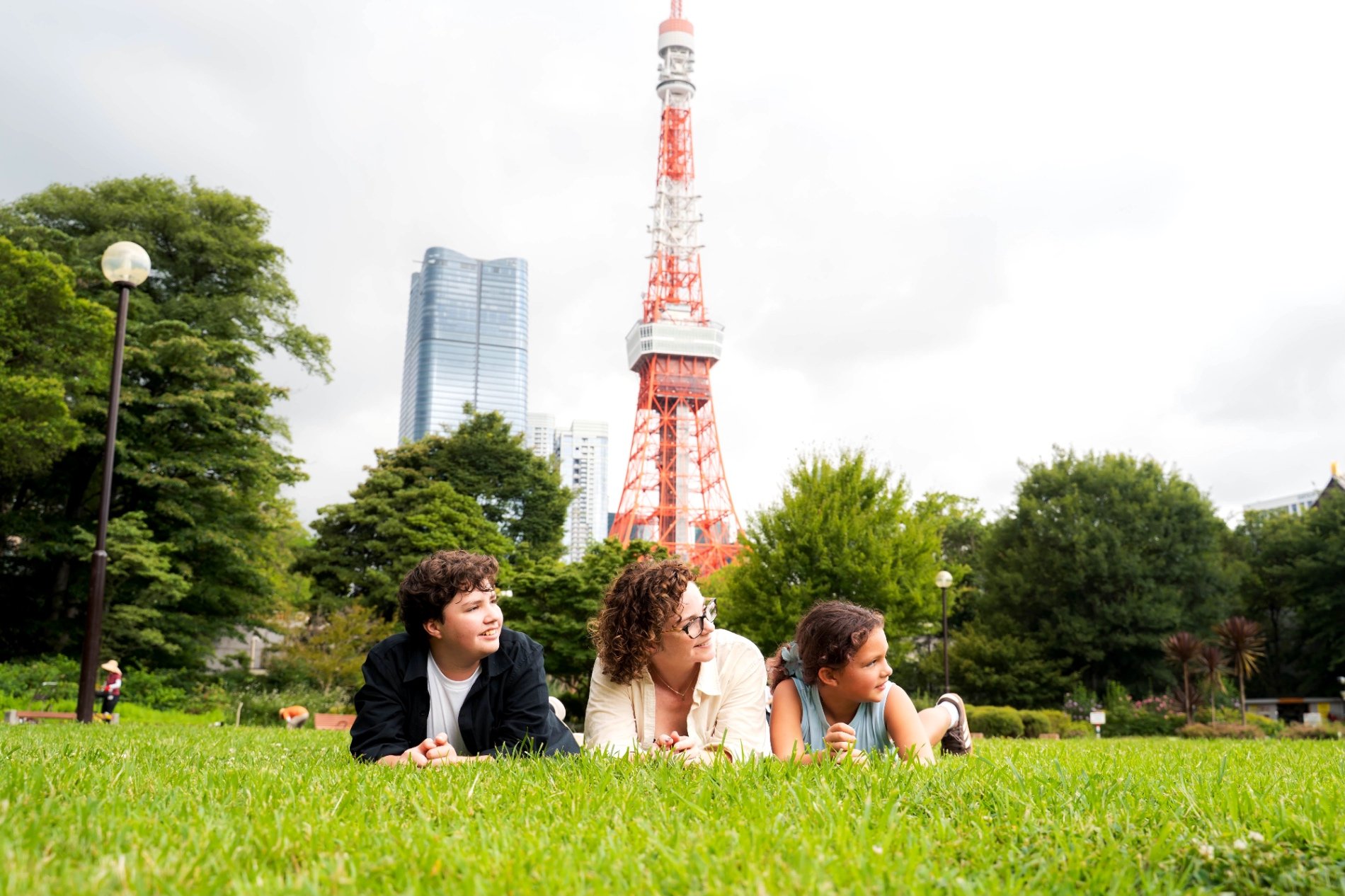
A family photoshoot in Tokyo is not a lighting problem. It is a logistics problem with a two-year-old in it. The frames are easy — the city is full of them and nearly all are minutes from a station — but a toddler has about ninety good minutes in a day, and they are not the ninety a photographer would pick. Stop fighting that and build the session around the child's clock instead. In Tokyo, for once, the two line up.
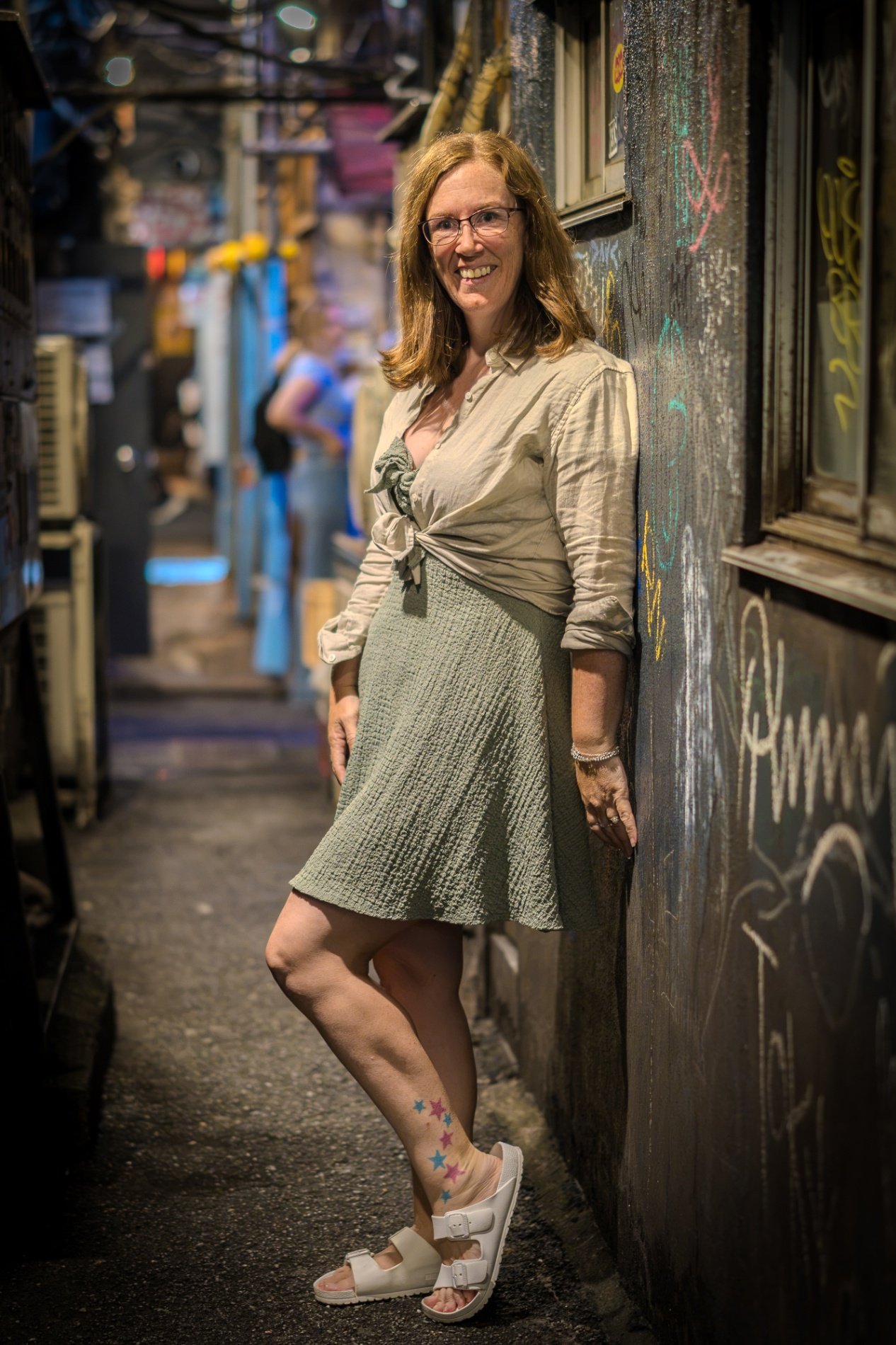
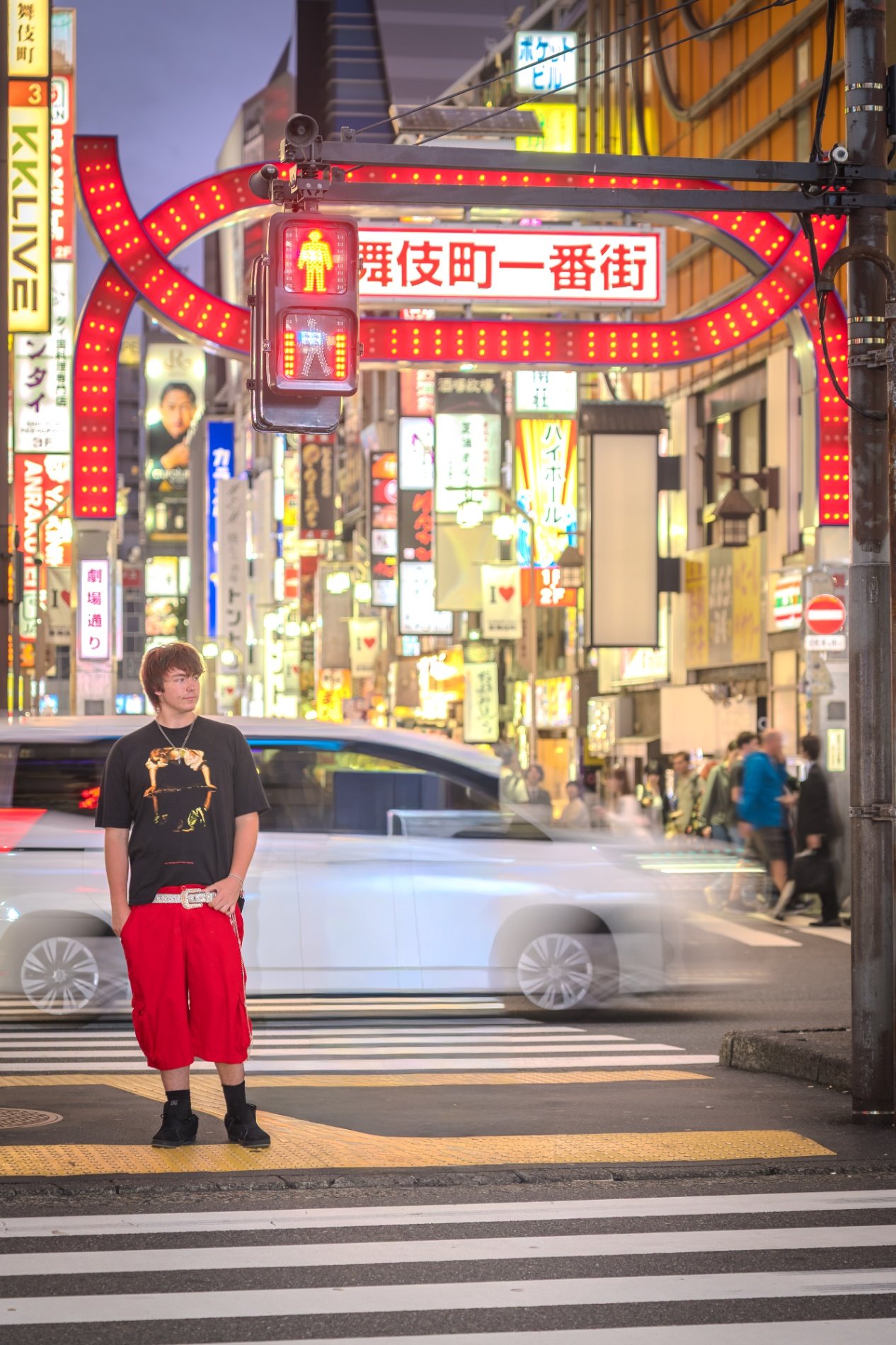
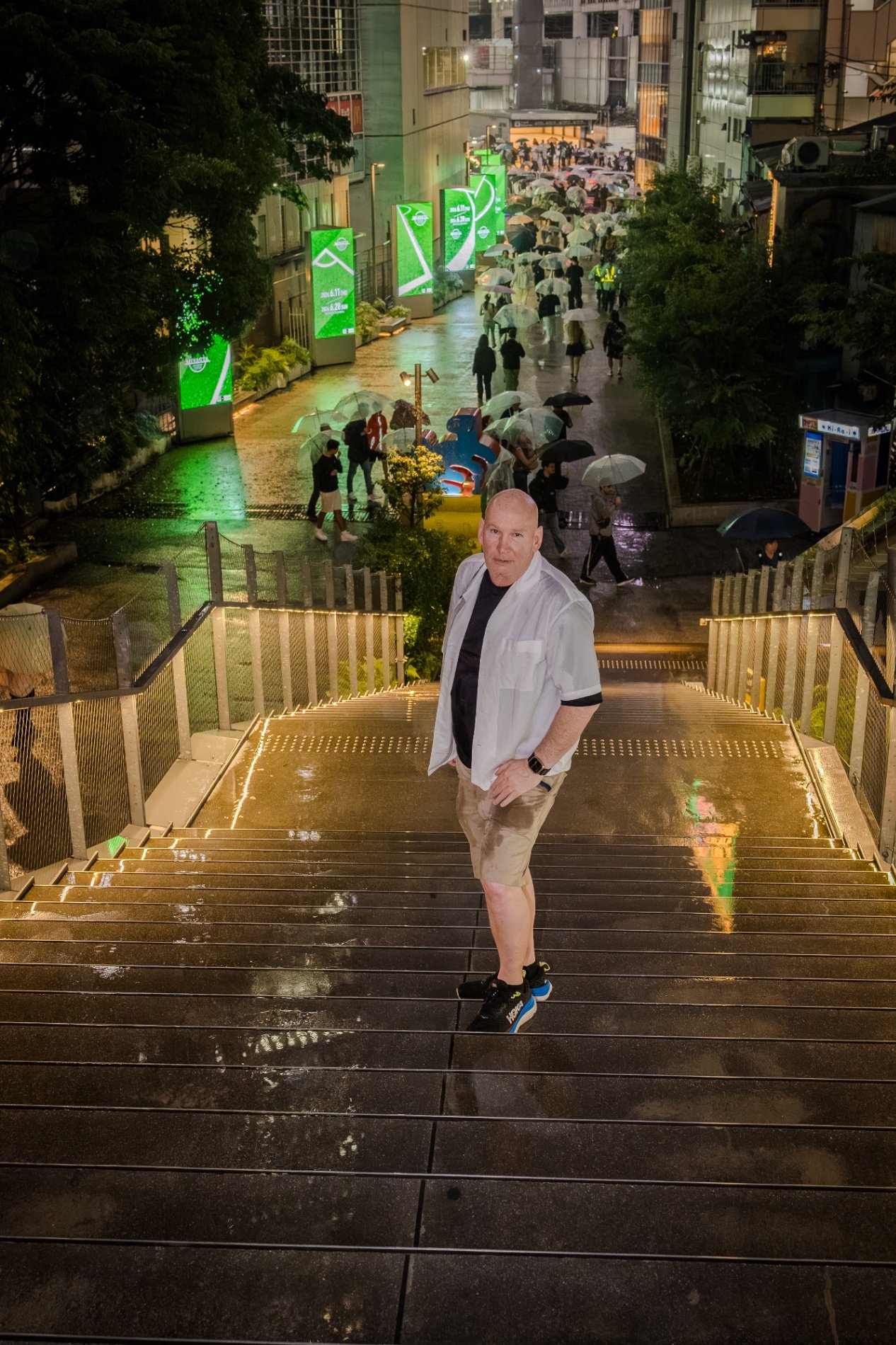
Real shots from Tokyo
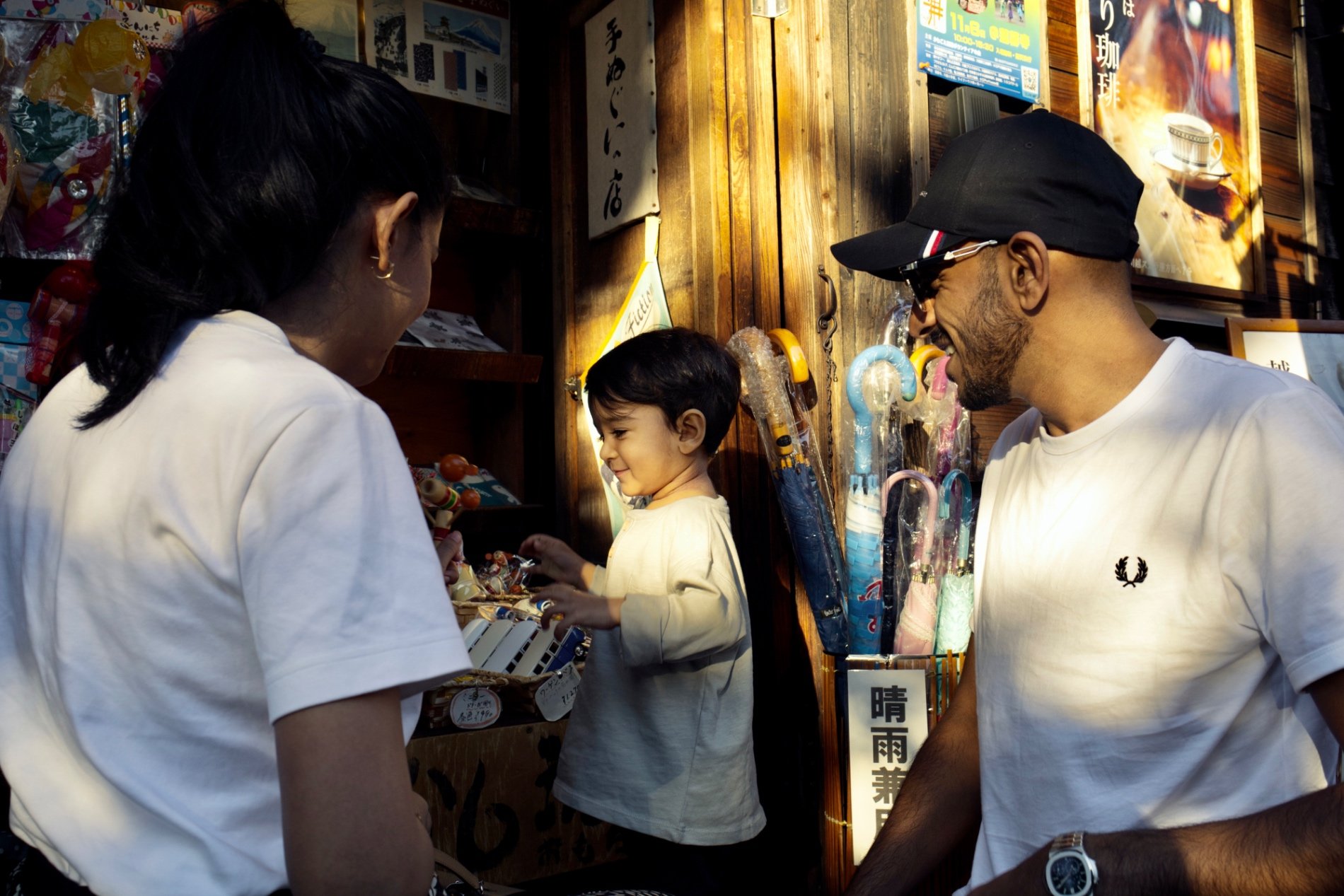
Jet lag is the best thing you have
A family that landed from Europe or North America two days ago will be wide awake at five in the morning and asleep by seven in the evening, and everybody treats this as a problem to be fixed. For one week it is an advantage. Five in the morning is when Tokyo photographs best: the old city is empty, the light is low and soft, the temperature in August is survivable, and the children are cheerful rather than melting.
So book the session for the first or second morning rather than the fourth, before the body clock resets. Be at the location at first light, shoot for sixty minutes, and be eating breakfast when the rest of the city starts its day. The nap that follows is the point, not a failure.
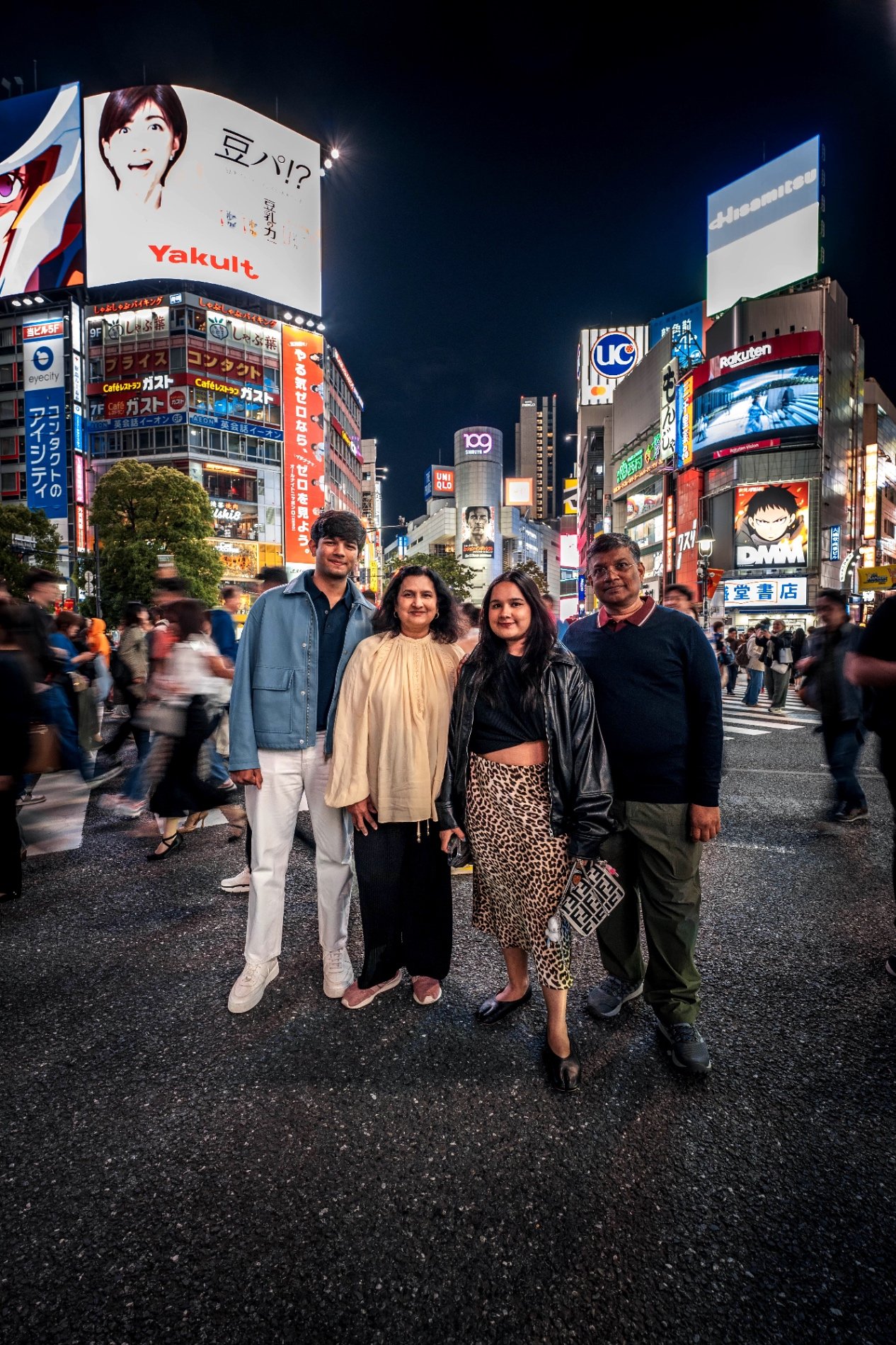
The opposite plan works for older children with no interest in getting up early: the hour before sunset, ending in the blue hour, when Tokyo's lit signage does what no daylight can. It does not suit a toddler who has been on their feet since dawn.
Senso-ji before the shops open
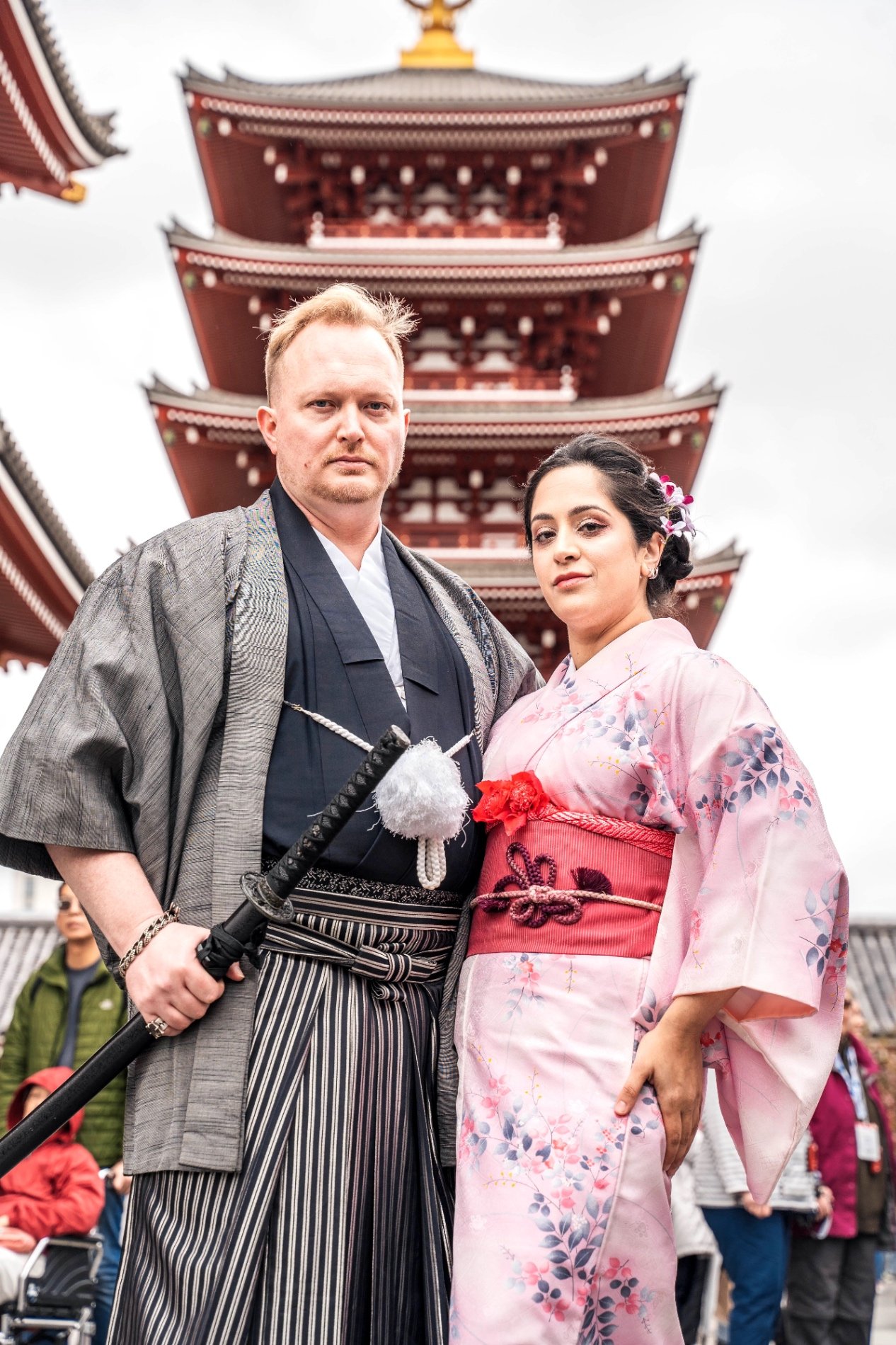
Asakusa is the strongest argument in the city for a dawn start with children. The Kaminarimon with its huge red lantern, the shopping approach of Nakamise-dori, the Hozomon gate and the five-storey pagoda all stand on one straight axis. Before the shops open that axis is empty, the stalls are shuttered, and the shutters are painted with old scenes of the district, so the street becomes a corridor of pictures rather than a souvenir market. A small child can run down the middle of it, which at ten in the morning is unthinkable.
Take the Ginza line to Asakusa and use exit 1, half a minute from the Kaminarimon. The temple's own hours move with the season, so check them the night before. This is a working temple: walk to the side of the gate path rather than straight down the middle, keep clear of the incense burner, and do not point a camera into the main hall where the signs ask you not to. An arranged shoot on temple ground normally needs the temple's own permission, asked for in advance. One more local rule that matters with children: eating while walking is frowned on here, and Nakamise-dori posts signs asking you not to — buy the thing, stand still, eat it.
The lawns: Shinjuku Gyoen and Yoyogi Park
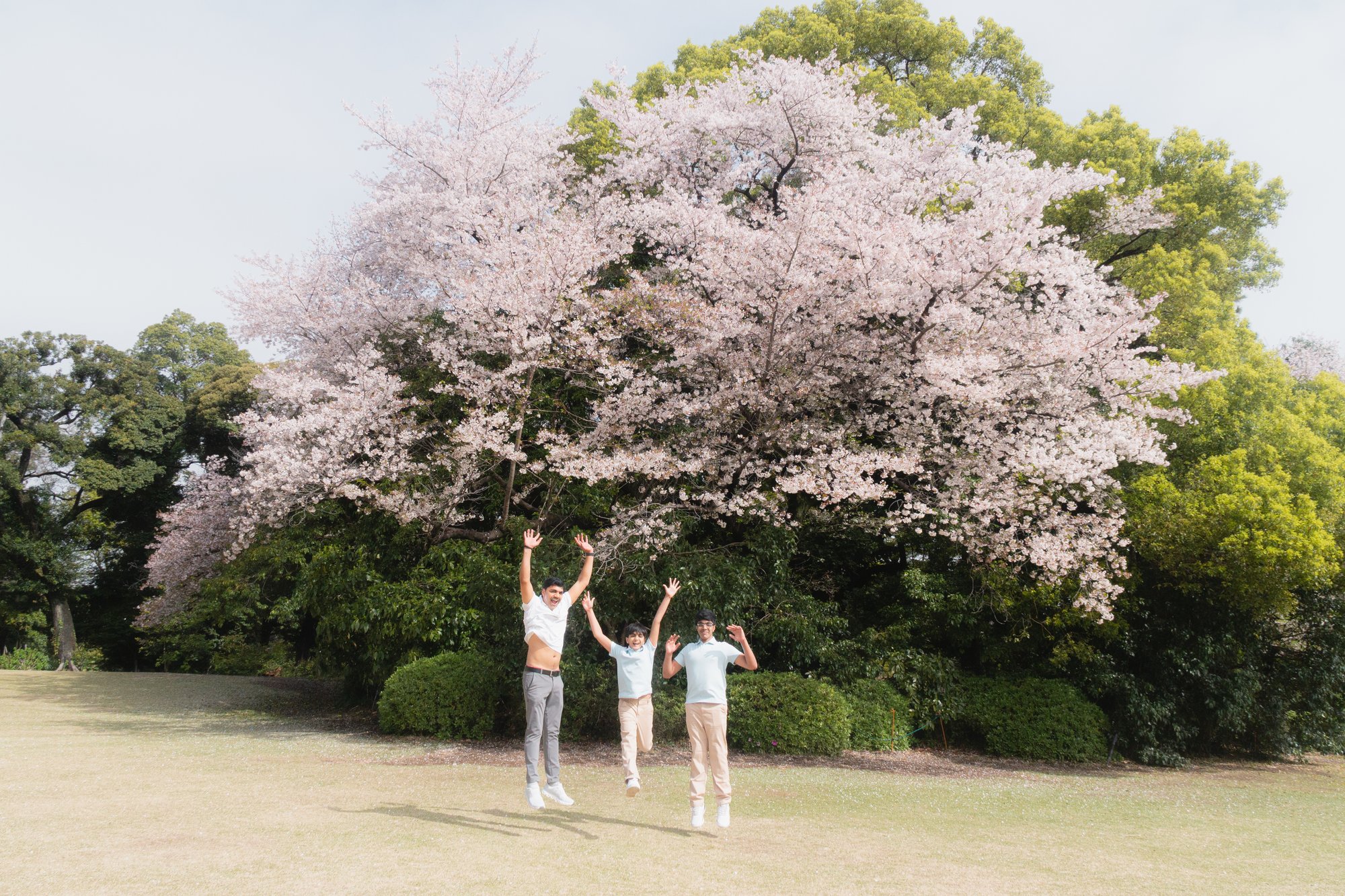
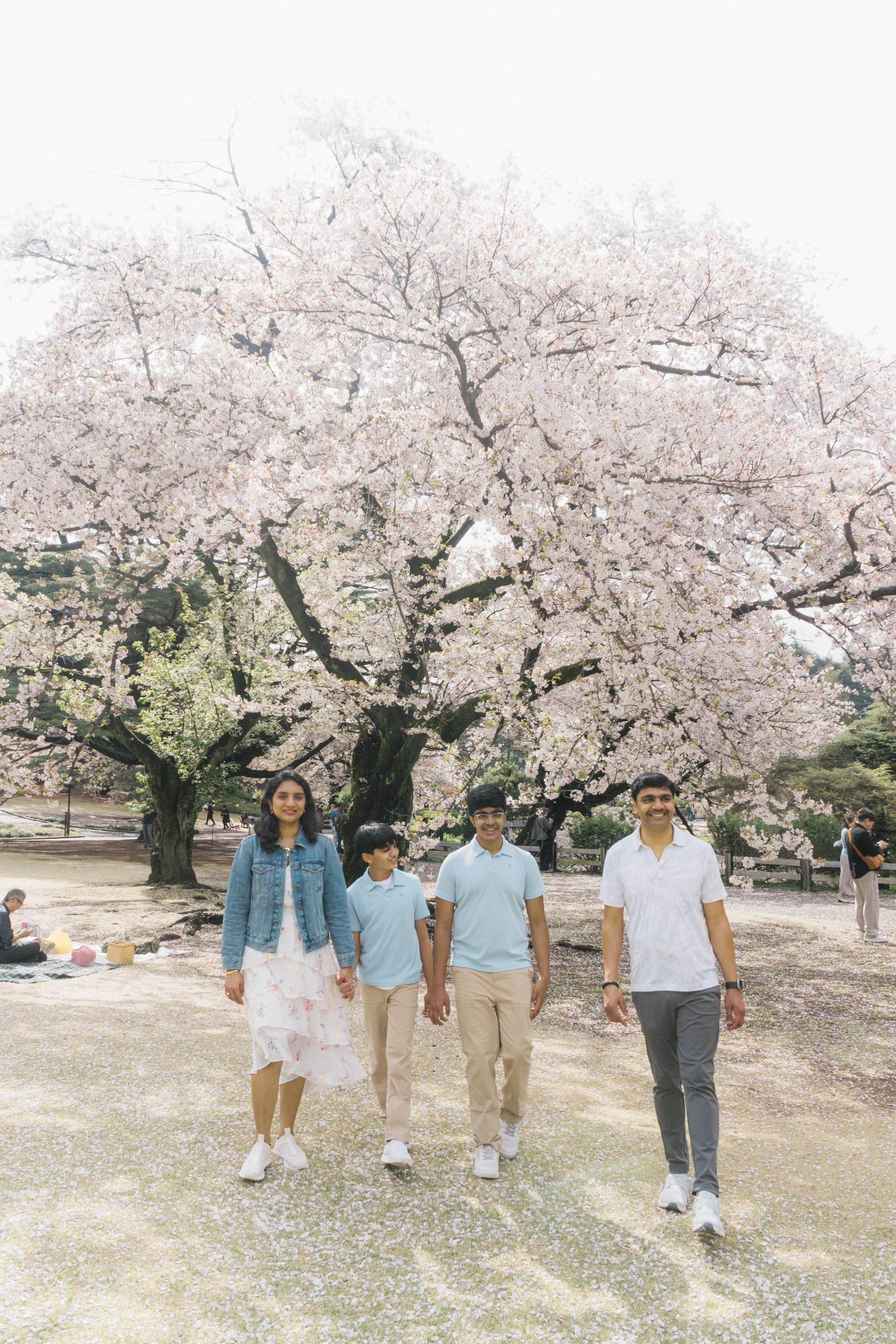
When you want grass and no traffic, these are the two. Shinjuku Gyoen is the better garden: enormous lawns, three distinct styles laid out beside each other, wide flat paths, and enough space that a running child does not end up in somebody else's frame. It has a ticketed entrance, closes one day a week outside the blossom and chrysanthemum seasons, and runs a bag check at the gate; it also restricts tripods on narrow paths, forbids alcohol, and requires permission from the park office for commercial photography. That last one is not a technicality: arrange it in advance or shoot elsewhere, and check the current rules, because they are revised.
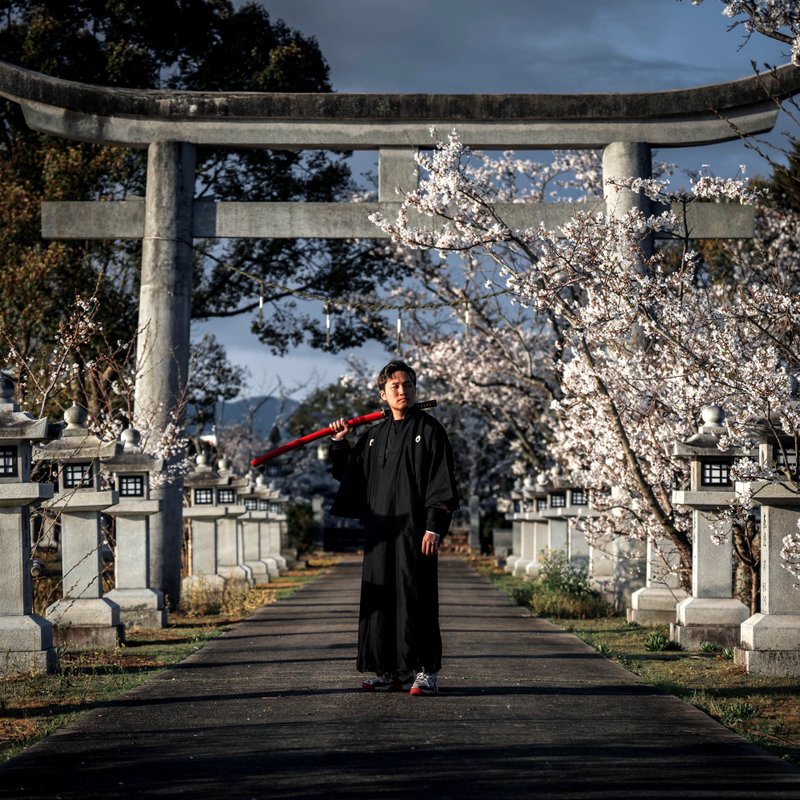
Yoyogi Park has none of that: no gate, no ticket, no closing day, and lawns where Tokyo families spend their Sundays. It is the easy option with a pram. Next door, Meiji Jingu gives you the enormous wooden torii and a forest path through the middle of the city, but the approach is deep gravel, which is hard work with wheels and hard on small knees, and the shrine sets its own photography rules.
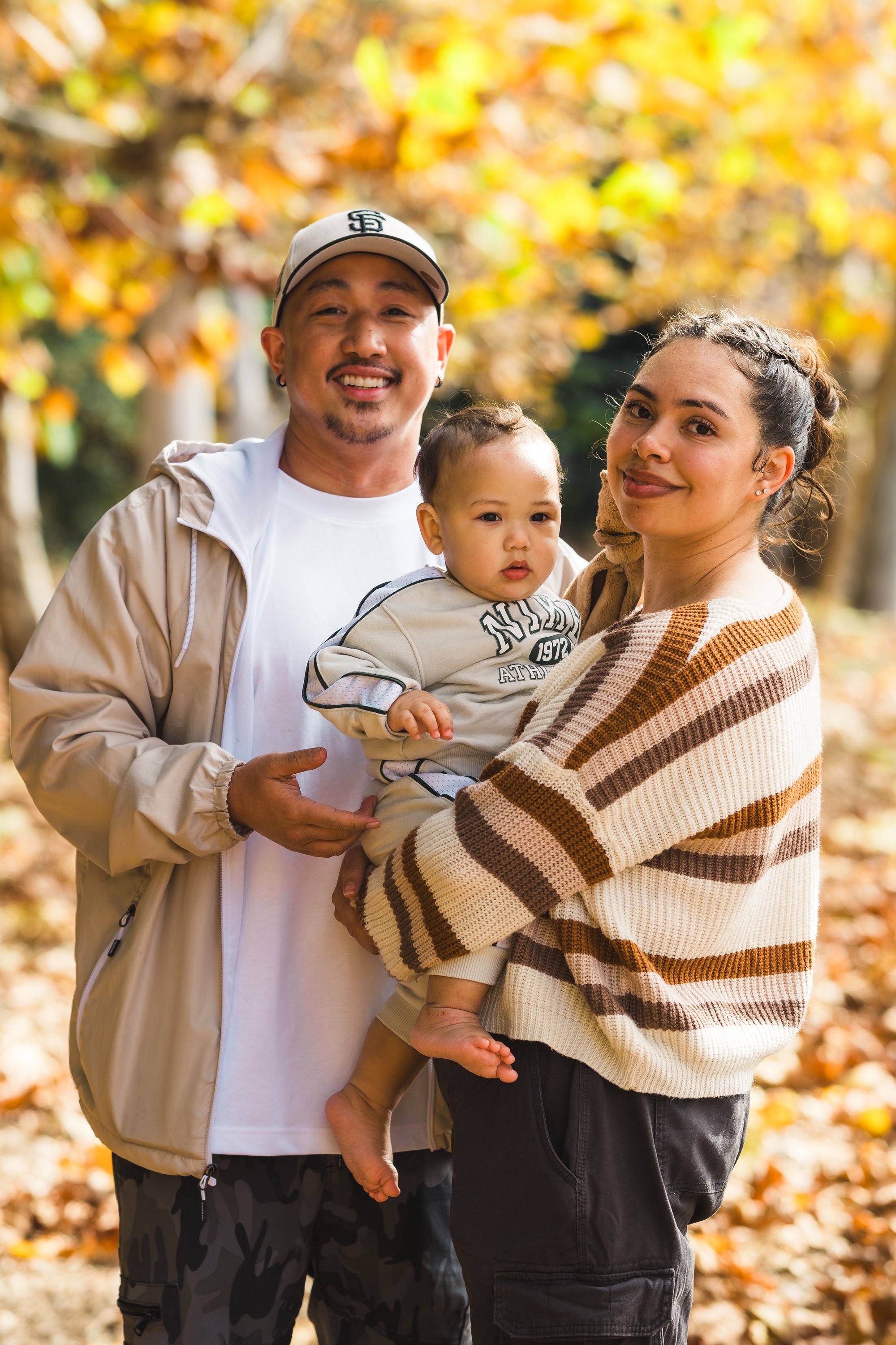
In blossom week, from late March into early April, both are transformed and both are full; the bloom lasts about a week and the date moves by up to a fortnight year to year. In late November the ginkgo and maples turn, the light is clean and cold, and the same lawns are half empty.
Boats at Inokashira, and the river under the Skytree
Inokashira Park, five minutes on foot from Kichijoji station on the Chuo and Keio Inokashira lines, is built around a pond with rowing boats and swan boats on it. Children who will not stand still for a portrait will sit perfectly happily in a boat, and a boat solves the other problem too: it puts the family together, in one frame, facing the same way. Cherry trees lean over the water in spring. The boat concession has its own hours and closes in bad weather and for maintenance, so check before you build the session around it.
The eastern answer is the Sumida. From either bank the Skytree stands clear above a low roofline, the red span of Azumabashi gives you a foreground, and Sumida Park runs under cherry trees on both sides. It is flat, wide, stroller-friendly and quiet at both ends of the day — and it is windy, which small children mind more than adults do.
What clients say about this kind of shoot
Marvin is so nice ! and also knows good spots where to take photos ✨✨✨ I RECOMMEND
— Btihal on Marvin T.
Working with Deniz was such a pleasure! He knew great spots to photograph that made the photoshoot exactly how I envisioned. I would certainly recommend this to any tourist or any local to Tokyo looking to elevate their images while in Japan. He was professional, kind, & extremely friendly. He gave direction when needed and communicated effectively. 10/10!! 😊
— Rebecca R. on Deniz D.
Deniz did an exceptional job with my shoot, customized it to my liking, and made me feel comfortable throughout the whole process. Highly recommend him for indoor/outdoor shoots around Tokyo!
— Molly C. on Deniz D.
A lovely experience. Marvin knew all the good spots and led the way. No thinking necessary on my part, which I loved. A pleasure to work with.
— Siobhan on Marvin T.
Marvin is FANTASTIC! He captured amazing photos of us and they were exactly what we were wanting from the session. Marvin knows all the best spots and ensures you have the best experience. Highly recommend Marvin’s photography services.
— Sara on Marvin T.
We had such a great photography experience with OKINI PHOTO TOUR! If you’re looking for an Osaka photographer, especially for a couple photoshoot in Osaka, I would definitely recommend them. The photographer made us feel comfortable from the beginning and guided us naturally with poses, so even if you’re not used to being in front of a camera, the experience is very relaxed and fun. What I really liked was that this wasn’t just a typical photoshoot. We walked around Osaka and enjoyed the city while taking photos, so it felt like both a photo tour and a local Osaka experience. The photos around Dotonbori and Osaka’s neon streets were especially beautiful. The photographer knew where to shoot, how to use the city lights, and how to capture natural moments between us. For couples traveling in Japan, honeymooners, or anyone searching for couple photography in Osaka, an Osaka travel photographer, or a Dotonbori photoshoot, OKINI PHOTO TOUR is a great choice. A wonderful way to keep memories from our trip to Osaka. Highly recommended!
— 伊藤尚也 on Soh
Prams, lifts and the practical layer
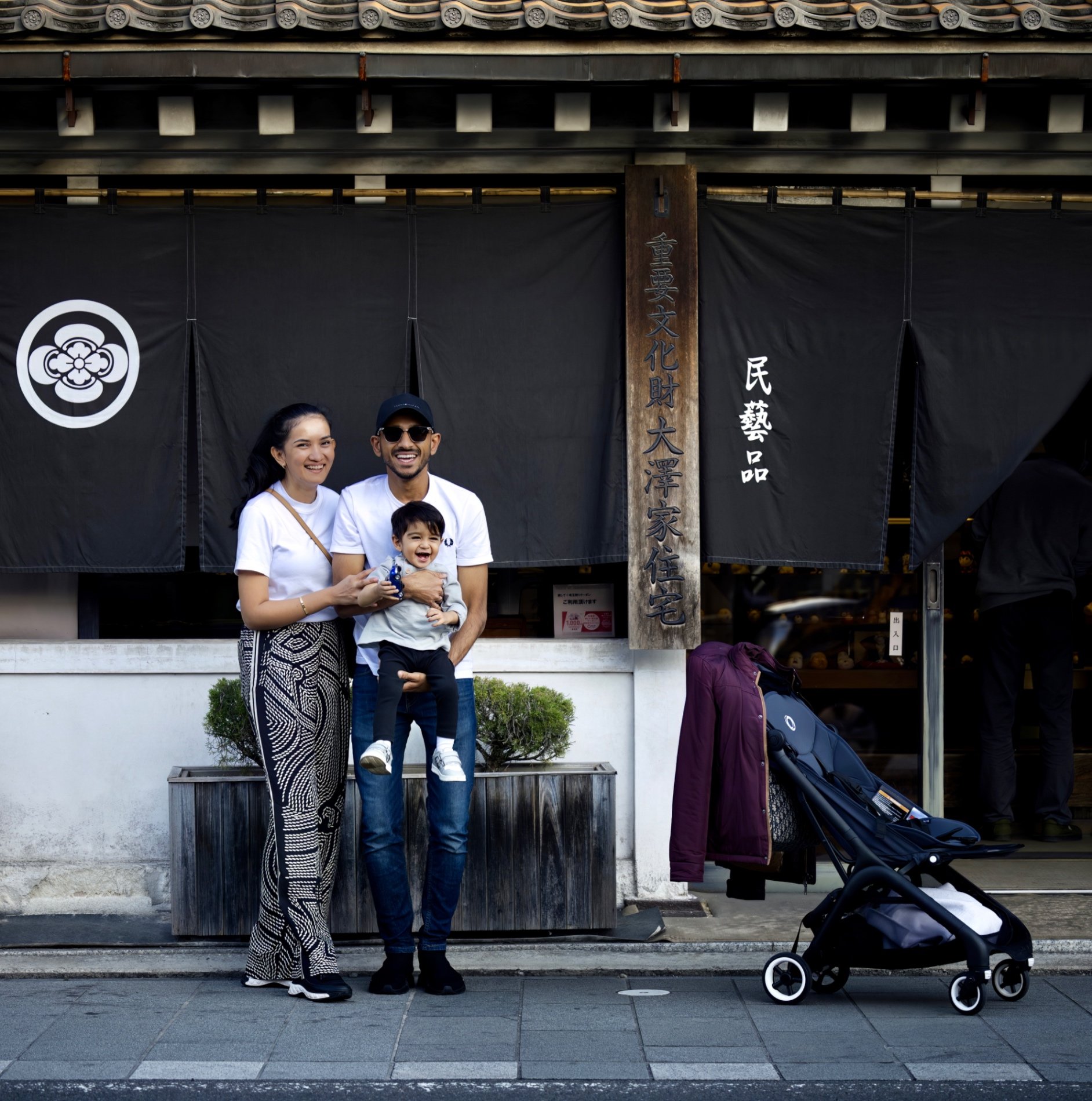
Tokyo is far more accessible than it looks, but the accessibility is hidden. Most large stations have lifts; they are often at the far end of a platform or require two separate lifts to reach the street, so allow more time than the map suggests. Station staff are used to being asked and will walk you to the right one. Some trains mark a stroller space on the floor near the doors. At rush hour — roughly eight to nine in the morning and six to seven in the evening — a pram on the Yamanote line is a genuinely bad idea, which is another argument for the dawn session.
Nursing rooms are rare inside stations and standard in the department stores attached to them, usually upstairs or in the basement, with hot water, a changing table and somewhere to sit; the floor guide marks them. Convenience stores are the honest answer to lunch: rice balls, sandwiches, fruit, no queue and no half-hour wait with a hungry child. Buy, sit down, eat, and carry the rubbish with you, because there are almost no public bins.
Rain, August heat and what to do instead
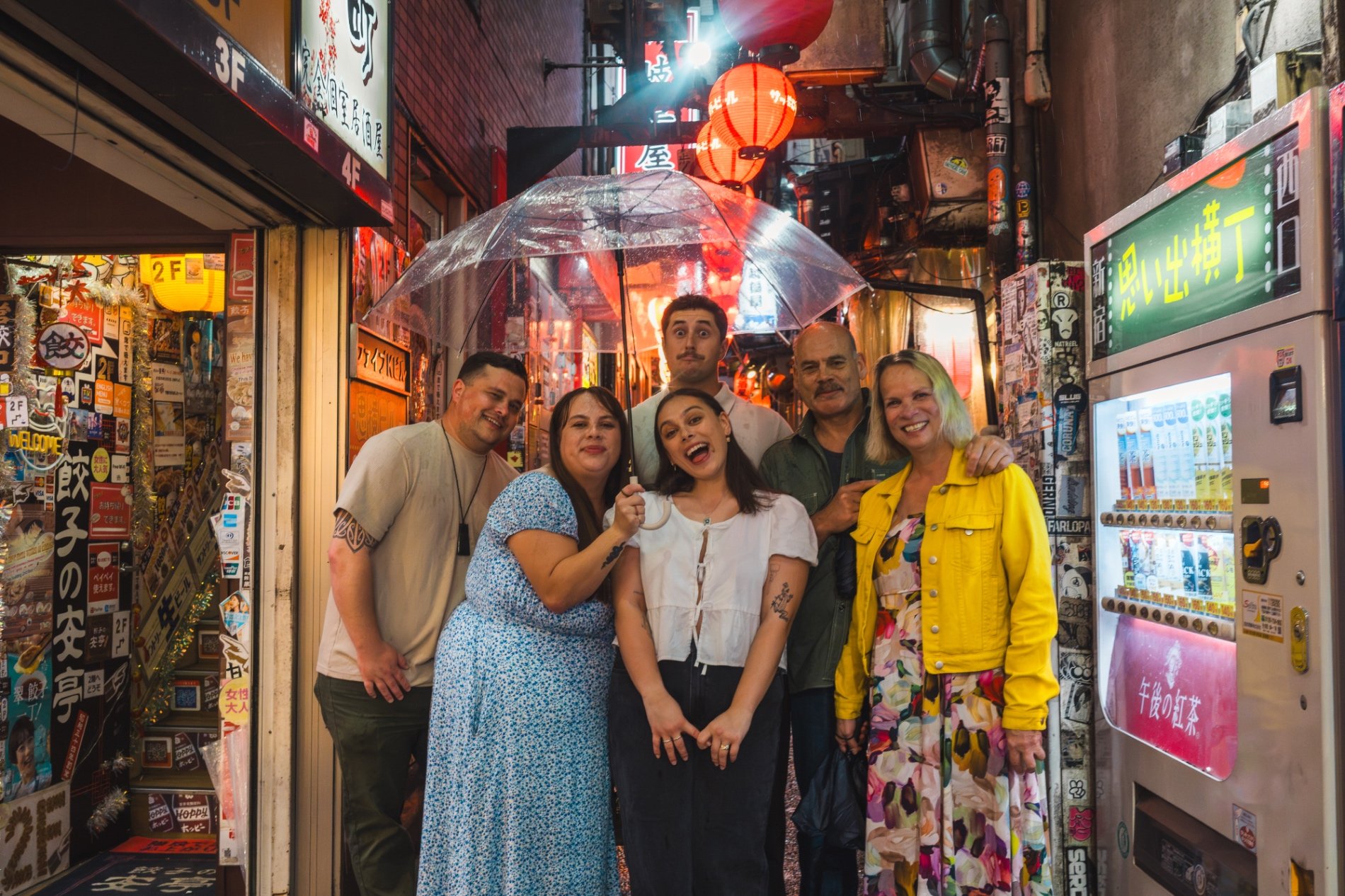
Rain is not a cancellation. The covered shopping streets — every neighbourhood has one — give you a dry, lit corridor of signage, shopfronts and people, and they photograph as Tokyo far better than a park does. An umbrella is a prop, not a problem, and the rainy season from early June into mid-July is warm.
August is the real problem. It is hot and very humid, and a small child in the middle of a Tokyo afternoon in August is a heat risk rather than a photographic subject. Shoot from first light and be done by eight, or take the hour before sunset; carry more water than you think; plan a route with shade and a cold drink at the end. The same logic applies to the middle of any summer day: the light is bad, the crowds are worst, and nobody is enjoying themselves.
Kamakura and the Enoden, when the city is too much
An hour south of Tokyo on the JR Yokosuka line, Kamakura is the release valve. The Great Buddha of Kotoku-in sits outdoors in an open courtyard, which children find far more interesting than another hall; Hase-dera's terraced gardens look out to sea; and the Enoden, a single-track tramway, runs between back gardens and then along the coast to Enoshima. The train is half the day out: small, slow, and the front window is at child height.
One caution. The level crossing at Kamakurakokomae, with the sea and the rails in one frame, became famous through a comic and now draws crowds large enough that the city posts a guard on it during the day. It is a working railway and a public road: stand on the roadside, never on the tracks, do not linger when the barriers lift, and follow the staff. Houses overlook the slope, so keep it quiet. The beach at Yuigahama is the better bet with small children anyway — open sand, no rules to break, and the light comes in low over the water in the late afternoon.
Planning a family photoshoot in Tokyo
Book the morning, not the afternoon, and book it early in the trip while the jet lag is still on your side. Sixty minutes is the right length with anyone under about six — it is one location, done properly, with time for the session to stop while somebody has a snack and starts again. Ninety minutes to two hours works for older children and lets a photographer move you between two places.
Tell the photographer the children's ages and when they nap. That one piece of information changes the start time, the route and the shot list more than any preference about style. Somebody who photographs families here knows which gate is quiet on a Tuesday, which station has the lift you need, and when to stop pressing for the posed frame and let the children play.
Read what a family photoshoot usually covers, browse the destination pages for Tokyo and Kamakura, see how it works, and book a photographer online.
Want professional photos in Tokyo?
Browse portfolios, compare packages, and book a verified local photographer in minutes.