Kamakura Photoshoot Guide: the Great Buddha, the bamboo and the Enoden at the sea
Kamakura was the seat of power in Japan eight hundred years ago and kept the temples after the power moved away. What makes it worth a session is the combination: a bronze Buddha in the open air, a bamboo grove you can stand in alone, and a single-track tram that comes out of the houses at the sea, all inside a town you can cross in twenty minutes. It is an hour from Tokyo, which means most people arrive at eleven and leave at four. Shift either end of that and you have the place to yourself.
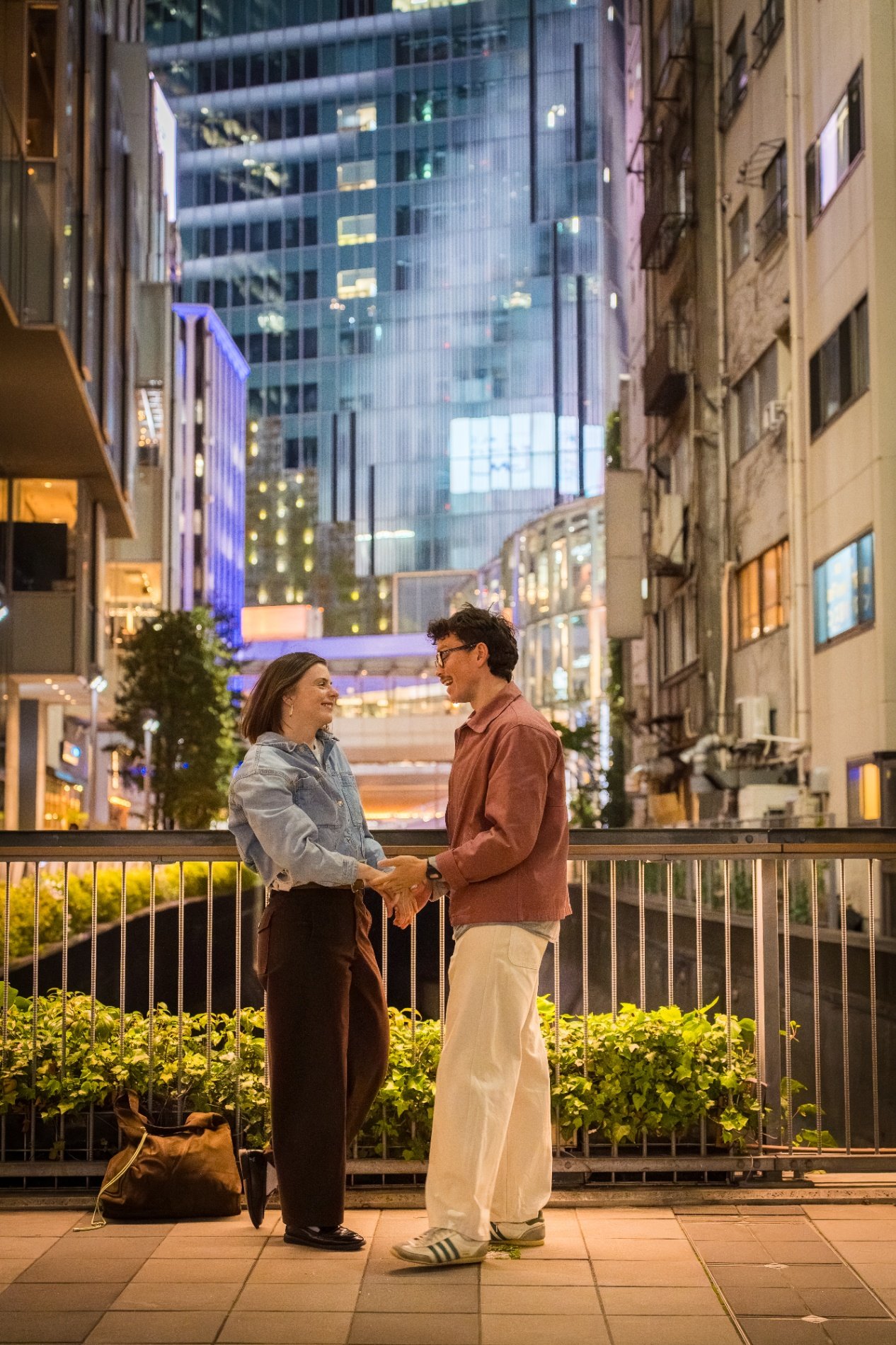
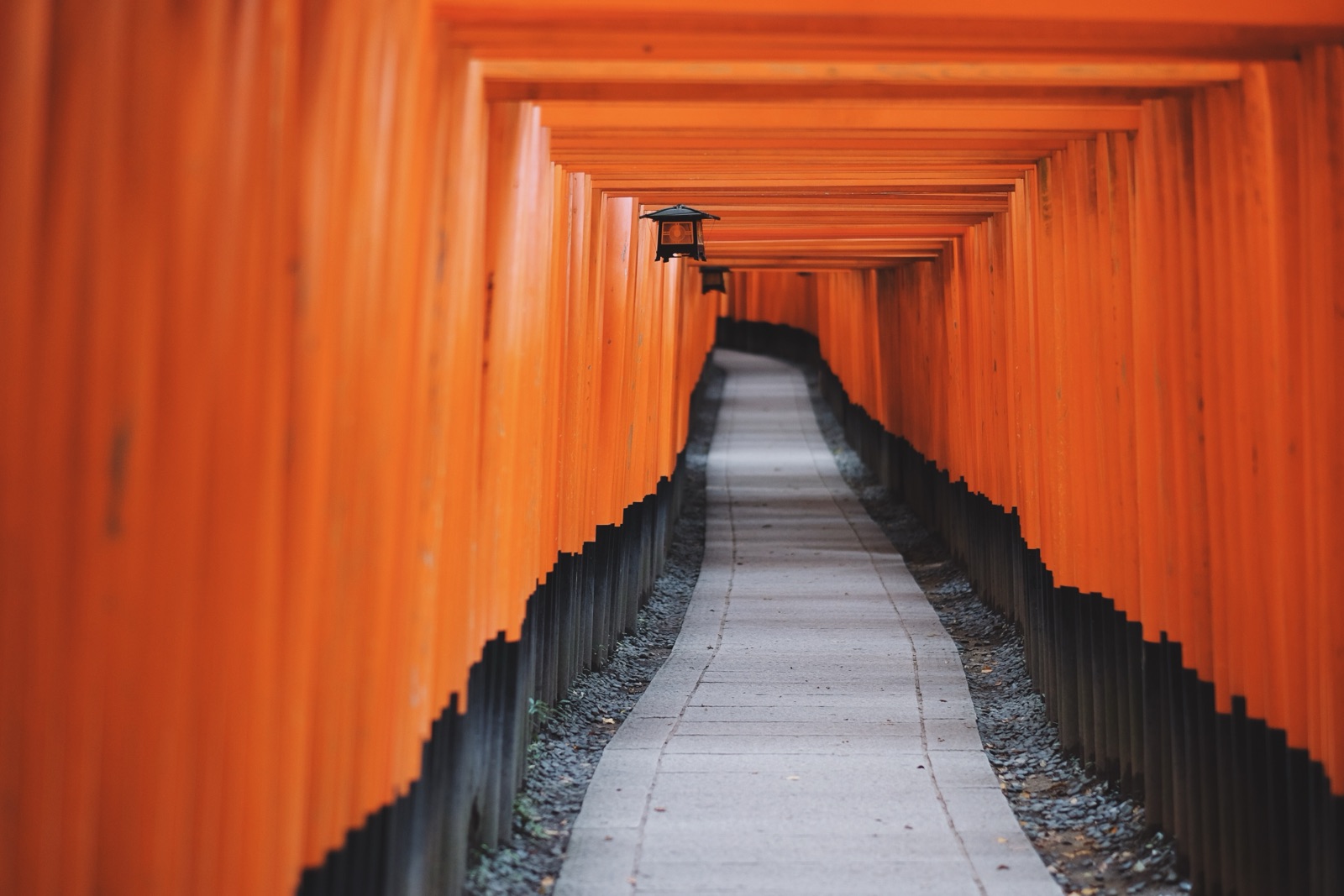
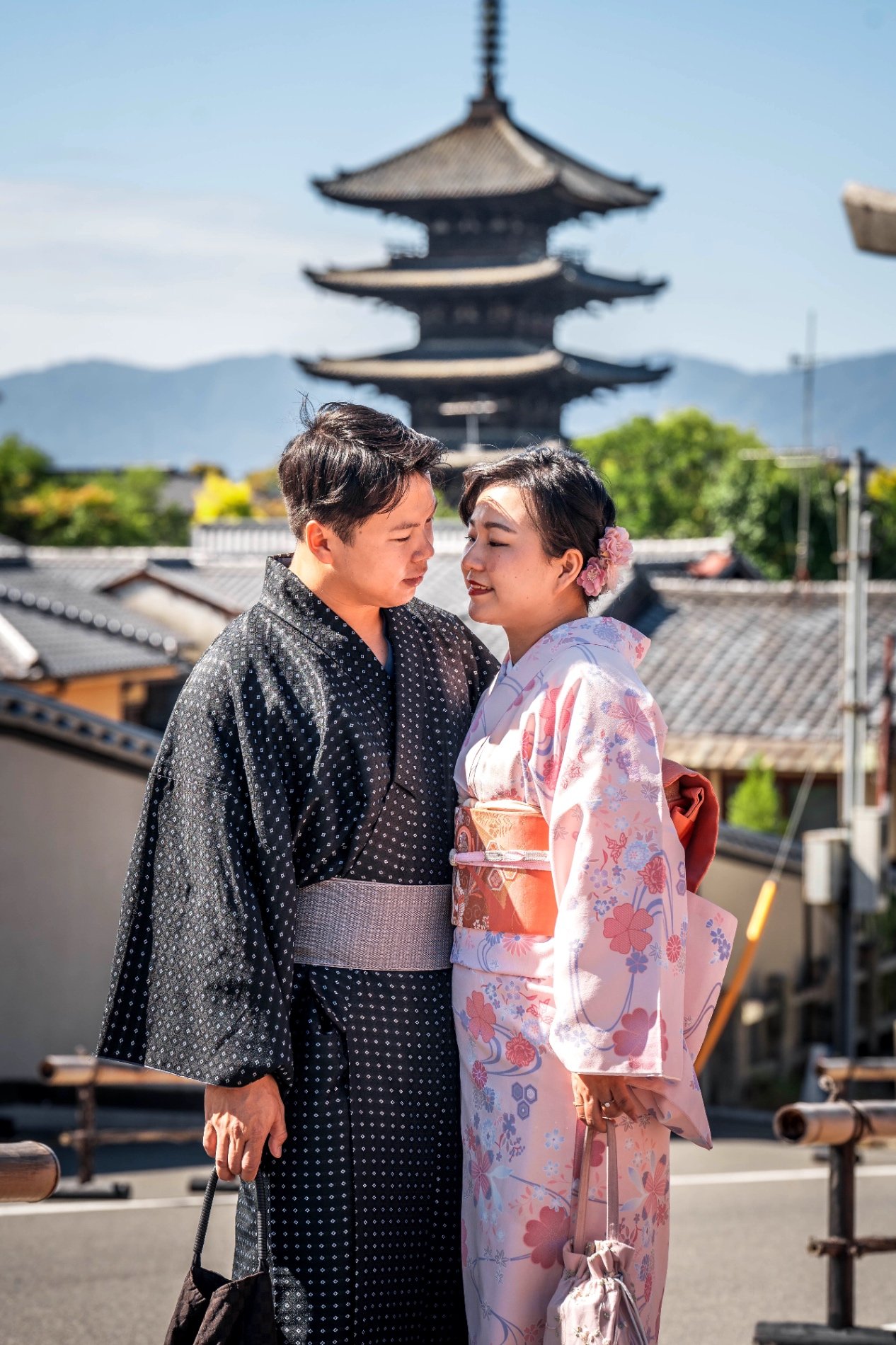
Real shots from Kamakura
The Great Buddha at Kotoku-in
The hall that once covered the Great Buddha was destroyed in the fifteenth century and never rebuilt, and that accident is the whole photographic argument: instead of a dark interior with a statue in it, you get weathered bronze under daylight with the sky and the wooded hillside behind. The figure faces south, so it is lit from the front through the middle of the day and hardest to shoot at noon, when the sun flattens it. The first hour after opening and the last before closing are the ones — low light rakes across the face and the folds of the robe, and the precinct is nearly empty.
Stand to one side rather than square on. The three-quarter view gives the shoulders and the profile against the trees, and it keeps the queue for the front view out of the frame. The precinct is small, ticketed, and keeps its own seasonal hours; there are usually limited hours when you can step inside the statue, and both of those are worth checking before the day rather than after. School groups arrive mid-morning in term time and they arrive all at once.
Kotoku-in is about ten minutes on foot from Hase station on the Enoden, up a street of shops that is itself worth a frame early, before the shutters go up.
The bamboo at Hokoku-ji
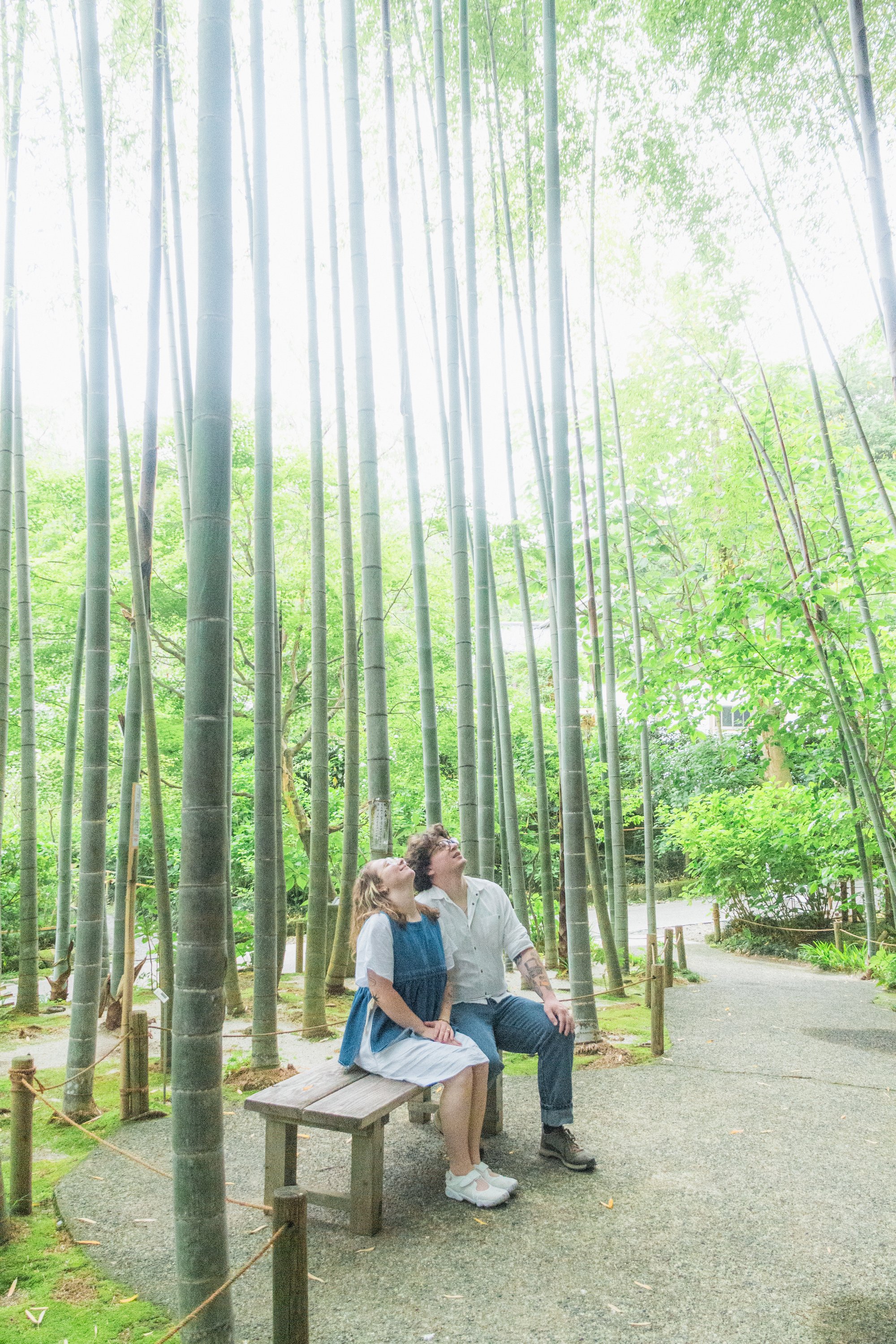
Hokoku-ji's grove is a small walled square of bamboo east of the centre, a fraction of the size of the famous grove in Kyoto, and that is exactly why it works: you can stand in it without a hundred people behind you. Paths run between the stalks, the ground is swept, and there is a tea house at the end of the walk where matcha is served looking back into the green.
Light is the thing to plan. Bright overcast is best; in direct midday sun the stalks throw hard stripes and the top light goes green on skin. It is dark in there, so this is a place for stillness rather than movement. The garden is ticketed, keeps short daytime hours and can close in bad weather, and whether a tripod or a booked photographer is welcome is the temple's call — ask first. The bus from Kamakura station takes about ten minutes and the walk from the stop is short. Two neighbours are worth the extra half hour: Sugimoto-dera, with its worn mossy steps, and Jomyo-ji next door.
Hase-dera, the terraces and the hydrangeas
Five minutes from the same station, Hase-dera climbs a hillside in terraces, and from the upper level you look over the town roofs to Yuigahama and the bay — one of the few frames in Kamakura that puts temple and sea in the same picture. The gardens are planted for every month of the year, there is a cave shrine at the bottom, and the rows of small Jizo figures on the slope are memorials rather than decoration: photograph the place, not them in close-up.
In June the hillside hydrangea path is the busiest thing in the town. In peak weeks the temple runs a separate numbered ticket for it, sometimes bookable in advance, and the wait can be long; the arrangement changes from year to year, so check the temple's own information before planning a June session around it. Nearby Meigetsu-in, the other hydrangea temple, is at Kita-Kamakura and has the same problem for the same fortnight — a weekday at opening time is the only civilised way to do either.
Kita-Kamakura, Tsurugaoka Hachimangu and the streets
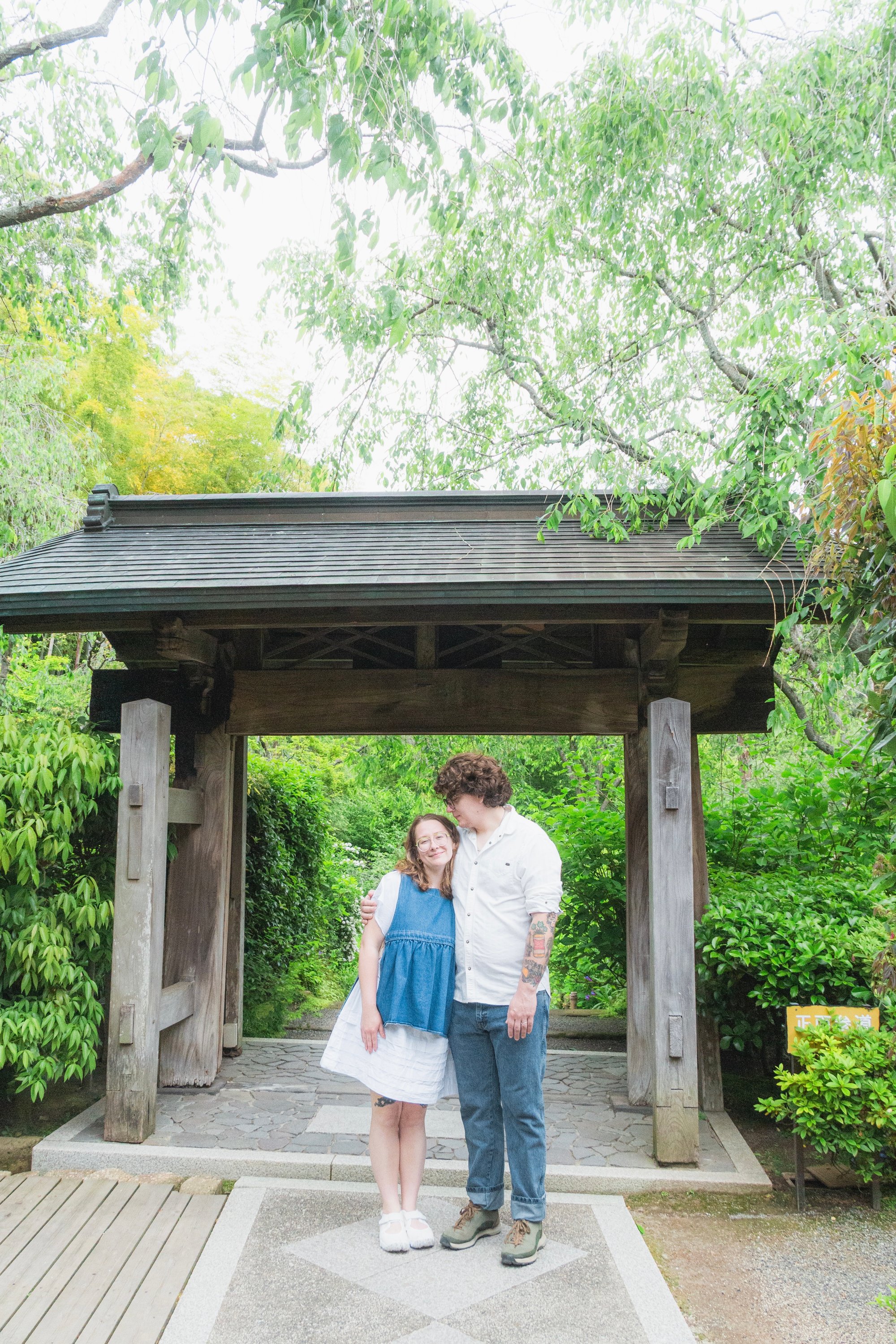
One stop north of Kamakura, Kita-Kamakura is where the big Zen precincts are: Engaku-ji effectively begins at the station exit, Kencho-ji is a walk down the road, and both give wooden gates, cedar avenues and raked gravel that are quiet early and steadily busier after ten. The walk south from there into town takes about half an hour and passes several smaller temples.
In the centre, Tsurugaoka Hachimangu closes the long avenue of Wakamiya-oji, with the raised Dankazura path running up the middle of it and a wide flight of steps at the end. It is a working shrine and the first days of January are extraordinarily full. Komachi-dori, the parallel shopping street, is packed from mid-morning; the side lanes off it are where the pictures are.
What clients say about this kind of shoot
We had such a great photography experience with OKINI PHOTO TOUR! If you’re looking for an Osaka photographer, especially for a couple photoshoot in Osaka, I would definitely recommend them. The photographer made us feel comfortable from the beginning and guided us naturally with poses, so even if you’re not used to being in front of a camera, the experience is very relaxed and fun. What I really liked was that this wasn’t just a typical photoshoot. We walked around Osaka and enjoyed the city while taking photos, so it felt like both a photo tour and a local Osaka experience. The photos around Dotonbori and Osaka’s neon streets were especially beautiful. The photographer knew where to shoot, how to use the city lights, and how to capture natural moments between us. For couples traveling in Japan, honeymooners, or anyone searching for couple photography in Osaka, an Osaka travel photographer, or a Dotonbori photoshoot, OKINI PHOTO TOUR is a great choice. A wonderful way to keep memories from our trip to Osaka. Highly recommended!
— 伊藤尚也 on Soh
Soh was the best! He knew all the hidden gems in Tokyo and we had the best shoot with him! Super professional, on time and gave great creative direction!
— Cathy D. on Soh
Soh was INCREDIBLE! The shots he got for us were so awesome, he knew so many amazing off the beaten path spots for pictures. 10/10 if you want awesome photoshoots come here!!
— Yeremi H. on Soh
I had such a great photoshoot experience with Okini! 📸✨ It was honestly so much fun, and the photos turned out absolutely beautiful. The Tokyo Tower spots were perfect, and our 2-hour photoshoot gave us so many amazing shots. Everything felt fun, relaxed, and worth it from start to finish. Definitely such a memorable experience and one I’d recommend if you want beautiful photos in Tokyo! 🗼💕
— Maria D. on Soh
⭐⭐⭐⭐⭐ I can’t recommend Soh enough! He captured one of the most important moments of our lives—my surprise engagement at Tokyo Tower—and absolutely exceeded every expectation. From the moment we met, Soh made the entire experience feel natural, comfortable, and special. After capturing the proposal perfectly, he took us to several other incredible spots around Tokyo so we could get photos that truly captured the energy, beauty, and authentic feel of the city. Every location added something different, and he knew exactly where to go and how to capture the moment. The photos are more than just pictures—they’re memories we’ll have for the rest of our lives. Looking back at them instantly brings us back to that night in Tokyo. Hiring Soh was one of the best investments I made on this entire trip, especially for such an important moment. If you’re visiting Tokyo and looking for a photographer for an engagement, couples shoot, or just unforgettable memories of the city, book Soh. You will not regret it. Thank you, Soh, for helping make an already unforgettable night even more incredible! 🇯🇵💍❤️
— Rolando R. on Soh
Wonderful photo shoot in Kyoto. He took his time to help us with poses and does the editing.
— Anthony N. on Soh
The Enoden, the crossing and the coast
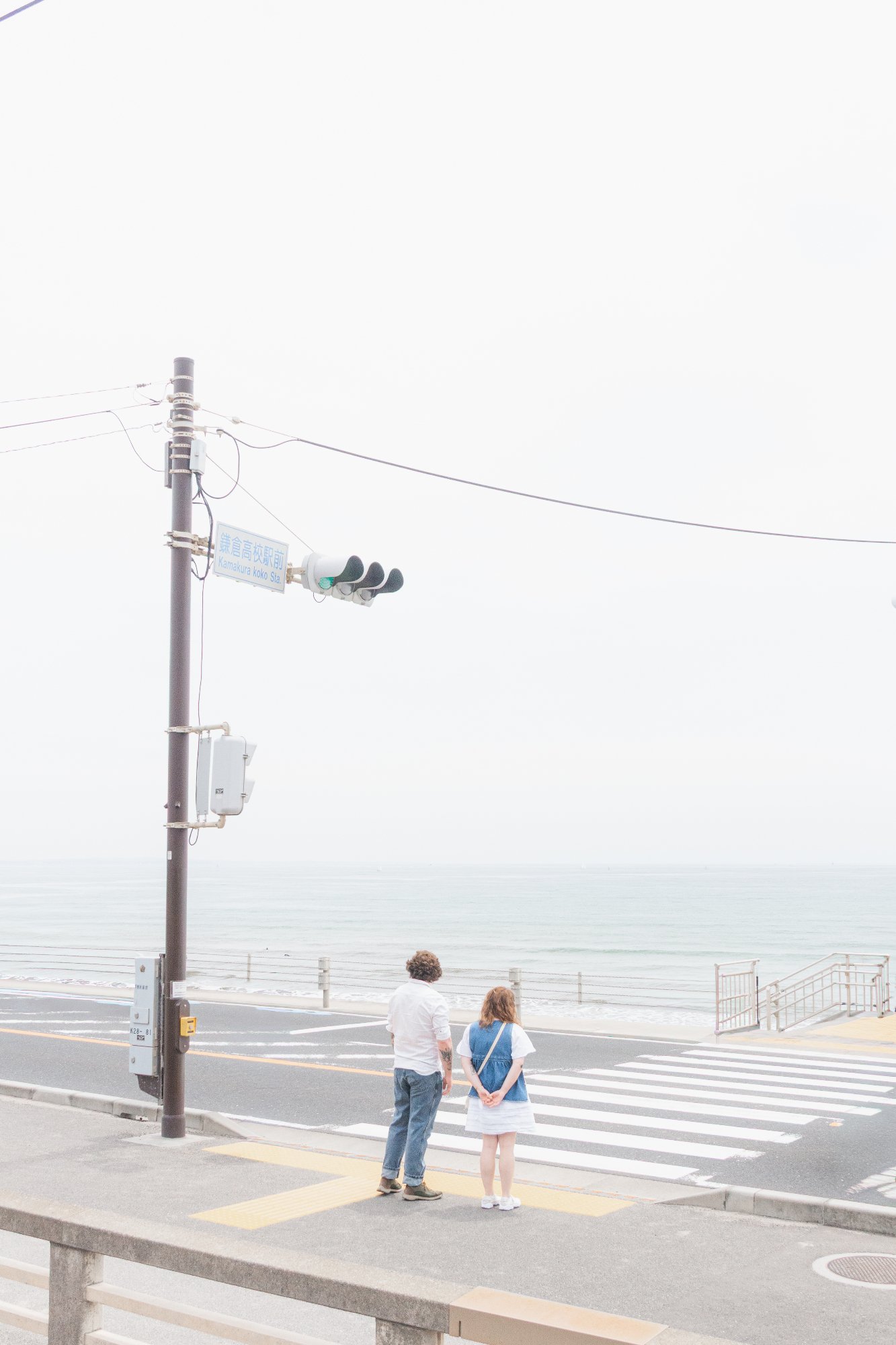
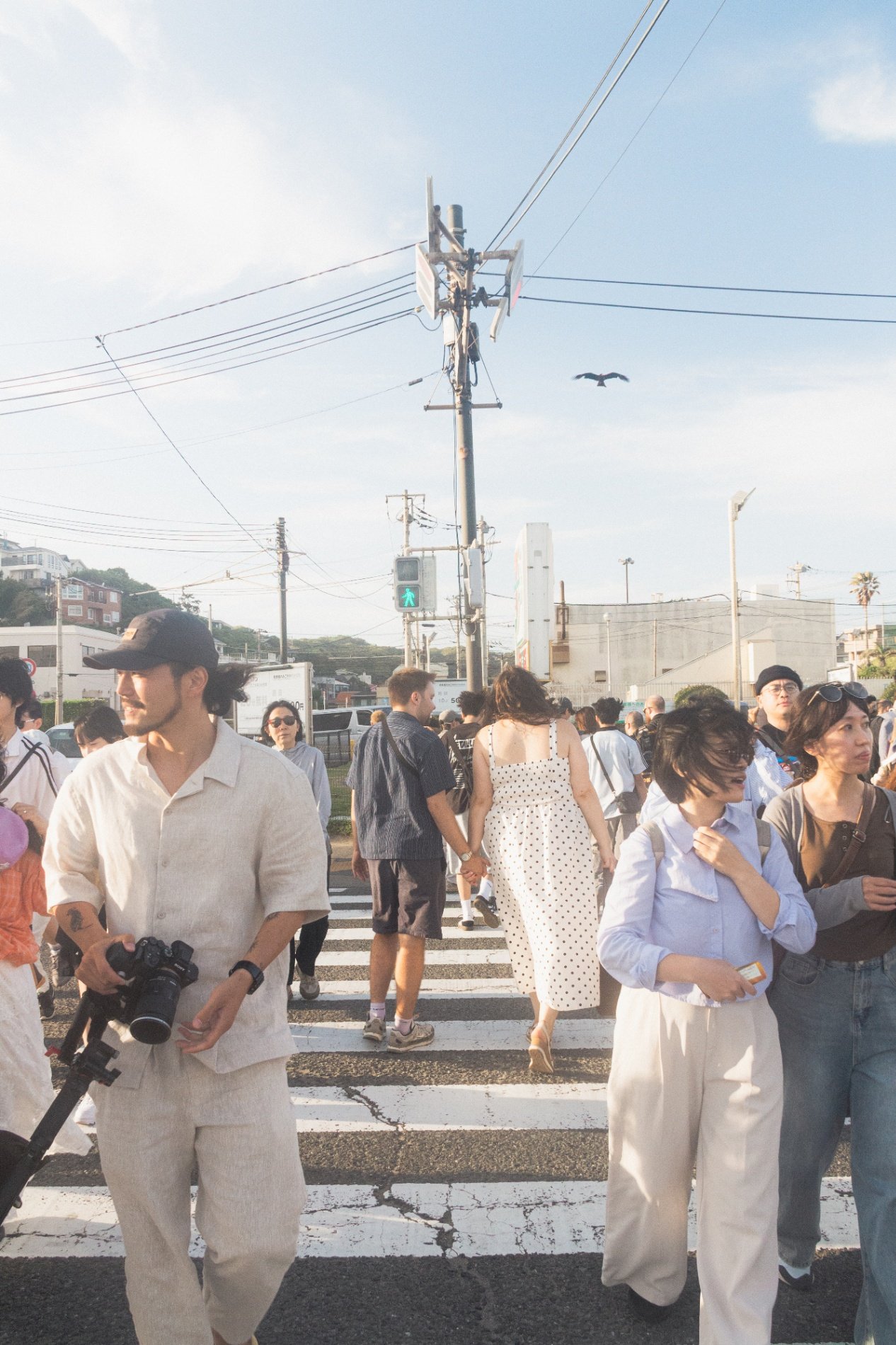
The Enoden is a small train that runs from Kamakura to Fujisawa, threading between garden walls and house fronts before it comes out at the coast. That transition is the reason it is on half the postcards in Japan, and the level crossing by Kamakurakokomae — train, road, beach, ocean — is the single most photographed spot in the town.
Be straightforward about how that one works now. It is a live road on a live railway, attendants are posted there, the city runs patrols and multilingual signs, and residents have spent years asking visitors to stop standing in the carriageway for a photograph. So: stay on the pavement, do not block the crossing or a driveway, do not point a camera into houses, follow the marshals without arguing, and assume a tripod is not happening. A session here is a few frames from the footpath between trains, not a shoot that owns the crossing. Handled quickly it is still a lovely picture; handled slowly it is the thing everyone in Japan complains about.
Further along the same line, Inamuragasaki is a small headland park with the best sunset in the area: Enoshima out in the bay and, on a clear afternoon from autumn to early spring, Mount Fuji behind it. Yuigahama beach is wide and walkable, and its last hour of light is the easiest, warmest part of a couples session.
What the seasons do here
June is hydrangea month and also rain, and the two go together: wet stone, dense colour, and umbrellas that belong in the picture rather than spoiling it. Summer puts beach houses and crowds on Yuigahama through July and August and makes the inland temples humid, which leaves sunrise as the only calm hour. Autumn colour arrives late on this coast — the last days of November into early December — and it is gentler than Kyoto's, with fewer people. Winter is the connoisseur's season: cold clear air, Fuji from the coast in the afternoon, temples with nobody in them, and the sun down before five, which makes an early-afternoon start sensible.
Getting there and building the day
The JR Yokosuka line from Tokyo Station reaches Kamakura in about an hour, and the Shonan-Shinjuku line runs from Shinjuku in a similar time; Kita-Kamakura is the stop before. The Enoden leaves from beside Kamakura station and runs every ten to fifteen minutes, so it is easy to build around, though it is standing-room only on a fine weekend. Day tickets exist for the line and whether one earns its keep depends on how many hops you make — check rather than buy automatically. Nothing here needs a car.
The natural shape of a day runs inland first and coastal second, because the light agrees: temples in the flat morning, the sea in the last hour. Kita-Kamakura, then the centre, then the Enoden to Hase for the Great Buddha, then the coast at sunset.
Planning a Kamakura photoshoot
Sixty minutes covers one thing properly — the Great Buddha and the lanes around Hase, or the crossing and the beach at the end of the day. Two hours covers a temple and the coast with a train ride between them, which is the version most couples want, and the train times are part of the plan rather than an afterthought.
Pick a weekday if you can; avoid a June weekend and the first days of January altogether. If you are coming from Tokyo for the day, take an early train rather than a mid-morning one: the difference between eight o'clock and eleven at Kotoku-in is the difference between a session and a queue.
A photographer who works here regularly knows which train gives you the sea behind it, which side of the Buddha is lit at that hour and how to get the crossing frame without becoming the problem — that knowledge is most of what you are booking. The destination page for Kamakura covers the rest of the town, couples sessions explain how a shoot usually runs, and you can book a photographer online.
Want professional photos in Kamakura?
Browse portfolios, compare packages, and book a verified local photographer in minutes.