Kimono Photoshoot for Two in Kyoto: how rental works and where it photographs
In Kyoto a rented kimono is not a costume. It is an errand: you walk into a shop near Gion or at the foot of the hill below Kiyomizu-dera, choose a garment, somebody dresses you in it, and you are out on the street for the day like anyone else. So a session here is not built around the light first. It is built around the dressing time at one end, the return deadline at the other, and the fact that you cannot walk far or fast in what you are wearing.
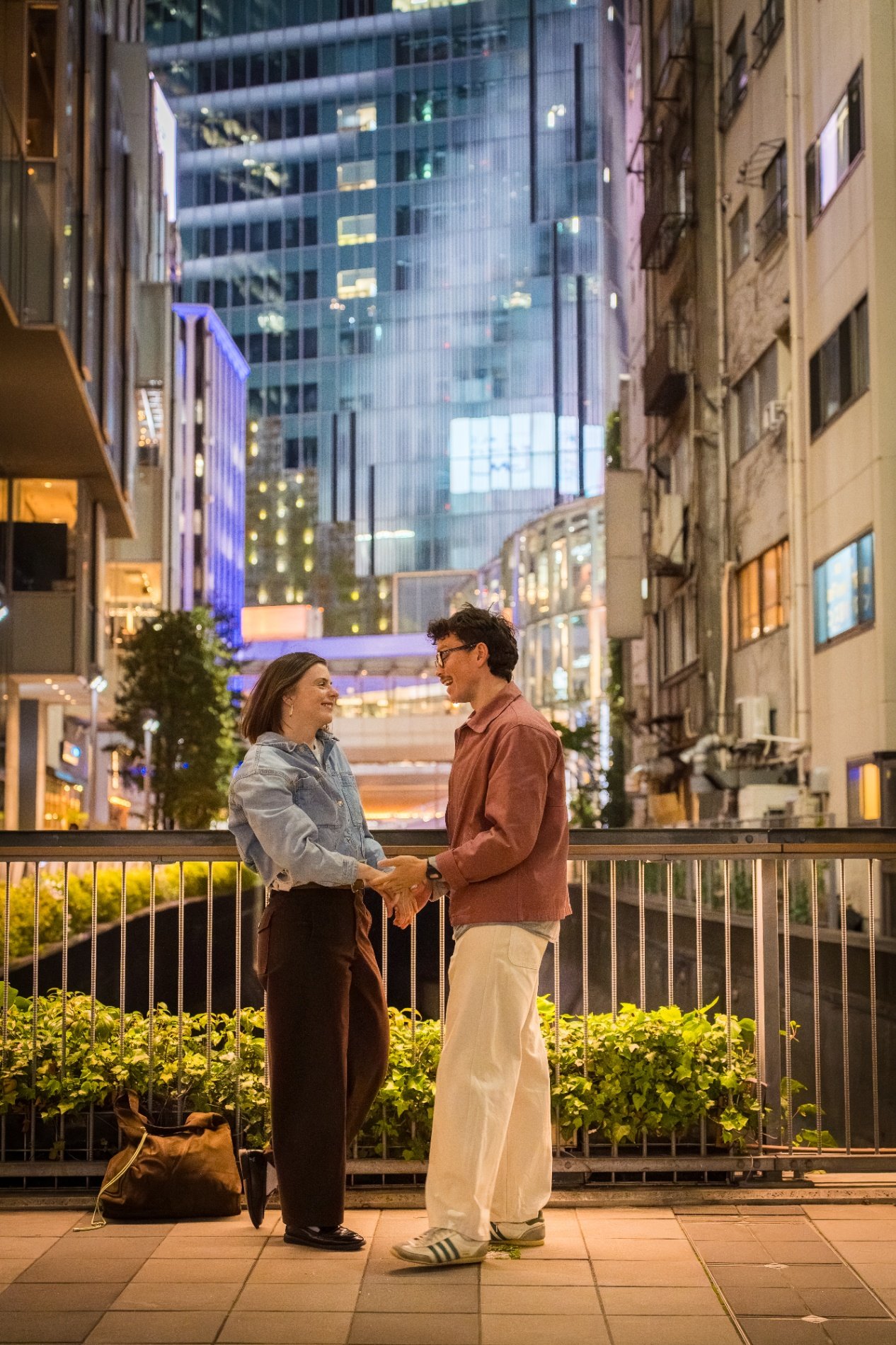
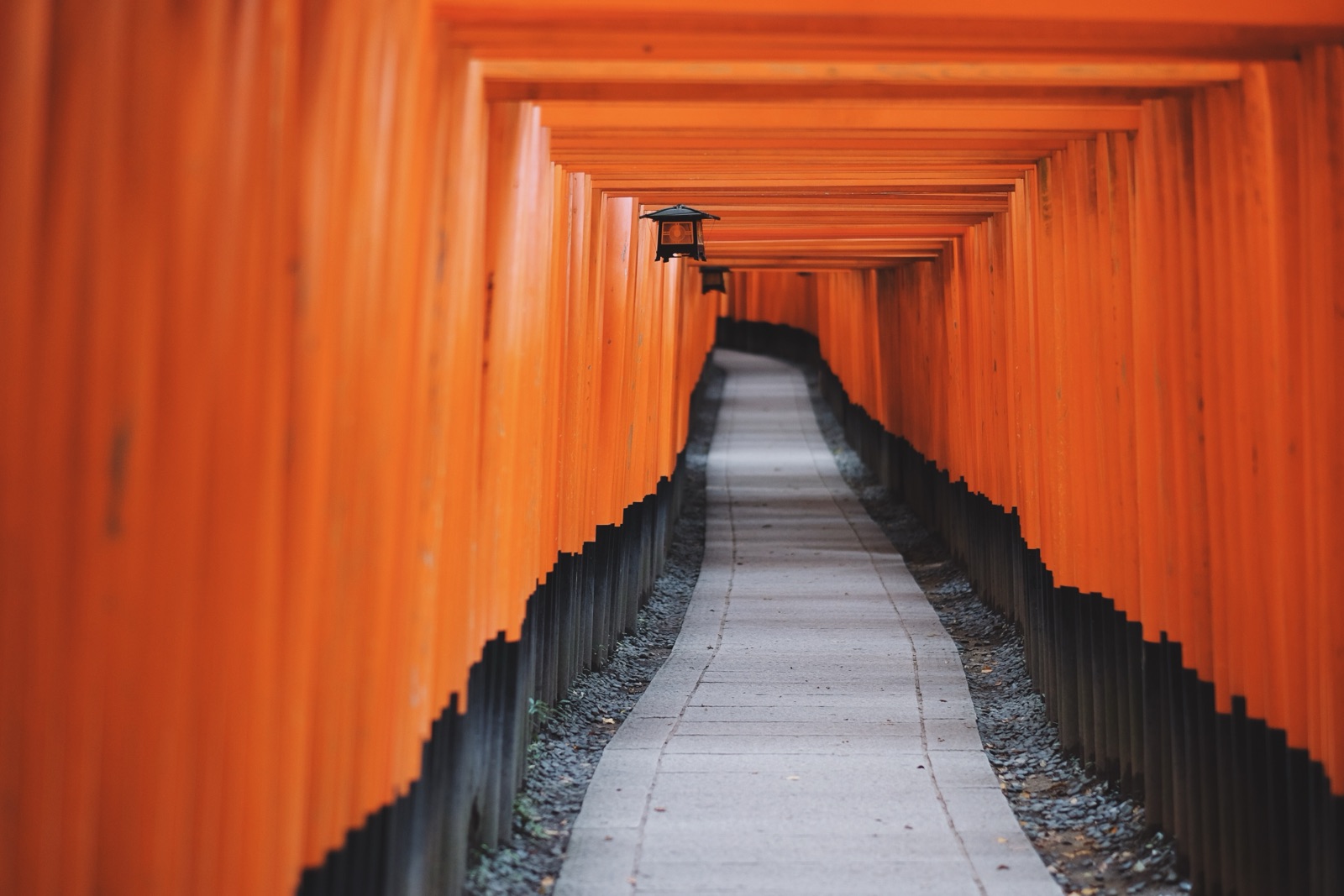
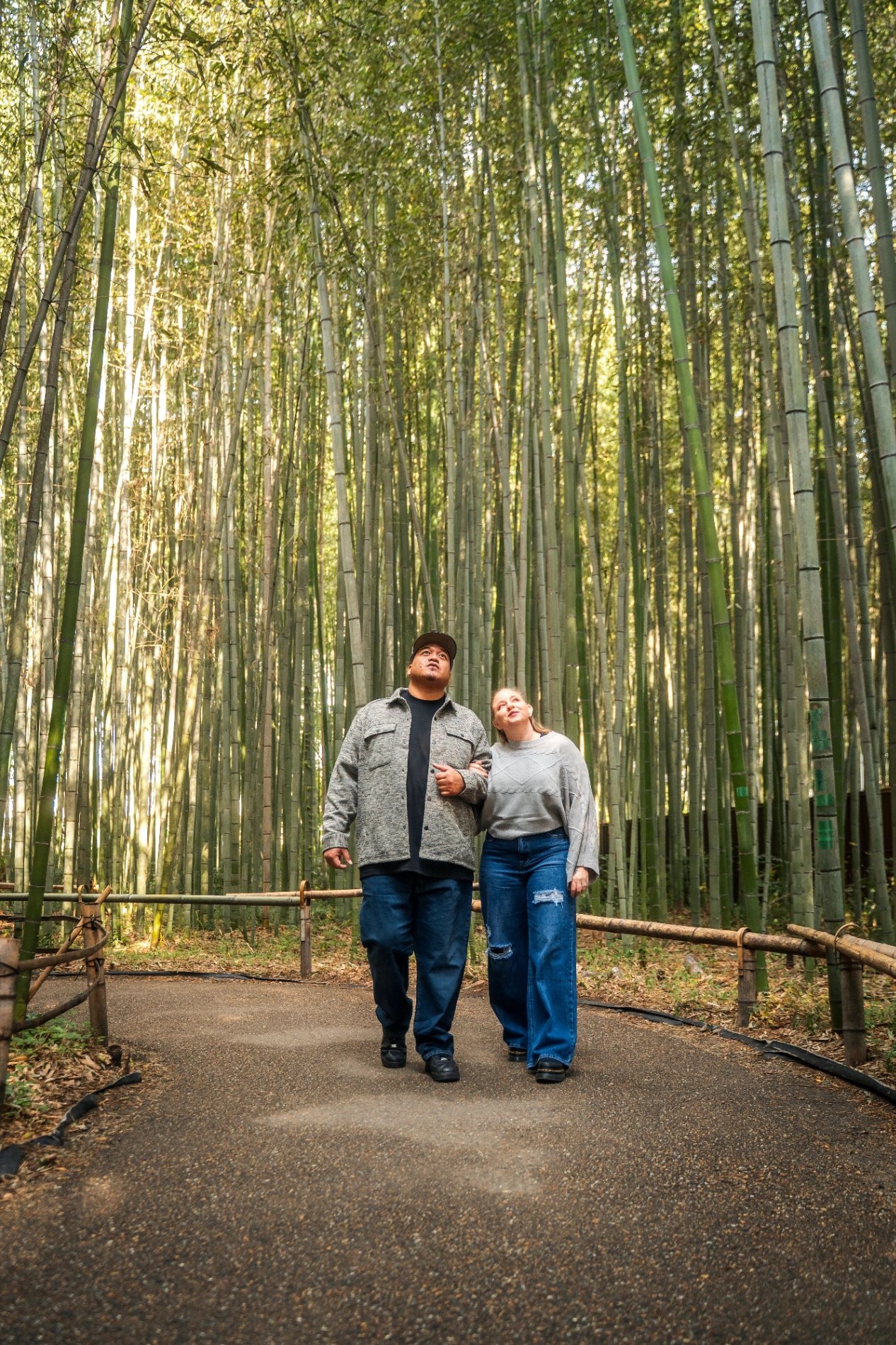
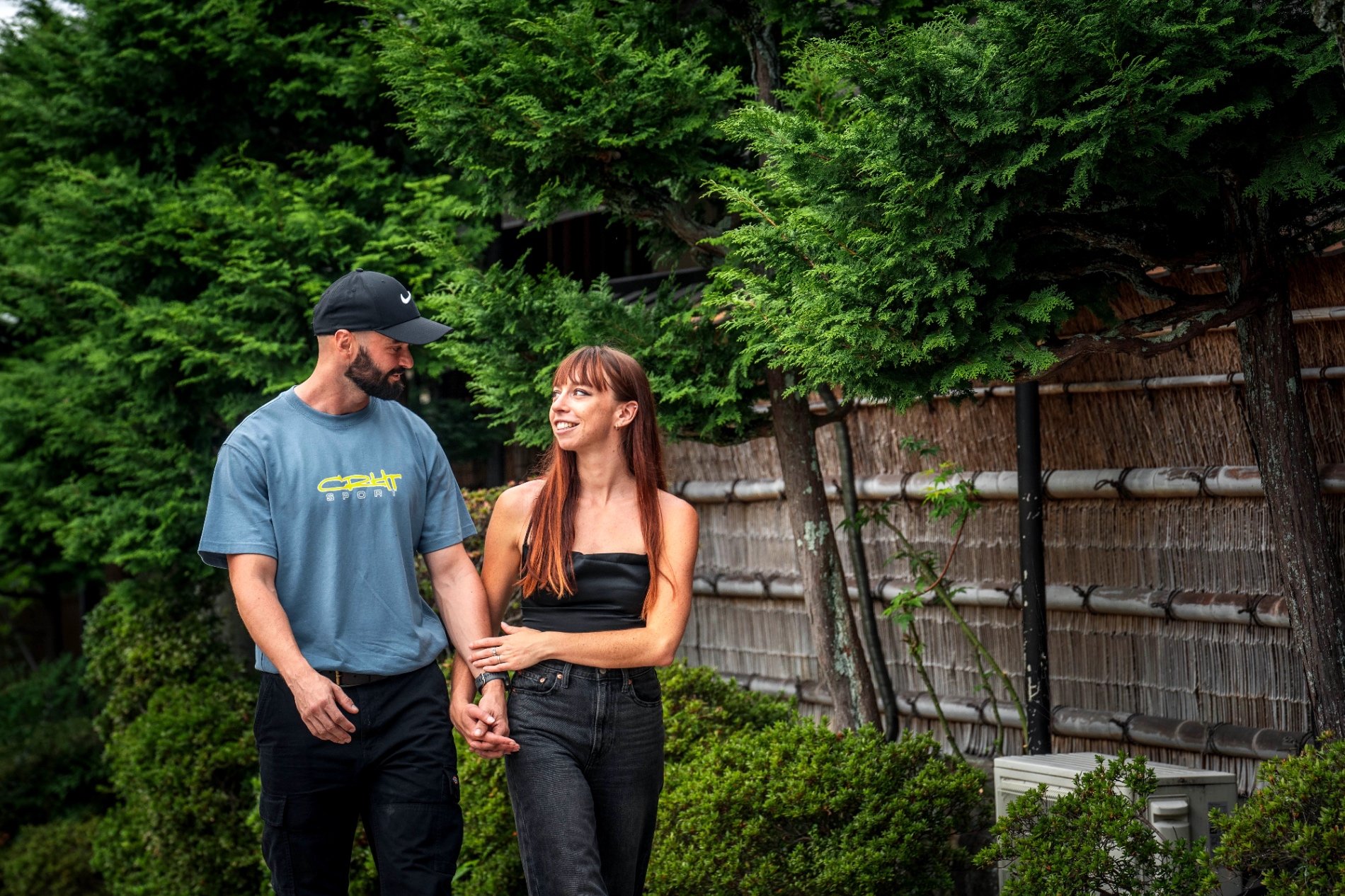
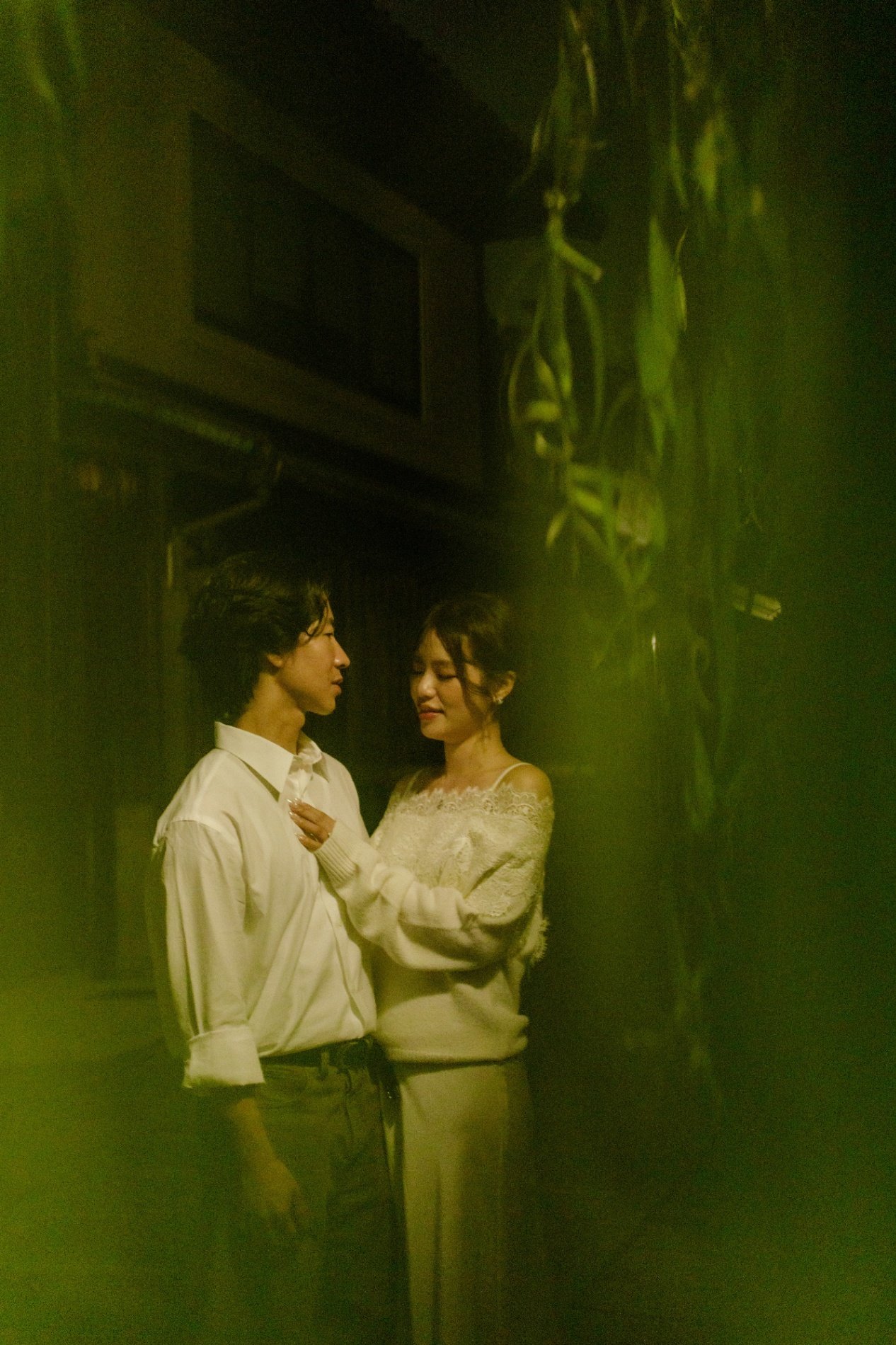
Real shots from Kyoto
How a rental morning actually works
Rental shops cluster where the visitors are: around Gion and Kawaramachi, along the slope below Kiyomizu-dera, near Arashiyama station. They open earlier than most Kyoto businesses, and the first slot is the one to book: quieter shop, the good garments still on the rail, and you reach the lanes before the crowd.
You choose a kimono, then an obi, then the small things: collar, cord, bag, footwear. A dresser puts it on you, which runs to something in the order of twenty minutes to half an hour for an ordinary kimono and longer for a formal furisode. It is done to you, not by you. Hair is usually a separate booking and a separate queue, so say when you reserve whether you want it. All in, plan on the better part of an hour before you are on the street, and set the photographer's start after that rather than at it.
The other end of the day matters more than people expect. Most shops take the garment back the same evening, by a fixed hour in the late afternoon, and they mean it. Some offer a hotel return, where you leave the bundle at the front desk for the shop to collect, and some a next-day return; both are usually paid extras, arranged when you book. Settle it first, because it decides whether a dusk session is possible at all.
What to ask for, and what photographs
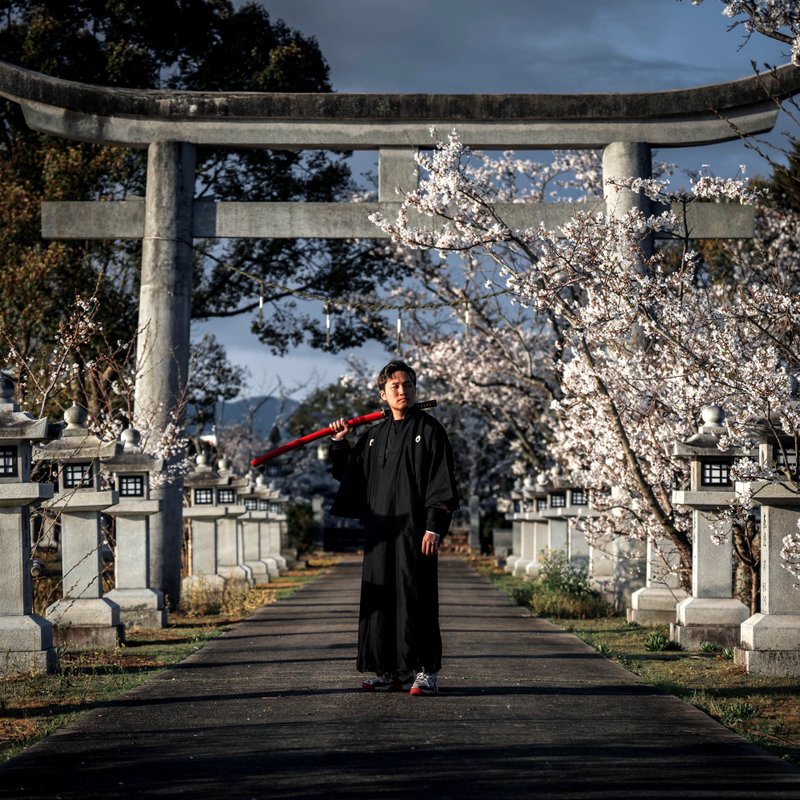
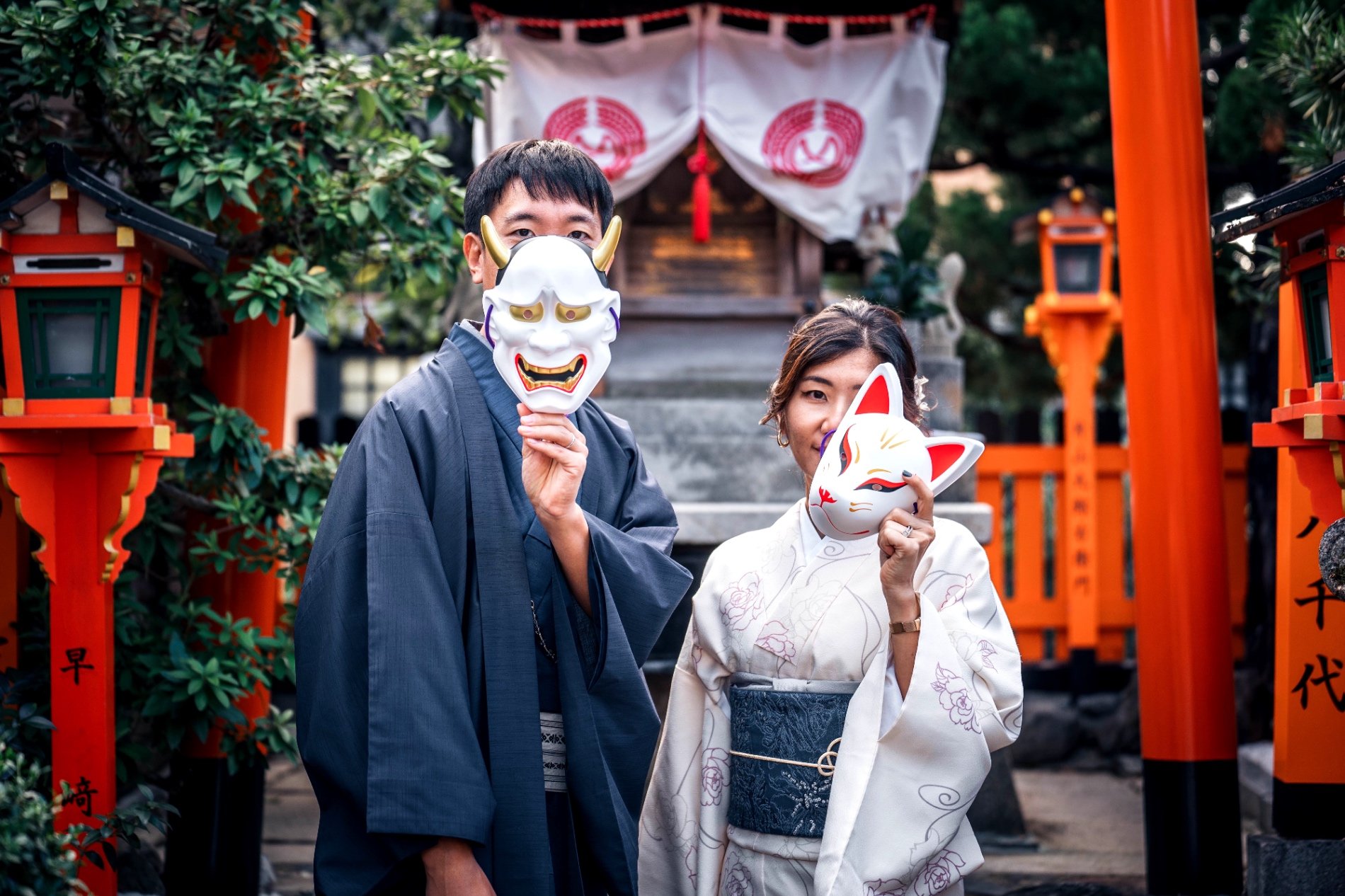
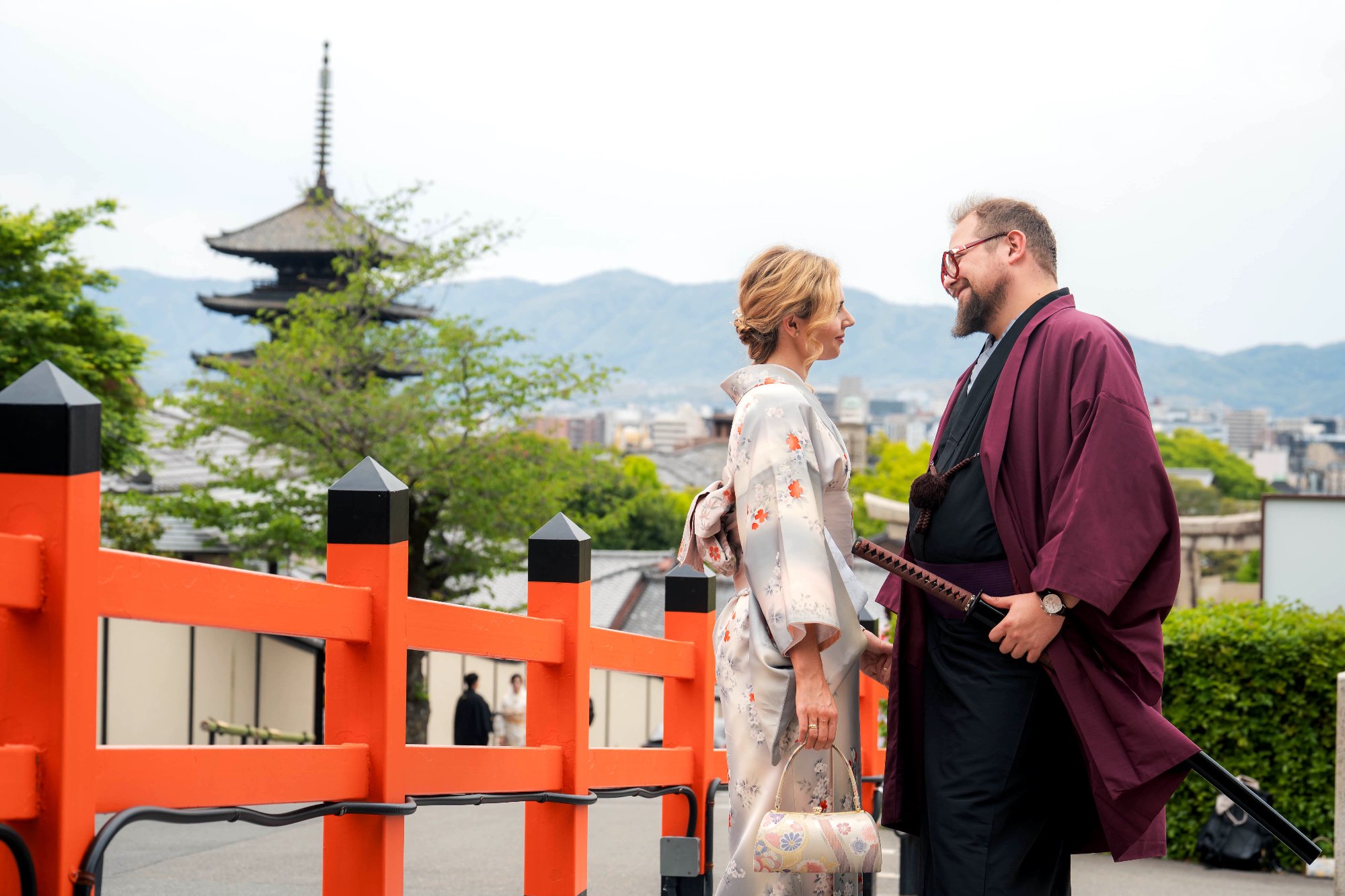
Choose for the photograph, not for the rail. Big, loud prints look wonderful on a hanger and then fight with a Kyoto lane, which is already full of pattern: lattice windows, tiled roofs, stone, bamboo. A plain single-colour kimono, an iromuji, or a quiet small-figured one holds up far better, and it lets the obi be the one strong note in the frame. Two people should not match: pick two colours that sit next to each other.
Yukata are the summer version: unlined cotton, a simpler obi, geta on the feet, worn from roughly June into September. Cooler, completely correct in August, wrong in November. For the cold months ask for the winter layers instead — a haori jacket and a shawl, and you will be glad of both at seven in the morning. The man's side of it is usually an afterthought and should not be: a men's kimono with a haori over it photographs as well as the woman's and stops the pictures looking like one person in costume beside one person in a jacket. Shops carry fewer men's sizes, so reserve rather than hope.
Wearing it well, and walking in it
Left over right, always. The left front panel crosses over the right; the reverse is how a body is dressed for a funeral, and a Japanese passer-by notices it the way you would notice a shirt on backwards. Your dresser will get it right; the risk is in the adjusting you do later in a mirror. Tabi socks go on before the kimono, because once you are wrapped you cannot reach your feet, and shoes come off wherever the floor changes: a temple hall, a tatami room, anywhere there is a step up and a rack beside it.
Then the walking. A kimono is a straight tube that halves your stride, and the footwear does the rest: zori, the flat sandals worn with kimono, or geta, the raised wooden ones usually worn with yukata. Plan the session as a short line, not a tour: three or four hundred metres end to end is plenty, and more turns the day into a march. For two districts, take a taxi between them.
The maiko question comes up, so: rented kimono is ordinary and welcome — Japanese people wear it to weddings, at New Year and around their own city on a good day. A maiko's dress is a different thing: a working uniform in a district where real maiko are walking to appointments. For two visitors who want to look like themselves in beautiful clothes, the answer is a kimono, worn properly.
What clients say about this kind of shoot
We had such a great photography experience with OKINI PHOTO TOUR! If you’re looking for an Osaka photographer, especially for a couple photoshoot in Osaka, I would definitely recommend them. The photographer made us feel comfortable from the beginning and guided us naturally with poses, so even if you’re not used to being in front of a camera, the experience is very relaxed and fun. What I really liked was that this wasn’t just a typical photoshoot. We walked around Osaka and enjoyed the city while taking photos, so it felt like both a photo tour and a local Osaka experience. The photos around Dotonbori and Osaka’s neon streets were especially beautiful. The photographer knew where to shoot, how to use the city lights, and how to capture natural moments between us. For couples traveling in Japan, honeymooners, or anyone searching for couple photography in Osaka, an Osaka travel photographer, or a Dotonbori photoshoot, OKINI PHOTO TOUR is a great choice. A wonderful way to keep memories from our trip to Osaka. Highly recommended!
— 伊藤尚也 on Soh
I had a truly unforgettable kimono photo shoot experience in Kyoto with Sanbao. He was warm, professional, and attentive to every detail. Since it was a busy weekend, he carefully selected a quieter temple location that was both peaceful and incredibly photogenic , a perfect setting away from the crowds. I’m not particularly familiar with wearing a kimono, so I wasn’t sure how to pose in a way that would look natural and elegant. But Sanbao is clearly very experienced . he thoughtfully designed the entire shoot based on the background, the setting, my kimono, and even my personality. He gave clear, gentle guidance and helped me feel comfortable and graceful throughout the session. Even the raw photos I received the same night were stunning. Each photo felt artistic, well-composed, and beautifully balanced (capturing not just how I looked, but how I felt in that moment. )It was truly a personalized, artistic experience that I’ll treasure forever. Highly recommend Sanbao to anyone.
— Xia on Sanbao Z.
We had a fantastic private photo session with SanBao. He’s highly professional, knows the area well, and was punctual. He kept great conversation throughout, which made us feel comfortable and relaxed. He also recommended a kimono rental and helped make the reservation, ensuring the whole process was smooth and well-planned. Most importantly, we absolutely love the photos he took of me and my family. You can tell he truly loves what he does—his expertise with lighting is amazing, and he has a real talent for capturing special moments. We couldn’t be happier with the results and highly recommend booking with SanBao!
— Molly on Sanbao Z.
Soh was the best! He knew all the hidden gems in Tokyo and we had the best shoot with him! Super professional, on time and gave great creative direction!
— Cathy D. on Soh
Soh was INCREDIBLE! The shots he got for us were so awesome, he knew so many amazing off the beaten path spots for pictures. 10/10 if you want awesome photoshoots come here!!
— Yeremi H. on Soh
I had such a great photoshoot experience with Okini! 📸✨ It was honestly so much fun, and the photos turned out absolutely beautiful. The Tokyo Tower spots were perfect, and our 2-hour photoshoot gave us so many amazing shots. Everything felt fun, relaxed, and worth it from start to finish. Definitely such a memorable experience and one I’d recommend if you want beautiful photos in Tokyo! 🗼💕
— Maria D. on Soh
Ninenzaka and the lanes below Kiyomizu-dera
Ninenzaka and Sannenzaka climb in stone steps and flagstones between two-storey wooden shopfronts towards Kiyomizu-dera, and a few minutes away on Yasaka-dori the five-storey pagoda of Hokan-ji stands at the end of the street with the lane framing it. The whole set belongs to whoever is there first.
Before the shops open these lanes are empty and the light is soft and indirect, because the buildings stand close together and the hill is still in shade; by mid-morning the same steps carry a continuous file of people and you are shooting between heads. Evening brings lanterns and a busier version, never emptiness. The steps are steep, uneven and slippery in rain — another argument for coming early, in zori, with nobody behind you. Kiyomizu-dera itself is a working temple with a ticketed inner precinct and its own rules on tripods and arranged shoots, and permission on temple ground is the temple's to give and is asked for in advance; the lanes below are public streets.
Gion: the canal, and the lanes that are closed
Gion has two faces and only one of them is yours to photograph. The better one is the Shirakawa canal on the north side: willows leaning over a narrow waterway, stone walls, wooden machiya fronts along one bank, the small Tatsumi Bridge at the end. It is public and quiet early, and for a few days around the start of April the weeping cherry beside the water gives the frame everyone wants; in the second half of November the same stretch turns yellow and red with a fraction of the Kiyomizu-dera crowd.
Hanamikoji, the wide lantern-lit street south of Shijo, is also public and photographs well at dusk once the lanterns come on. The private alleys running off it are not. Kyoto closed them to visitors in 2024, with signs at the mouth of each lane and a posted fine for walking in, after years of geiko and maiko being followed and filmed on their way to work. Photographing geiko and maiko without consent is banned, so keep the session on the public streets and never wait outside a doorway for somebody to come out. The rules tightened in 2019 and again in 2024 and will move again — check what is posted before you go.
Kanazawa and Nara, if Kyoto is full
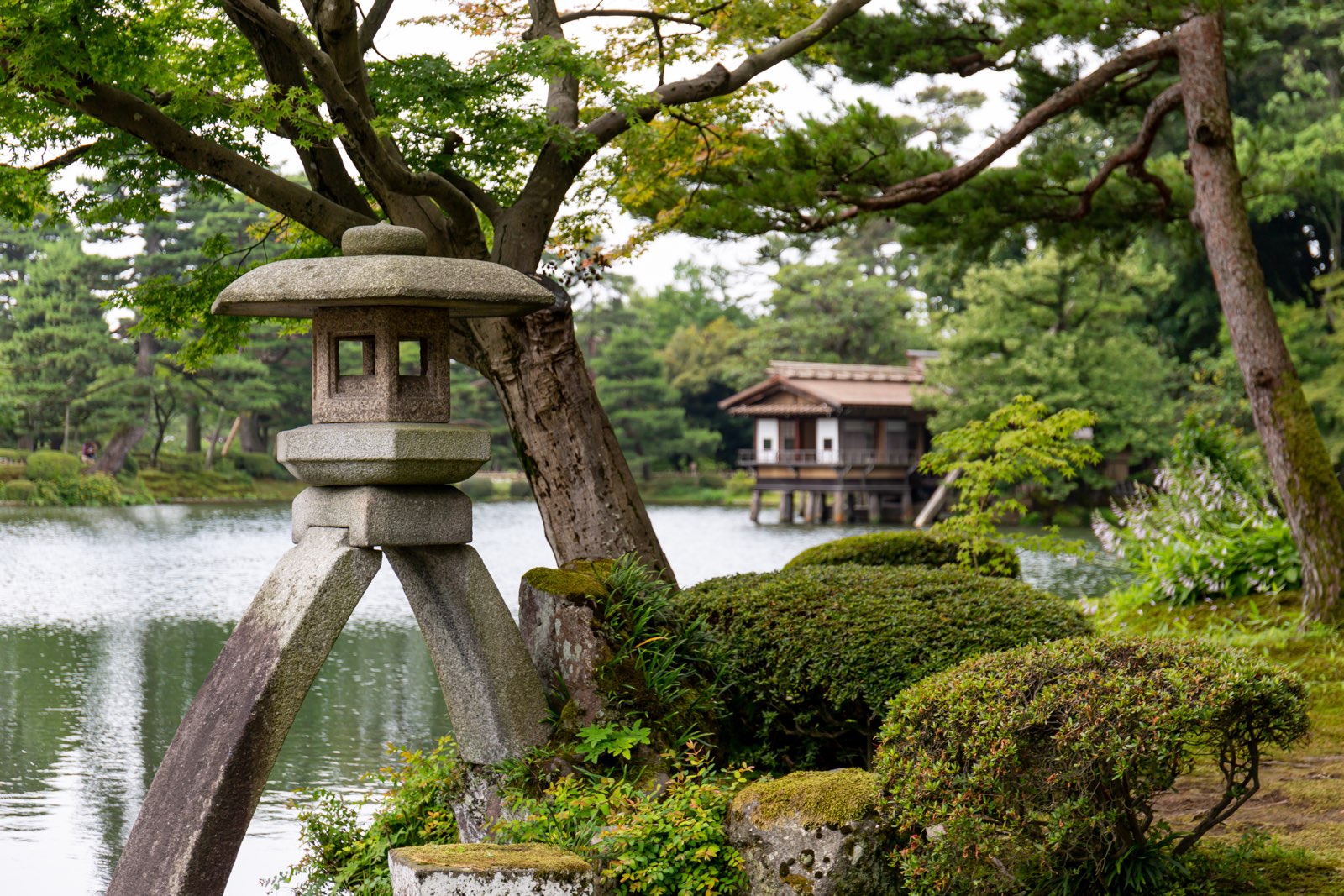
Kanazawa is where to go when the idea of Kyoto appeals and the queue does not, and kimono rental is ordinary there too. Higashi Chaya is a preserved teahouse district of dark latticed fronts and narrow lanes, smaller than Gion and noticeably emptier, best in the first hour before the coaches reach it. Kenroku-en, ten minutes away, is one of the great Japanese gardens and big enough to leave you corners of your own on a busy morning. It gives two entirely different pictures: maples in November, and in winter the pines under yukitsuri, the rope cones that hold the branches against snow that falls here far more reliably than in Kyoto. Kanazawa is about two and a half hours from Tokyo on the Hokuriku Shinkansen and about two from Kyoto, with a change at Tsuruga.
Nara is the quietest light of the three, around forty-five minutes from Kyoto by Kintetsu or JR. Nara Park is open ground — grass, the long roofs of Todai-ji, stone lanterns climbing towards Kasuga Taisha — and unlike a Kyoto lane it takes late afternoon sun beautifully, low and gold across the grass, at the hour the crowds thin. The deer are wild animals, not props: they push, they butt, and a trailing kimono sleeve is exactly what a deer investigates, so keep food out of the frame and let them come to you.
Planning a kimono photoshoot in Kyoto
Work backwards from the return deadline. A morning that starts with the first dressing slot leaves you the empty lanes below Kiyomizu-dera, a walk down to the Shirakawa canal, and the garment back at the shop with time to spare; an afternoon start spends its best light in a crowd and ends in a rush across town. The month decides the rest: blossom from late March into early April, though full bloom lasts about a week and the date moves by up to a fortnight from year to year, so book a window rather than a date. August is the hard month, hot and humid with several layers under the garment; January is cold, clear and empty.
Sixty minutes covers one district done properly — the lanes, or the canal, not both. Ninety minutes to two hours lets you take a taxi between two and still walk slowly, which is the only speed available to you. Say at the booking that you will be in kimono: it changes the route, the pace and the poses, and a photographer who has shot it before knows which steps you can manage.
Read what a couples photoshoot usually covers, browse the destination page for Kyoto and the alternatives in Kanazawa and Nara, and book a photographer online.
Want professional photos in Kyoto?
Browse portfolios, compare packages, and book a verified local photographer in minutes.