Honeymoon Photoshoot in Japan: Kyoto, Hakone and Miyajima in one week
The mistake honeymooners make in Japan is booking three photoshoots in three cities and running to all of them. A week here is mostly train time and unpacking, and the good hours are at the two ends of the day, which is exactly when you are either asleep or at dinner. One session, in the right place, at the right hour, beats three squeezed between connections. This is the route that makes that easy: Tokyo in, a ryokan night in Hakone, the Shinkansen to Kyoto, then west to Miyajima and the tide.
The week, in the order the trains run
Fly into Tokyo and give the first day to nothing in particular, because you will be awake at four and useless by three. From Shinjuku the Odakyu Romancecar runs to Hakone-Yumoto in around an hour and a half — the easiest transfer of the trip. Two nights there beats one: an evening for the mountain, a morning for the lake.
From Hakone you leave by Odawara, ten minutes down the valley, and take the Shinkansen to Kyoto in about two hours. There is a catch: the fastest Nozomi trains do not stop at Odawara, and the Hikari that do are far less frequent through the middle of the day, so check the departure the night before rather than turning up. Give Kyoto three nights. Kyoto to Hiroshima is then about an hour and forty minutes, a local JR train on to Miyajimaguchi under half an hour, and the ferry across about ten.
Six nights, three bases, two long train rides. Two spare days go at Lake Kawaguchi between Tokyo and Hakone, not at the end.
Hakone: the lake gate at first light
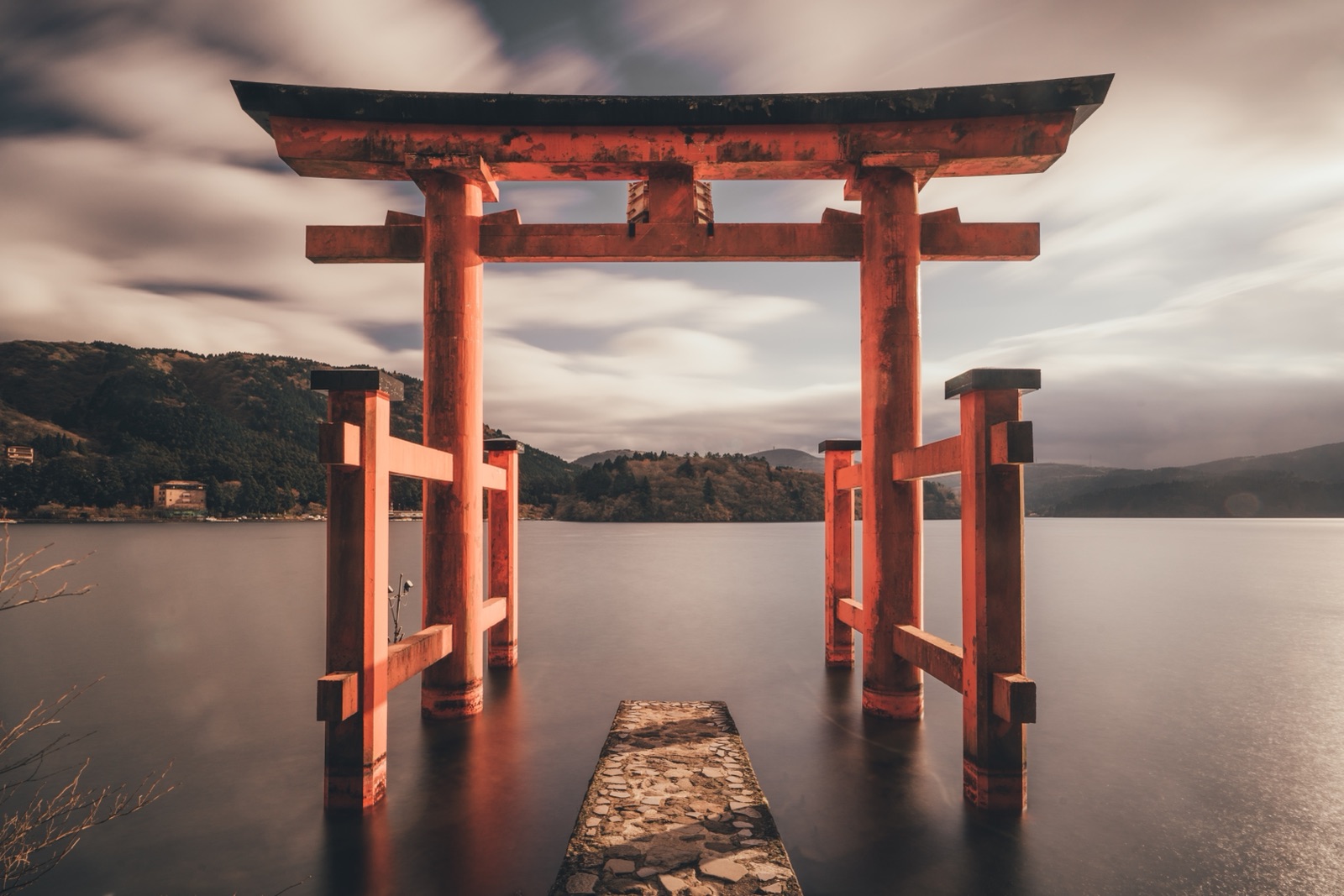
Hakone's photograph is the vermilion torii of Hakone Shrine standing in the shallows of Lake Ashi, wooded hills behind it and, on a clear winter morning, Mount Fuji over the far shore. It is also the most queued-for frame in this guide: the shrine marshals a line for the spot directly in front of the gate, and on a high-season afternoon that line can swallow an hour of your day. Early on a weekday there is often no line at all.
So put the session at first light and walk down from Motohakone before breakfast. The gate faces roughly east across the water, which means the light comes to you over the lake and the shrine steps behind are still in shade — and it means the wind is usually down, so the water holds a reflection. The quieter version of the same place is the shrine's long cedar approach and the stone steps under the trees: no queue, soft light all morning.
Treat the rest of Hakone as scenery rather than a schedule. The Hakone Tozan railway climbs to Gora through switchbacks where the train reverses and the crew change ends, a cable car goes on to Sounzan, and the ropeway crosses the steaming valley of Owakudani to the lake. The ropeway closes for high wind and for volcanic gas, sometimes at short notice, so check the operator's status that morning and have a plan that does not need it.
The ryokan night, and what it buys you
A ryokan is the reason to stop in Hakone rather than day-trip it. Dinner is served at a set hour in the early evening and it is long, so a sunset session has to end before it, not overlap it. Breakfast is early too, which pushes the photography to first light — where you wanted it anyway.
Two things decide how comfortable the night is. Tattoos: many communal baths still refuse visible ink, and the reliable answer is a room with its own bath or a bookable private one, which most ryokan have. And cameras: the communal baths are never a place for one, while the garden, the corridors and your own room usually are — but the house sets that rule, and a shoot in the garden of a working ryokan is the innkeeper's to permit, so ask at check-in.
The yukata the house lends you is for the building and the village lanes rather than a session outfit, but it photographs beautifully on an engawa veranda at dusk with the garden lights on.
Kyoto: one dawn session and one at dusk
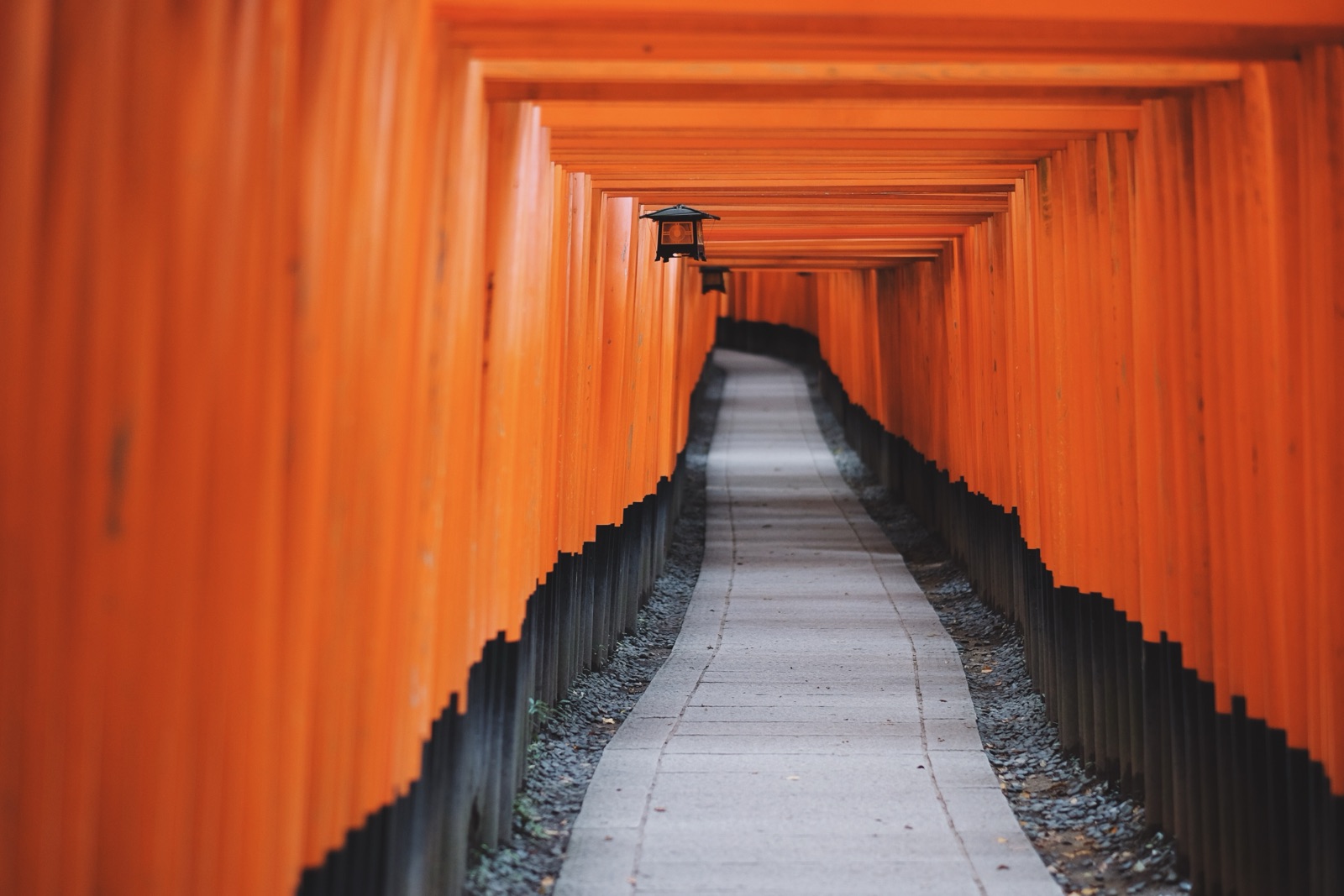
Kyoto is the only stop where two sessions earn their place, because its two good hours look nothing alike. Dawn is for Fushimi Inari's tunnels of vermilion gates and for the Arashiyama bamboo, both of which are near-private before seven and unusable by ten. Dusk is for the lantern-lit lanes: Ninenzaka below Kiyomizu-dera, the Shirakawa canal in Gion, the stone bridges over the Kamo.
Split them across two mornings and keep the middle of each day for what tolerates crowds. Temples are working religious sites: walk to the side of a torii path rather than down the centre, do not photograph inside main halls where the signs say no, and expect a professional session on temple or shrine ground to need that site's own permission, asked for well in advance. Gion's private alleys have been closed to visitors since 2024, with a posted fine, while the public streets around them stay open. The rules have tightened twice in recent years — check what is current before you go.
Season decides the rest. Blossom runs from late March into early April, full bloom lasts about a week and the date moves by up to a fortnight from year to year; autumn colour arrives from mid-November into the first days of December. Both are the busiest weeks of the Kyoto year, and both are worth the crowd if you start at dawn.
What clients say about this kind of shoot
We had such a great photography experience with OKINI PHOTO TOUR! If you’re looking for an Osaka photographer, especially for a couple photoshoot in Osaka, I would definitely recommend them. The photographer made us feel comfortable from the beginning and guided us naturally with poses, so even if you’re not used to being in front of a camera, the experience is very relaxed and fun. What I really liked was that this wasn’t just a typical photoshoot. We walked around Osaka and enjoyed the city while taking photos, so it felt like both a photo tour and a local Osaka experience. The photos around Dotonbori and Osaka’s neon streets were especially beautiful. The photographer knew where to shoot, how to use the city lights, and how to capture natural moments between us. For couples traveling in Japan, honeymooners, or anyone searching for couple photography in Osaka, an Osaka travel photographer, or a Dotonbori photoshoot, OKINI PHOTO TOUR is a great choice. A wonderful way to keep memories from our trip to Osaka. Highly recommended!
— 伊藤尚也 on Soh
Amazing service and perfect photos! Highly recommended—thank you.
— Inbar B. on Ryoji M.
Amazing service. I booked for an engagement photoshoot, and even though he had other commitments made himself available. Was extremely helpful in choosing locations and keeping in contact before with weather updates! Do not hesitate to book if considering a photographer in the area
— Ben F. on Ryoji M.
Soh was the best! He knew all the hidden gems in Tokyo and we had the best shoot with him! Super professional, on time and gave great creative direction!
— Cathy D. on Soh
Soh was INCREDIBLE! The shots he got for us were so awesome, he knew so many amazing off the beaten path spots for pictures. 10/10 if you want awesome photoshoots come here!!
— Yeremi H. on Soh
I had such a great photoshoot experience with Okini! 📸✨ It was honestly so much fun, and the photos turned out absolutely beautiful. The Tokyo Tower spots were perfect, and our 2-hour photoshoot gave us so many amazing shots. Everything felt fun, relaxed, and worth it from start to finish. Definitely such a memorable experience and one I’d recommend if you want beautiful photos in Tokyo! 🗼💕
— Maria D. on Soh
Miyajima: the tide decides the picture
Miyajima gives you two completely different photographs and you do not choose between them — the tide does. At high water the great torii and the corridors of Itsukushima Shrine stand in the sea and appear to float. At low water the sand is exposed and you can walk out to the foot of the gate. Tide tables are published well ahead: look them up before you book the day.
The other decision is whether to stay the night. The day-trippers arrive from Hiroshima mid-morning and are gone on the evening ferries, and the island afterwards is a different place: lanterns on, shrine lit, deer wandering an empty foreshore. A small visitor levy is collected on the crossing and the arrangements change, so check before you travel.
Behind the shrine, Momiji-dani is a maple valley that turns in the second half of November, and the ropeway climbs from there towards Mount Misen — wind and maintenance close it, so treat the summit as optional. The deer will take a map or a ticket straight out of your hand: keep paper in a bag and food out of the frame.
Fuji is a bonus, not a plan
Do not build a honeymoon shoot around Mount Fuji. The mountain is clearest from November to February, often out at dawn and gone by midday; in July and August the haze hides it for weeks. Hakone gives you a chance at it across Lake Ashi — hold it as a bonus if the morning is clear.
If you want the mountain properly, that is its own overnight. Lake Kawaguchi is reached from Tokyo via Otsuki and the Fujikyuko line, and the classic frame — the Chureito Pagoda with the mountain behind it — sits at the top of a long flight of steps in Arakurayama Sengen Park, best just after sunrise. Blossom comes here about two weeks later than in Tokyo. Sleep by the lake, shoot at dawn, and accept that some mornings you photograph a beautiful lake and no mountain.
Luggage, trains and the things that get into the frame
Nobody looks their best dragging a suitcase, and Japanese stations have stairs in exactly the wrong places. Use the forwarding service every hotel and ryokan front desk offers: the big cases go from Tokyo straight to Kyoto, and you travel with an overnight bag. It is normally next-day rather than same-day, so send them ahead the evening before and keep one night of clothes with you, including whatever you are shooting in.
Reserve seats on the Shinkansen if you are carrying anything, because the oversized-baggage rules on the Tokaido and Sanyo lines mean a very large case may need a booked space. Rail passes exist and their terms change often, so work out the route first and then check whether one earns its keep. Three windows to avoid: Golden Week at the end of April into early May, Obon in mid-August, and the New Year days, when a dawn start stops being an optimisation and becomes the only option.
Planning a honeymoon photoshoot in Japan
Pick one place and give it the good hour. In Hakone that is first light at the lake gate, with the ryokan garden at dusk as the quiet second half; in Kyoto, dawn at the gates or the bamboo; on Miyajima, whichever tide you want, which means staying the night.
Sixty minutes is enough for one location done properly; ninety to two hours lets a photographer move you between two nearby ones while the light holds. Book it early in your stay in that city rather than on the last morning, so bad weather has a second chance — and say at booking that it is a honeymoon, because it changes the pace more than it changes the pictures.
Read what a honeymoon photoshoot usually covers, then the destination pages for Hakone, Kyoto and Miyajima, and book a photographer online.
Want professional photos in Hakone?
Browse portfolios, compare packages, and book a verified local photographer in minutes.