Solo Travel Photoshoot in Japan: Tokyo, Kyoto and Kanazawa on your own
Japan is about as easy as solo travel gets and about as hard as it gets to come home with a photograph of yourself in it. The trains work, the country is calm, nobody minds you eating alone — and then you stand under a thousand vermilion gates with nobody to hand the camera to, a tripod is refused at the gate, and what you take home is an arm and a jawline. A session with a local photographer solves that one problem, and Japan is a good place to solve it: the backgrounds are dense and one figure reads cleanly against them.
Kanazawa: Kyoto's pictures without Kyoto's queue
Kanazawa is the easiest city in Japan to be photographed alone in. It kept its old quarters through the war and offers much of what people queue for in Kyoto with a fraction of the crowd — which matters when the subject is one person and every passer-by is in shot.
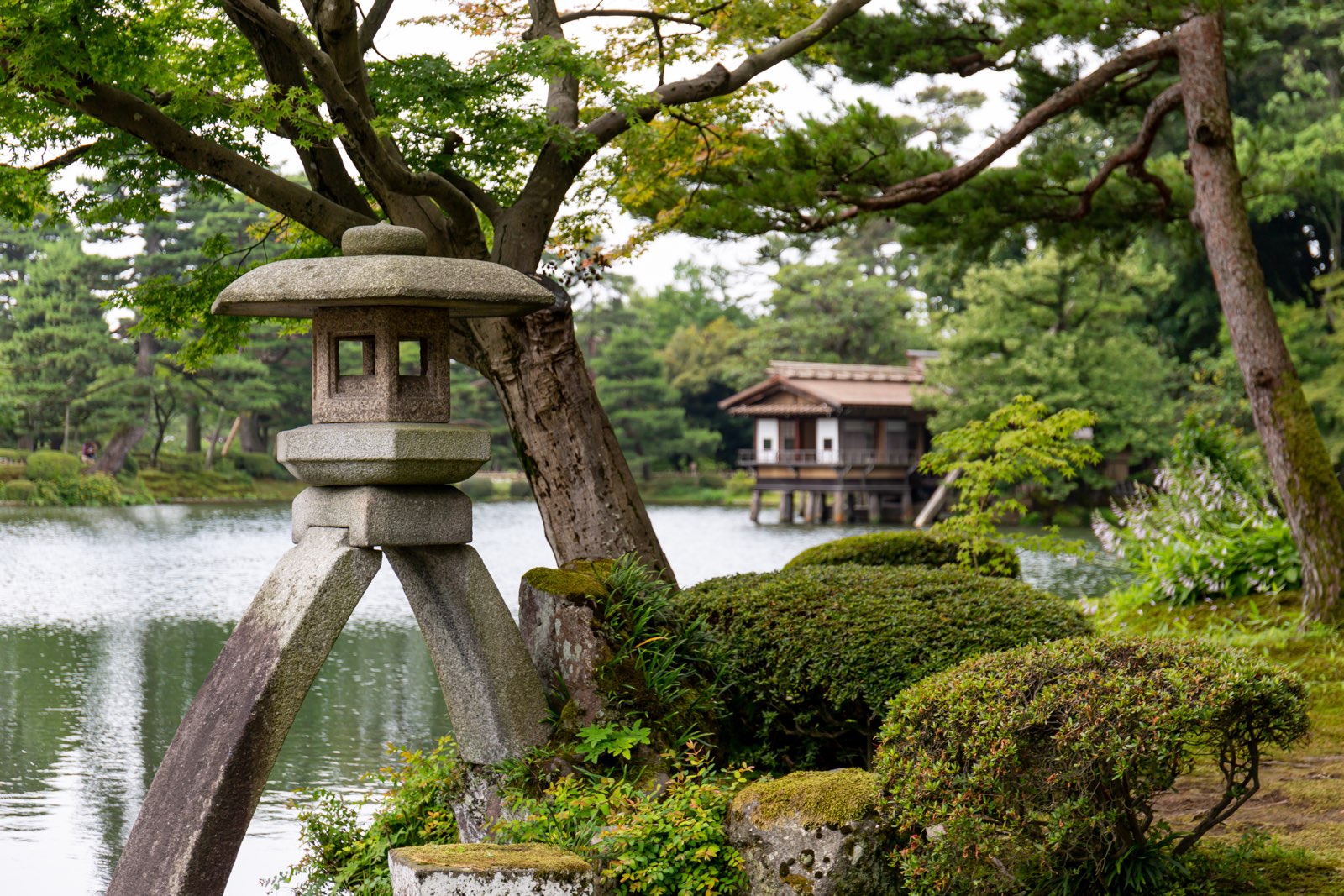
Kenroku-en is the set piece, a garden built over two centuries, with the two-legged Kotoji lantern at the pond and much else nobody bothers with. It has long opened before the ticket booths do for a free early-morning walk, through a couple of gates only, with a deadline to be out before the paid hours start; the window moves with the season, so check it first. That hour is the point: close to empty, the light low across the water.
Higashi Chaya is two streets of wooden teahouses with lattice fronts and gold leaf in the windows, and it works in the flat overcast light of this coast — no harsh shadow, no squint. It is a lived-in district: the streets are public, the teahouse interiors are not, so ask. Kazuemachi, on the Asano river, is the quieter third teahouse district, and Nagamachi, the samurai quarter, has earthen walls and water channels minutes from the covered Omicho market.
Winter is Kanazawa's strongest season: snow is reliable here in a way it is not in Kyoto, the pines in Kenroku-en stand inside their conical yukitsuri rope frames from autumn, and a garden under snow with one person in it is the picture of the trip. Blossom comes later than in Kyoto, usually the first week of April. The rest of the year it rains often — locals say you can forget your lunch but never your umbrella — which for a portrait is a gift.
Kanazawa is about two and a half hours from Tokyo on the Hokuriku Shinkansen. From Kyoto or Osaka there is no direct train: since the line reached Tsuruga in spring 2024, the Thunderbird runs only that far and you change there.
Kyoto before anyone is awake
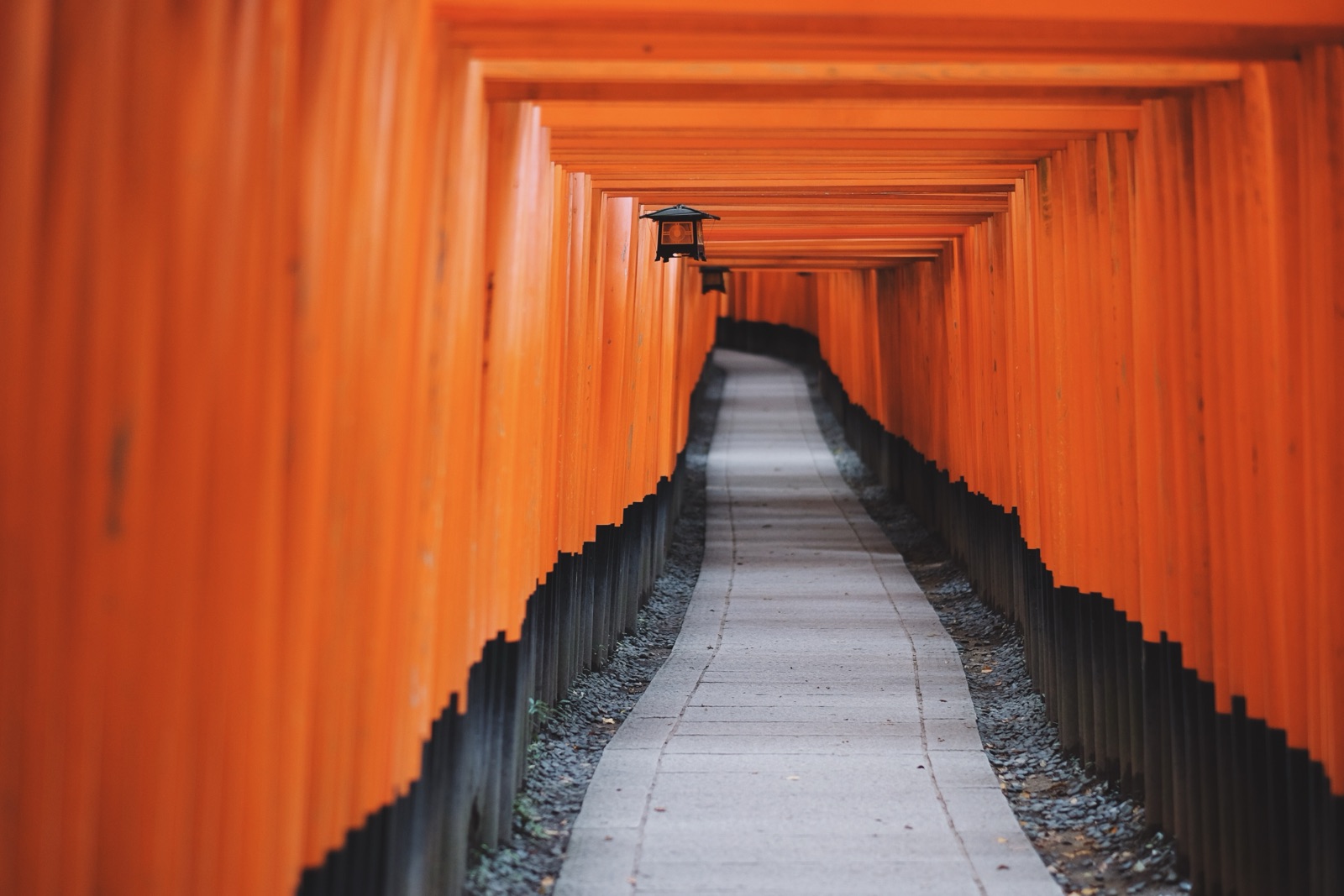
Kyoto rewards a solo traveller more than a couple, because the hour that makes it work is the hour nobody wants to share. The paths at Fushimi Inari are open around the clock and free, which is the only reason the gate tunnels are photographable at all: by ten a queue, at first light yours. Arashiyama's bamboo is the same, and the stone lanes of Ninenzaka below Kiyomizu-dera are empty until the shops open.
In Gion, know the rules first. The private alleys are closed to visitors with a posted fine for entering, and photographing geiko and maiko without consent is banned. Hanamikoji and the Shirakawa canal at Tatsumi Bridge are public and stay open, and the canal in the last light is the best of the district anyway. Autumn is the other peak, maples deep red from mid-November into early December.
Tokyo after dark, where one figure is enough
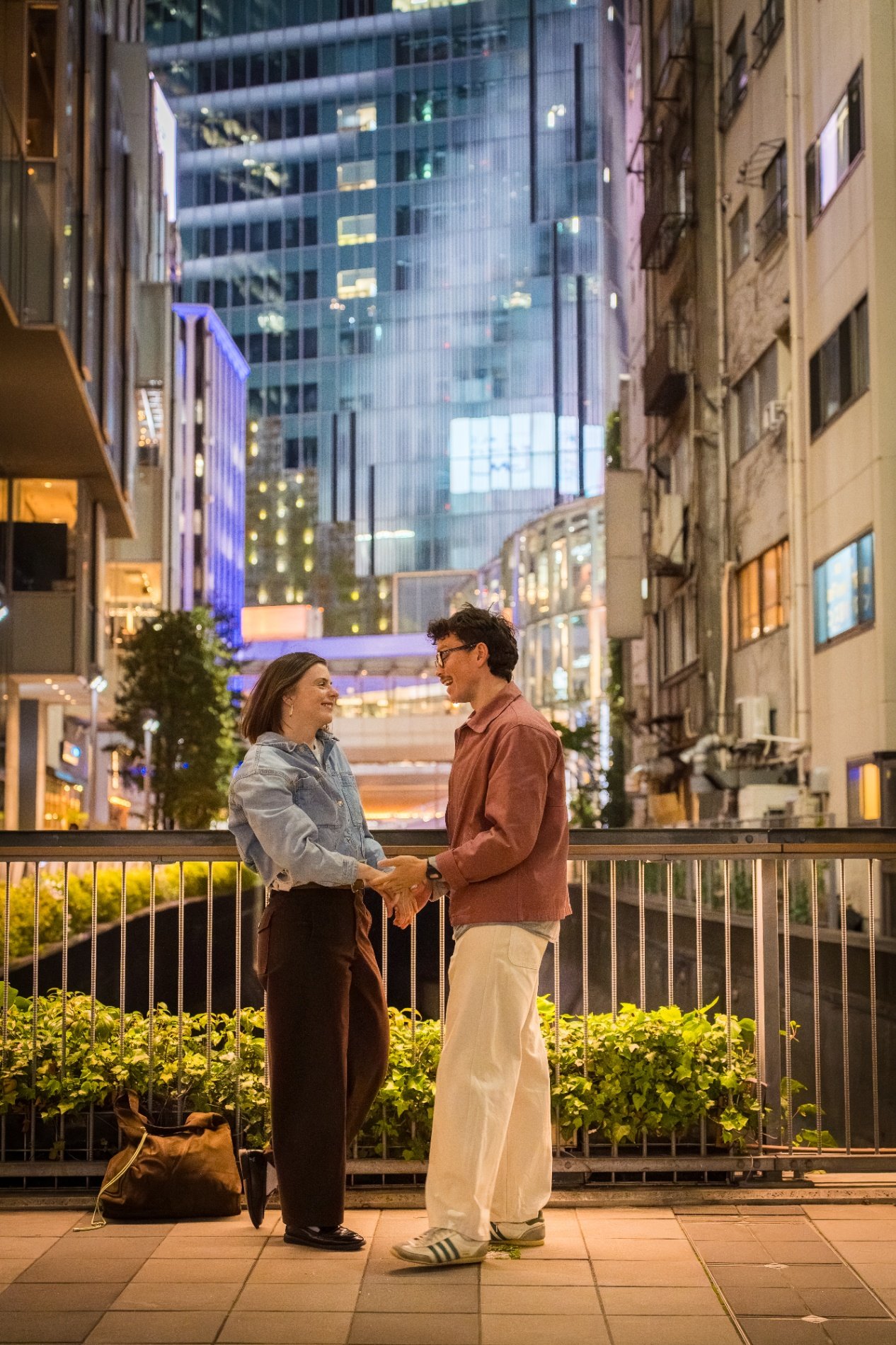
Neon is where being alone is an advantage. A couple in a lit street becomes two people and a background; one person becomes a figure in a city, which is what people are actually after.
Shibuya works from the Hachiko side of the crossing, where the signs light a face better than any lamp a photographer can carry. Omoide Yokocho and Golden Gai in Shinjuku are tighter and older — but many bars ban cameras outright and the lanes are narrow enough that you are standing in somebody's doorway, so ask first and move on if the answer is no. Nakameguro's canal is the quiet version, and a tunnel of blossom for a fortnight in spring. For the other Tokyo, go early: Yanaka's lanes and the approach to Senso-ji are empty before eight.
Nara, where the animals do the work
Nara is a half day from Kyoto or Osaka and hands a solo session something no city can: another living thing in the frame. The deer in Nara Park are wild, tame enough to approach and uninterested in your plans. First light across the lawns is the hour — low sun, mist off the grass, coaches still an hour away.
Two rules improve the pictures. Do not hold the crackers while you want to look composed: deer that know what a cracker is will nudge, butt and crowd. And keep moving, because a stationary person with a bag is worth investigating. Todai-ji photographs best from the outer gate, where the scale registers; the walk up to Kasuga Taisha runs through cedar forest lined with stone lanterns, mossy and green after rain.
Being photographed alone when you never have been
Almost nobody is comfortable in front of a camera alone for the first thirty seconds, and photographers know it. The fix is not confidence, it is having something to do. Walking is the most useful instruction in portraiture: walk away, walk towards, turn back halfway. Give your hands a job — a sleeve, a pocket, a bag strap — because hands with nothing to do go rigid and look it.
Ask for frames where you are not looking at the lens: into a garden, up at a gate, down a lane. Turn slightly away from the camera rather than square on, weight on the back foot, breathe out before the shutter.
What to wear, and what a kimono changes
Japan's backgrounds are wood, stone, grey sky and dark green, with vermilion and neon as the accents. One strong colour against that beats a whole outfit of careful neutrals, and patterns and big logos fight the lattice, tiles and gates behind you. Shoes matter: a session is a walk, and in temples you take them off.
A kimono changes the session, not just the outfit. Rental, dressing and hair are booked separately with the shop; those shops open in the morning rather than at dawn, so a kimono session cannot be a first-light one, and everything must be back before closing. The obi and the cut shorten your stride to small steps, which means one location and flat ground. Wear it properly — left side over right, the shop will check — and treat it as clothing rather than a costume, because that is what it is.
The comfort question, answered plainly
Booking a stranger to follow you around a foreign city with a camera deserves a straight answer. Photographers are checked before they appear on the platform at all, and a profile carries the portfolio and the reviews previous clients left, so you decide with evidence in front of you. You book and pay online, in advance — no cash, no envelope, no negotiating at a station exit.
The session happens in public places and you can name them. Bringing a friend along is normal. Messages go through the platform beforehand, so you can fix the exact meeting point — a named station exit, not "the park" — and the pictures come back in a private gallery.
Luggage, ryokan and the weekday-morning trick
Japan solves carrying things better than anywhere: hotel desks and convenience stores forward suitcases, usually next day between major cities. Send the case to your next hotel, shoot the dawn session with a day bag, pick your life up in the evening. Coin lockers cover the hours between, though they fill early in peak weeks.
Accommodation is where Japan is awkward alone. Many ryokan price per person with dinner and breakfast included, and a good number will not take a single booking at all or will add a supplement, especially at weekends and in the smallest inns. Filter for single occupancy before you fall in love with a room; business hotels have no such problem.
And the trick that makes the rest easier: book a weekday morning. The gap between a Tuesday at seven and a Sunday at eleven in the same place is not incremental — and in blossom week, over the autumn weekends in Kyoto, during Golden Week, Obon and the first days of January, it is the only version that works.
Planning a solo photoshoot in Japan
An hour covers one district properly, and for a solo session that is usually enough: being photographed is more tiring than people expect, and the good frames come early. Ninety minutes to two hours lets a photographer move you between two nearby places — which works in Kanazawa, where the old quarters sit close together, and not in Kyoto.
Say at booking that you are travelling alone, and that you have never done this before if that is true. It changes how a photographer runs the session — more direction, more walking, fewer static poses — and that is the difference between pictures of a place with you in them, and pictures of you.
Read what a solo photoshoot usually covers, then the destination pages for Kanazawa, Kyoto, Tokyo and Nara, and book a photographer online.
Want professional photos in Kyoto?
Browse portfolios, compare packages, and book a verified local photographer in minutes.