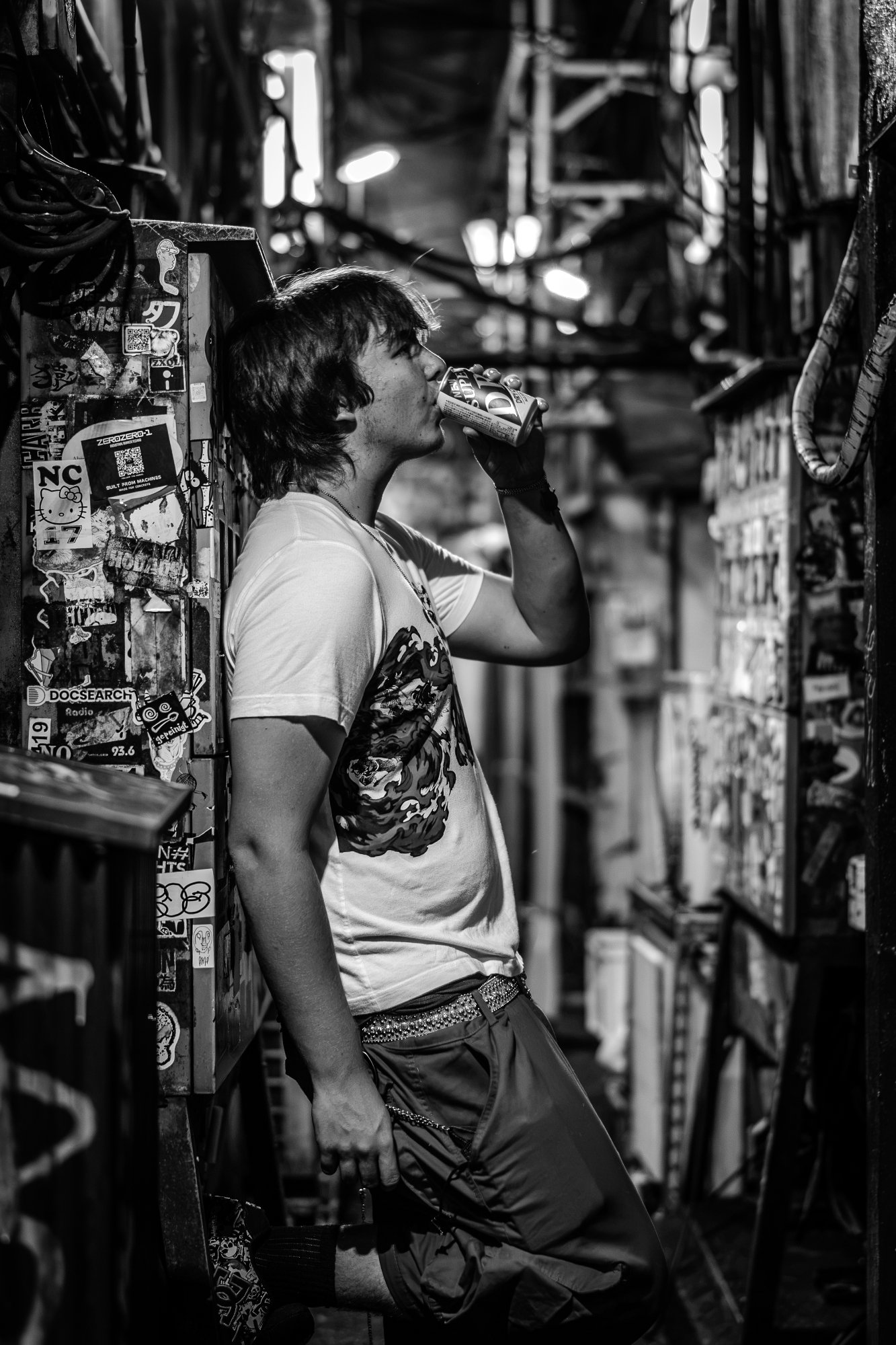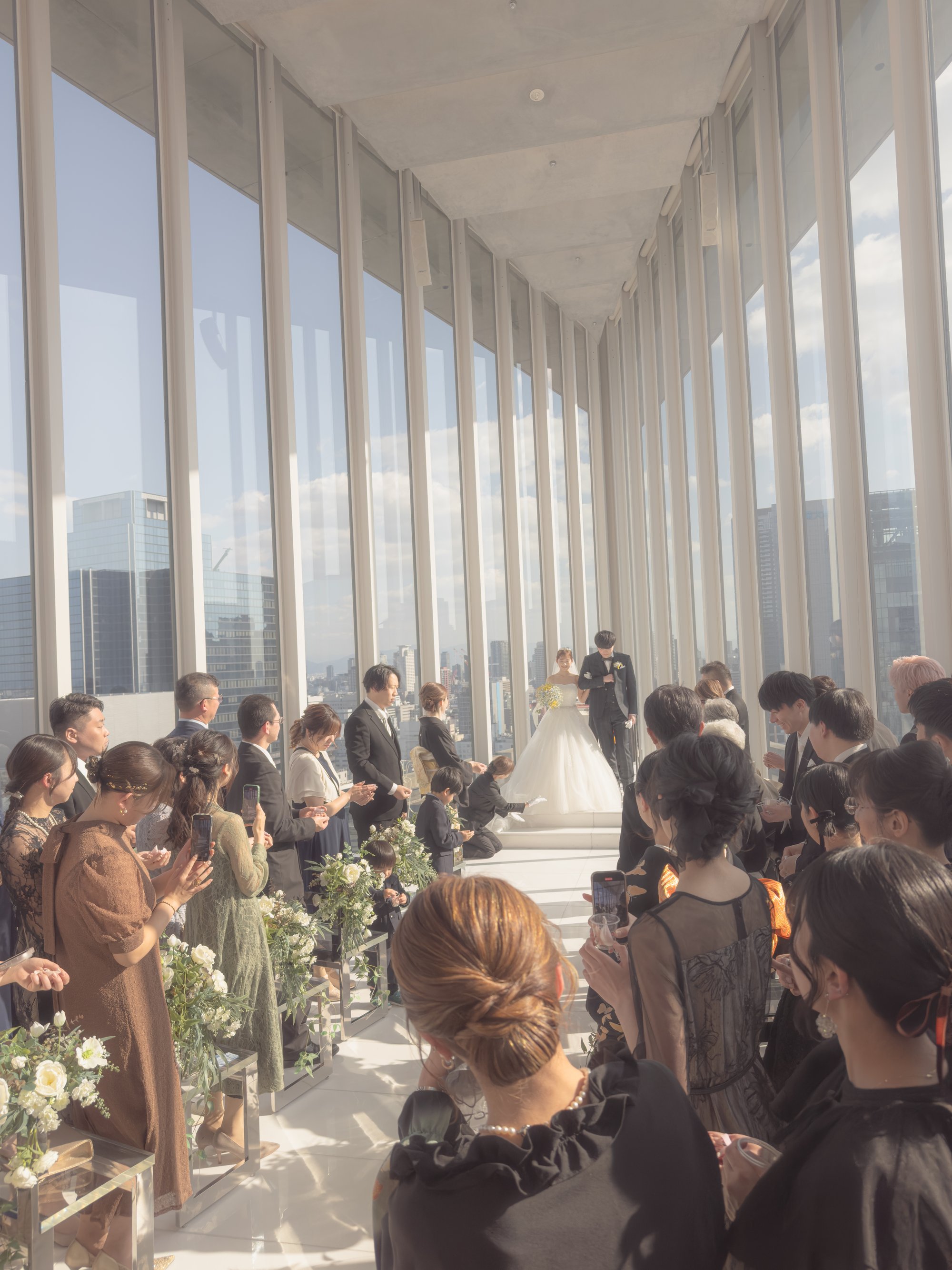
Osaka Photo Guide: Dotonbori neon, the castle in blossom and Umeda at sunset
Most Japanese cities ask you to get up early to beat the crowd. Osaka asks the opposite. The canal at Dotonbori only works once the signs are lit, the crowd on Ebisubashi is part of the picture rather than the problem, and the best hour in the city starts while the sky still holds blue. There is a good daylight city too — a castle above a moat, a red-brick island between two rivers, a stone lane a block from the noise — but build the plan backwards from sunset.
3 photo spots in Osaka — click a pin to open the full guide
Real shots from Osaka
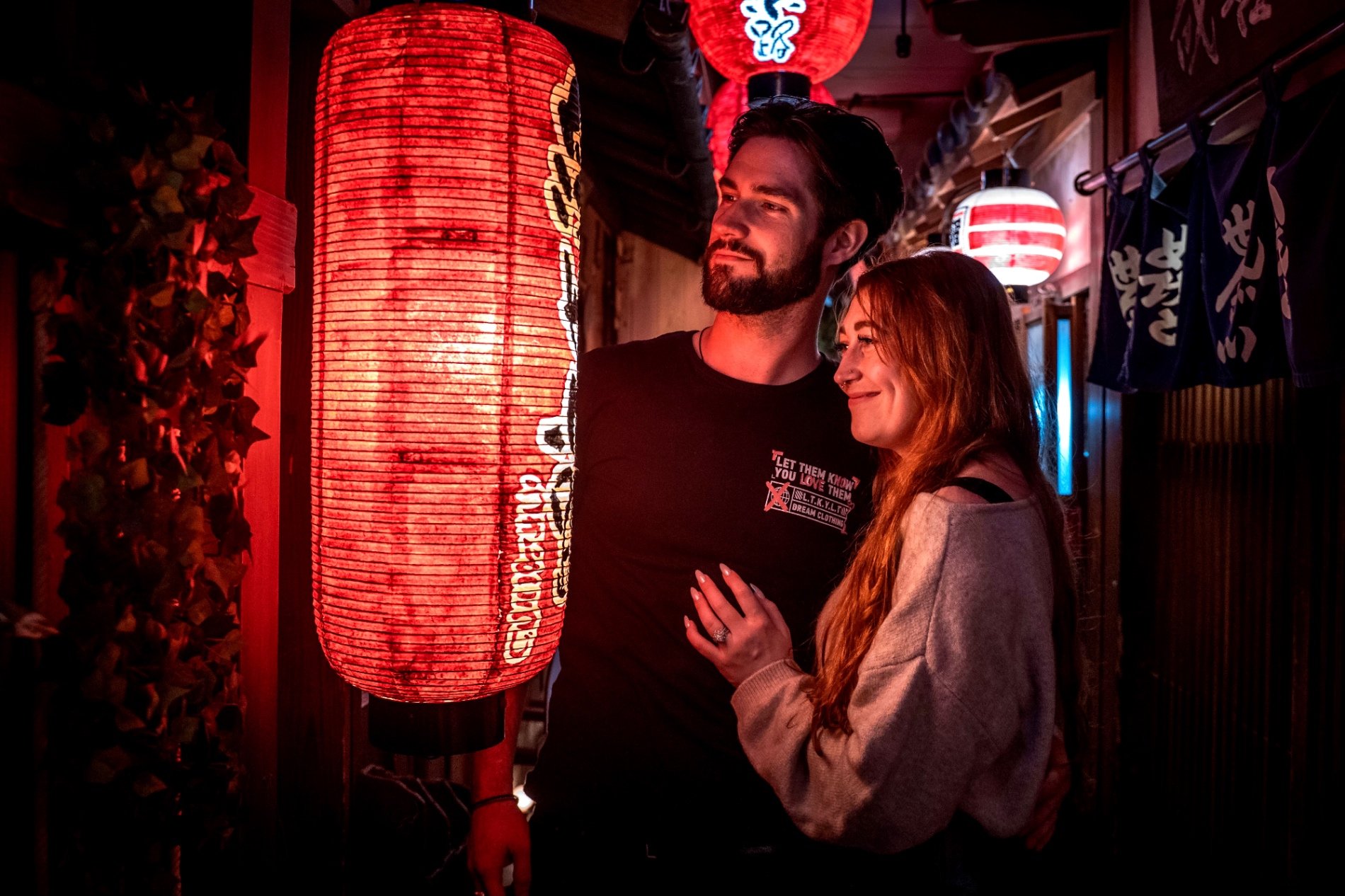
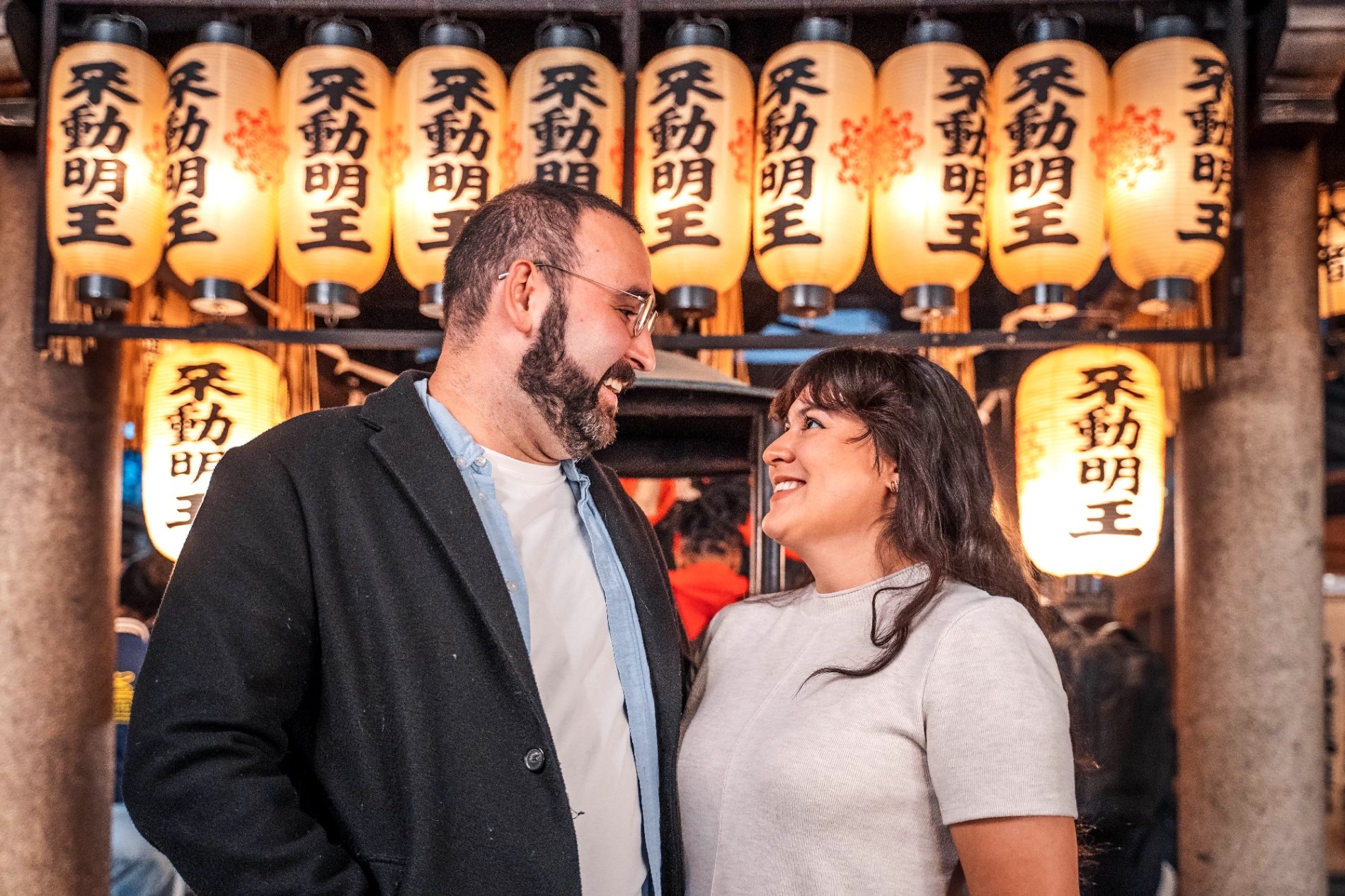
Dotonbori and Ebisubashi after dark
The canal is the whole trick. Signs on both banks throw their colour down into the water, so a frame that would be busy at eye level becomes layered the moment you include the reflection. Ebisubashi, the wide bridge in the middle, is the vantage everyone knows: from it you get the running man sign — the current version is LED and dates from 2014, the sixth in a line going back to the 1930s — with the canal leading away underneath. It is crowded, and that is fine: a long lens flattens the crowd into texture, a wide one puts your subject in front of it with the signs as a wall of colour.
One level down, the Tonbori River Walk runs along the water itself and is calmer than the bridge, with the same signs above you and boats passing. Rain is an improvement rather than a problem: the pavement doubles everything.
Namba on the Midosuji line is the station; Osaka Namba on the Kintetsu and Hanshin lines and Nankai Namba for the airport train sit in the same block. Come out on the north side and the canal is a few minutes away. The streets behind it are nightlife, some of it touting for business — keep a session on the main bridges and the river walk.
Hozenji Yokocho and the Mizukake Fudo
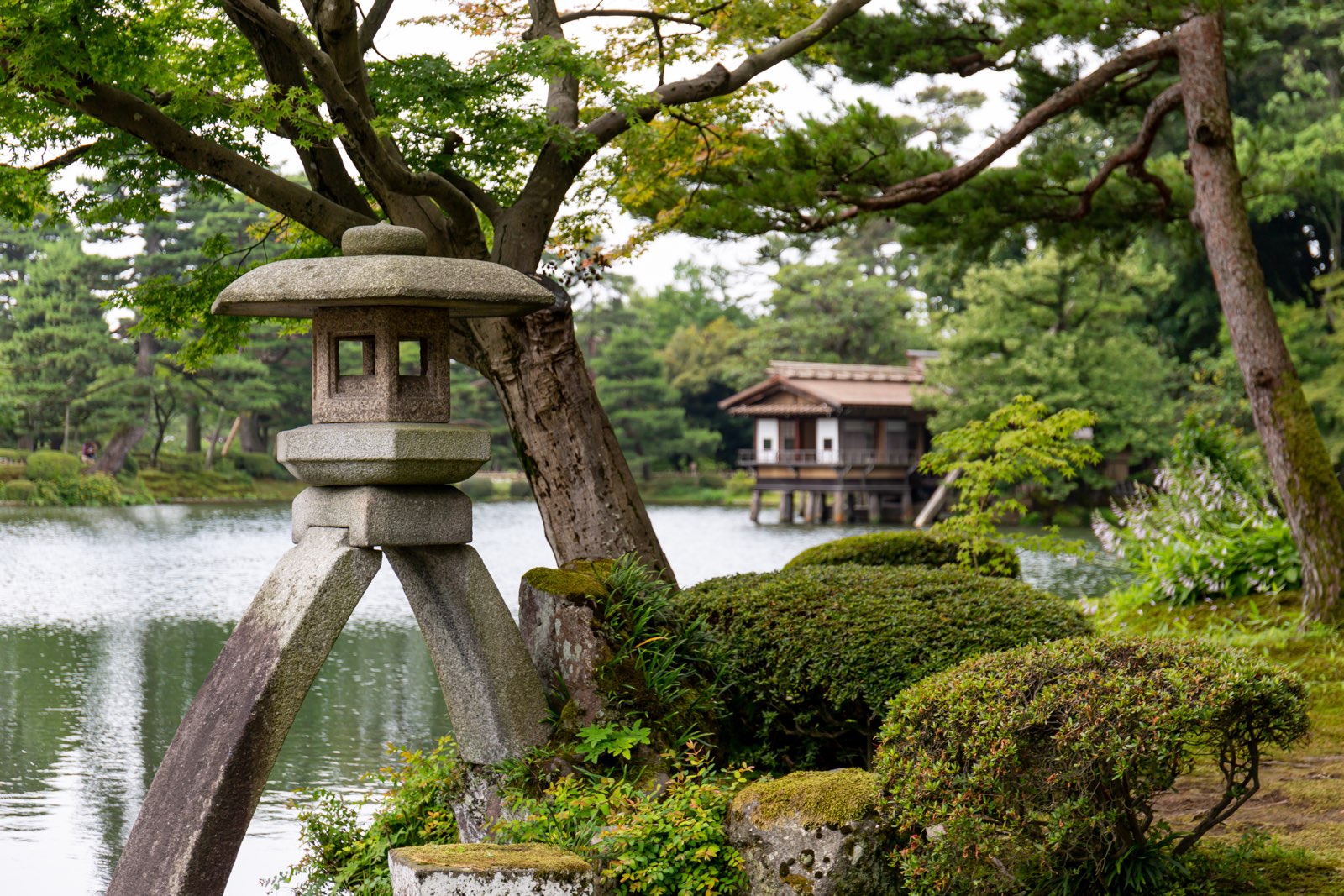
One block south of the noise, Hozenji Yokocho is two narrow stone-paved lanes with stone lanterns, dark wooden fronts and almost no signage. It is the quiet counter-frame to Dotonbori and it is two minutes away on foot. At its centre stands the Mizukake Fudo, a statue so thickly covered in moss that the features have softened, because visitors have been ladling water over it for generations as they pray.
That is worth remembering with a camera in your hand: it is a place of worship in the middle of an entertainment district, so wait for people to finish rather than shooting over their shoulders. The lanes are lined with working restaurants — ask before you photograph a doorway. Before service starts they are empty, and the lanterns are already the best light there.
Shinsekai, Tsutenkaku and the old south
Shinsekai was built as a pleasure district in 1912 around a tower modelled on European landmarks, went to seed, and now photographs better than anything designed to be pretty. The current Tsutenkaku dates from 1956 — the original was dismantled during the war — and it stands at the end of a street of enormous three-dimensional signs: pufferfish, crabs, chefs, all lit at night. Jan-Jan Yokocho, the covered arcade running off it, is a corridor of skewer restaurants and old game parlours.
Dusk is the hour again: signs on, sky not yet black. Ebisucho on the Sakaisuji line and Dobutsuen-mae bring you out at the right end. This is a lived-in neighbourhood with a long history of being photographed badly by visitors; shoot the street and the signage rather than the people drinking in it.
Namba Yasaka Shrine's lion head
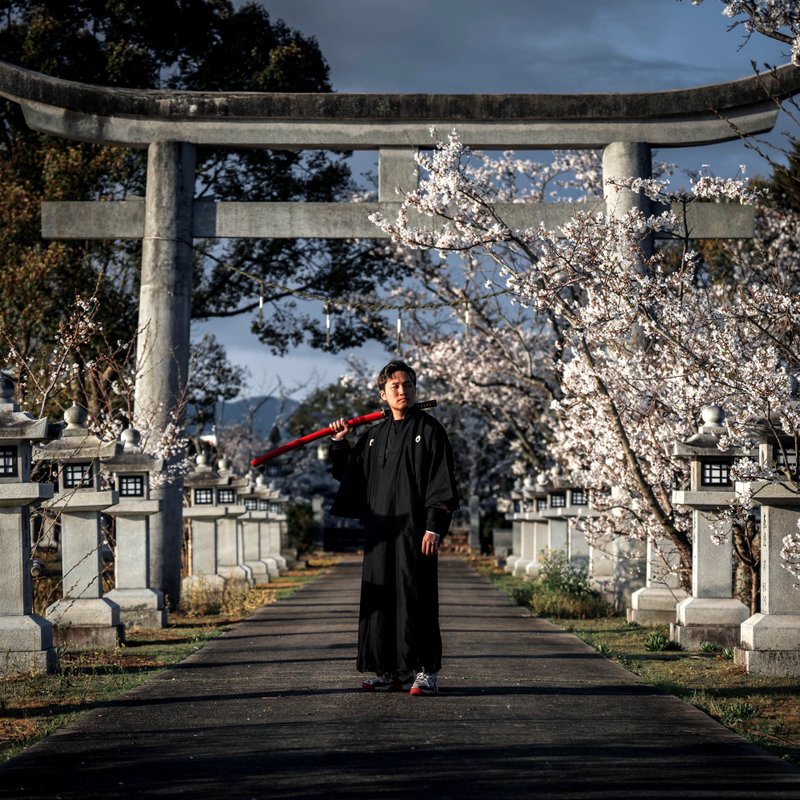
Ten minutes' walk south-west of Dotonbori, Namba Yasaka Shrine has one feature and it is unforgettable: a stage built as a lion's head twelve metres high, mouth open, facing the small courtyard. It is said to swallow bad luck, and it is a genuinely strange, strong backdrop in a city with no shortage of them.
The grounds are tiny, so a queue of people waiting for the same frame forms quickly; early morning is the window. It is a shrine — bow at the torii, keep out of the way of anyone praying, keep it short, and check the shrine's own guidance on arranged photography before you plan a session there.
Osaka Castle: the daylight set piece
The keep is a 1931 reconstruction standing on the original stone base, and that base is the part photographers underrate: the walls around the Sakuramon gate include some of the largest single stones ever moved in Japan. The classic frame is from across the inner moat, with the whole tower and its green roofs reflected on a still morning; the park around it is big enough to be empty early even in high season.
Nishinomaru Garden, inside the park, is the blossom ground: ticketed, with an evening opening and lighting during blossom week — hours and dates change every year, so check. Blossom here usually lands in the first days of April, and the plum grove on the east side flowers much earlier, February into early March, when nobody is there. JR Osakajokoen on the Loop line is closest; Tanimachi 4-chome and Morinomiya also work, ten to fifteen minutes' walk in.
What clients say about this kind of shoot
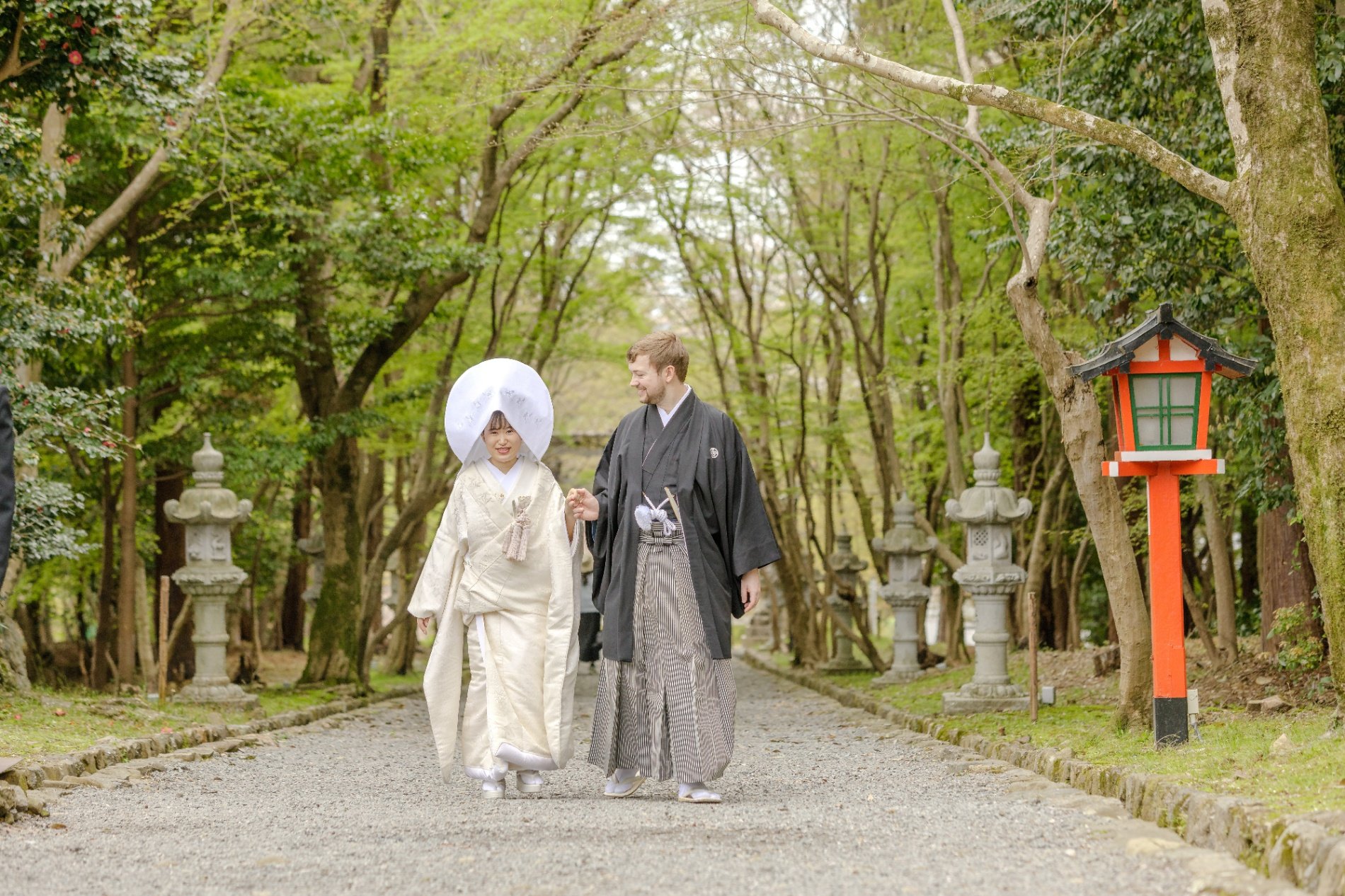
We had such a great photography experience with OKINI PHOTO TOUR! If you’re looking for an Osaka photographer, especially for a couple photoshoot in Osaka, I would definitely recommend them. The photographer made us feel comfortable from the beginning and guided us naturally with poses, so even if you’re not used to being in front of a camera, the experience is very relaxed and fun. What I really liked was that this wasn’t just a typical photoshoot. We walked around Osaka and enjoyed the city while taking photos, so it felt like both a photo tour and a local Osaka experience. The photos around Dotonbori and Osaka’s neon streets were especially beautiful. The photographer knew where to shoot, how to use the city lights, and how to capture natural moments between us. For couples traveling in Japan, honeymooners, or anyone searching for couple photography in Osaka, an Osaka travel photographer, or a Dotonbori photoshoot, OKINI PHOTO TOUR is a great choice. A wonderful way to keep memories from our trip to Osaka. Highly recommended!
— 伊藤尚也 on Soh
Soh was the best! He knew all the hidden gems in Tokyo and we had the best shoot with him! Super professional, on time and gave great creative direction!
— Cathy D. on Soh
Soh was INCREDIBLE! The shots he got for us were so awesome, he knew so many amazing off the beaten path spots for pictures. 10/10 if you want awesome photoshoots come here!!
— Yeremi H. on Soh
I had such a great photoshoot experience with Okini! 📸✨ It was honestly so much fun, and the photos turned out absolutely beautiful. The Tokyo Tower spots were perfect, and our 2-hour photoshoot gave us so many amazing shots. Everything felt fun, relaxed, and worth it from start to finish. Definitely such a memorable experience and one I’d recommend if you want beautiful photos in Tokyo! 🗼💕
— Maria D. on Soh
⭐⭐⭐⭐⭐ I can’t recommend Soh enough! He captured one of the most important moments of our lives—my surprise engagement at Tokyo Tower—and absolutely exceeded every expectation. From the moment we met, Soh made the entire experience feel natural, comfortable, and special. After capturing the proposal perfectly, he took us to several other incredible spots around Tokyo so we could get photos that truly captured the energy, beauty, and authentic feel of the city. Every location added something different, and he knew exactly where to go and how to capture the moment. The photos are more than just pictures—they’re memories we’ll have for the rest of our lives. Looking back at them instantly brings us back to that night in Tokyo. Hiring Soh was one of the best investments I made on this entire trip, especially for such an important moment. If you’re visiting Tokyo and looking for a photographer for an engagement, couples shoot, or just unforgettable memories of the city, book Soh. You will not regret it. Thank you, Soh, for helping make an already unforgettable night even more incredible! 🇯🇵💍❤️
— Rolando R. on Soh
Mr Bernard is very kind & profesional photographer.. He know every spot photo & know my angle too.. I like the result.. Thank you so much.. I love it...
— Agustin T. on Bernard L.
Umeda Sky Building at sunset
Two towers, joined at the top by a ring — the Floating Garden observatory, with an open-air deck on the roof. It faces west over the city towards the bay, which makes it a sunset building rather than a sunrise one, and the roof itself glows: a path of fluorescent paving that picks up light once it is dark.
The picture most visitors miss is on the way up. An escalator crosses the open gap between the two towers in a glass tube, and from inside it the city drops away underneath — a strong frame in its own right, and one that needs no permission. The deck is ticketed, hours run late into the evening and change with the season, and the rooftop can close in heavy rain or high wind; the enclosed floor below stays open. It is a ten-minute walk from Osaka and Umeda stations through the underpass, which is signposted but not obvious the first time.
Nakanoshima and the river in the morning
If the evening is Dotonbori, the morning is Nakanoshima — the long island between the Dojima and Tosabori rivers, with the red-brick Central Public Hall of 1918 at its eastern end and the Bank of Japan's Osaka branch facing it. Waterfront terraces line the north bank at Kitahama, the rose garden between the two rivers peaks in late May and again in autumn, and the bridges give you clean, quiet geometry an hour after sunrise.
Yodoyabashi on the Midosuji line and Kitahama on the Keihan put you on the island — the civilised daylight answer in a city that sells itself by night, five minutes by train from the neon.
Base, not destination
Osaka sits about thirty minutes from Kyoto by fast train and forty from Nara on the Kintetsu line from Osaka Namba, which is why so many travellers sleep here and spend their days elsewhere. Treat that as an advantage: give the days to Kyoto and Nara, and keep the Osaka session for the evening you come back. Nothing else in Japan gives you a night frame this strong without a long walk.
What the seasons actually change
February brings plum blossom at the castle and nobody else. Blossom follows in the first days of April, with about a week of full bloom and a date that moves by up to a fortnight. The rainy season runs from early June to mid-July, and in Osaka more than anywhere else that suits the frames — the neon needs the wet ground. July and August are genuinely hard: hot, humid, hazy, with typhoon season running from July into October. Autumn colour is later and thinner here than in the mountains, arriving from mid-November. Winter is dry and clear, the blue hour starts early in the afternoon, and the city strings illuminations along Midosuji and on Nakanoshima — dates move each year, so check.
Planning an Osaka photoshoot
Start with sunset and work backwards. The strongest hour begins while there is still blue in the sky: the signs are lit, faces still have shape, and the water carries colour. Fully dark is a harder picture, worth a few minutes rather than the whole session.
Sixty minutes covers Dotonbori and Hozenji Yokocho comfortably, because they are two minutes apart. Two hours adds Shinsekai by train, or starts in daylight at the castle or on Nakanoshima and finishes on the canal. Do not plan the castle and the canal back to back in one hour — they are on opposite sides of the centre and the walk at either end eats the time.
A photographer who works Osaka at night knows which side of Ebisubashi is clear at eight, which lane is lit and which is a wall of shadow. Read the destination page for Osaka, see what a couples photoshoot usually covers, check how it works, and browse photographers online.
Want professional photos in Osaka?
Browse portfolios, compare packages, and book a verified local photographer in minutes.