Nikko Photoshoot Guide: Tosho-gu in the cedars and Kegon Falls in autumn
Nikko is a shrine town with a mountain road behind it, and the two halves want different hours. Down in the town the subject is carving: gilded gates and painted beams under cedars planted three hundred years ago, with almost no direct sun reaching the ground. Behind it the road climbs in hairpins to a lake above a thousand metres and a waterfall dropping close to a hundred, and in the second half of October most of the Kanto plain seems to drive up there at once. Plan around the road rather than the light and Nikko gives you more usable frames in a day than anywhere else within two hours of Tokyo.
Real shots from Nikko
Tosho-gu: gilded carving in permanent shade
Tosho-gu is the mausoleum of Tokugawa Ieyasu, and nothing else in the country looks like it: black and vermilion lacquer, gold leaf, and carved panels over every surface of the Yomeimon gate — animals, sages and peonies, repainted to their original colours in a recent restoration. The sacred stable carries the three monkeys. Behind the main hall a couple of hundred stone steps climb through the forest to the tomb, past the sleeping cat.
For a photographer the point is the light, which barely exists. The cedars stand close and tall enough that the courtyards hold shade most of the day, with a thin column of sun crossing the main approach around midday. Colour stays saturated, faces are evenly lit, and there is no hour you have to avoid. Overcast beats sun here, and rain beats both — wet lacquer is the version of Tosho-gu that photographs best.
Cameras are a separate question. Photography inside the halls is not allowed, tripods are refused in most of the precinct, and drones are out. An arranged session on shrine ground — anything that reads as a production rather than a visitor with a camera — needs the shrine's own permission, and what counts as commercial is its decision, not yours. The rules have tightened more than once: check before the day and have an alternative ready.
Coaches and school parties arrive from mid-morning and the bottleneck is the stairway under the Yomeimon, where everyone stops with their heads back. The first hour after the gates open is a different place.
Taiyuin and Futarasan: the quiet half of the same forest
Ten minutes west, Taiyuin is the mausoleum of Ieyasu's grandson Iemitsu, built to be darker: black and gold rather than white and vermilion, steps climbing into deeper cedar, a fraction of the visitors. If the session wants stillness instead of spectacle, work here and keep Tosho-gu for the approach.
Futarasan sits between the two, owns the Shinkyo bridge down at the river and keeps a working precinct of moss and stone lanterns with far less traffic than its neighbour. End to end the world-heritage area is a twenty-five-minute walk, all of it under trees, so a two-hour session never needs a taxi.
The Shinkyo bridge
Twenty-eight metres of red lacquer standing over the green water of the Daiya river, where the old road into the mountains crossed. It is the first thing off the bus and everyone stops. Walking across it is ticketed separately from the shrines and the hours are short, shorter in winter — check them. But the frame most people want is not from the bridge, it is of the bridge, and that one is taken from the road bridge alongside it and from the riverbank below.
Flat light suits it: the vermilion goes fluorescent in direct sun and sits properly under cloud. Before eight the pavement is empty; by ten there is a row of tripods on it. Behind the bridge the gorge turns colour in the first half of November, a fortnight after the mountain above. In winter, red lacquer against snow and black water is the best single picture in the town.
Kanmangafuchi: the line of Jizo
Twenty to thirty minutes on foot from the bridge, through a residential lane and along the river, a lava gorge holds a row of some seventy stone Jizo figures in red bibs and knitted caps, mossed over, all facing the water. Local lore says you never count the same number twice.
It is the quietest good place in Nikko and rarely has a queue. Shoot it with the river in the frame, keep the group off the stone and leave the clothing alone: these are memorial figures that people still dress and tend, not props. The light is low and green all day, and in late autumn the colour above the grey stone does the rest.
What clients say about this kind of shoot
We had such a great photography experience with OKINI PHOTO TOUR! If you’re looking for an Osaka photographer, especially for a couple photoshoot in Osaka, I would definitely recommend them. The photographer made us feel comfortable from the beginning and guided us naturally with poses, so even if you’re not used to being in front of a camera, the experience is very relaxed and fun. What I really liked was that this wasn’t just a typical photoshoot. We walked around Osaka and enjoyed the city while taking photos, so it felt like both a photo tour and a local Osaka experience. The photos around Dotonbori and Osaka’s neon streets were especially beautiful. The photographer knew where to shoot, how to use the city lights, and how to capture natural moments between us. For couples traveling in Japan, honeymooners, or anyone searching for couple photography in Osaka, an Osaka travel photographer, or a Dotonbori photoshoot, OKINI PHOTO TOUR is a great choice. A wonderful way to keep memories from our trip to Osaka. Highly recommended!
— 伊藤尚也 on Soh
Soh was the best! He knew all the hidden gems in Tokyo and we had the best shoot with him! Super professional, on time and gave great creative direction!
— Cathy D. on Soh
Soh was INCREDIBLE! The shots he got for us were so awesome, he knew so many amazing off the beaten path spots for pictures. 10/10 if you want awesome photoshoots come here!!
— Yeremi H. on Soh
I had such a great photoshoot experience with Okini! 📸✨ It was honestly so much fun, and the photos turned out absolutely beautiful. The Tokyo Tower spots were perfect, and our 2-hour photoshoot gave us so many amazing shots. Everything felt fun, relaxed, and worth it from start to finish. Definitely such a memorable experience and one I’d recommend if you want beautiful photos in Tokyo! 🗼💕
— Maria D. on Soh
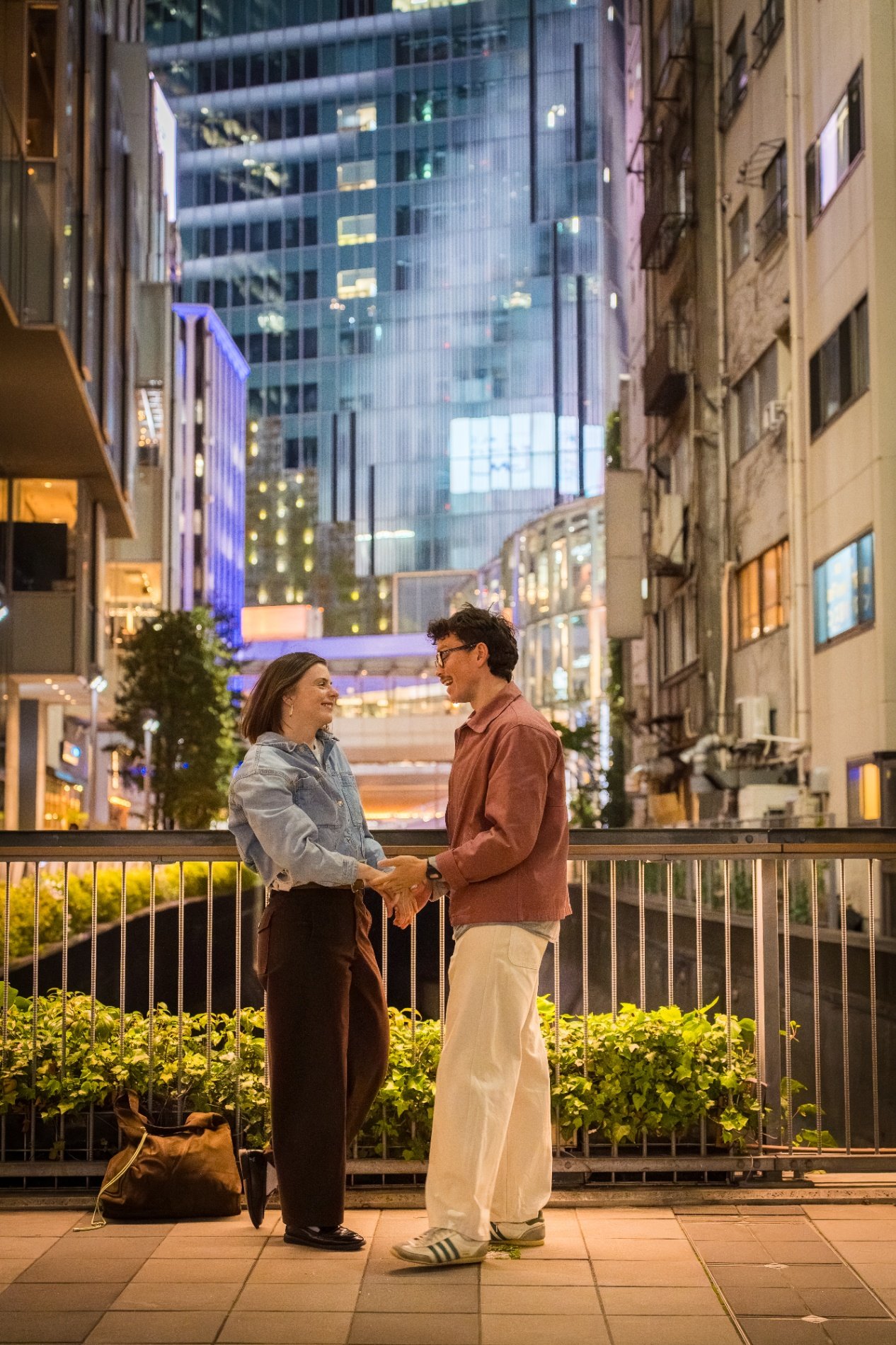
⭐⭐⭐⭐⭐ I can’t recommend Soh enough! He captured one of the most important moments of our lives—my surprise engagement at Tokyo Tower—and absolutely exceeded every expectation. From the moment we met, Soh made the entire experience feel natural, comfortable, and special. After capturing the proposal perfectly, he took us to several other incredible spots around Tokyo so we could get photos that truly captured the energy, beauty, and authentic feel of the city. Every location added something different, and he knew exactly where to go and how to capture the moment. The photos are more than just pictures—they’re memories we’ll have for the rest of our lives. Looking back at them instantly brings us back to that night in Tokyo. Hiring Soh was one of the best investments I made on this entire trip, especially for such an important moment. If you’re visiting Tokyo and looking for a photographer for an engagement, couples shoot, or just unforgettable memories of the city, book Soh. You will not regret it. Thank you, Soh, for helping make an already unforgettable night even more incredible! 🇯🇵💍❤️
— Rolando R. on Soh
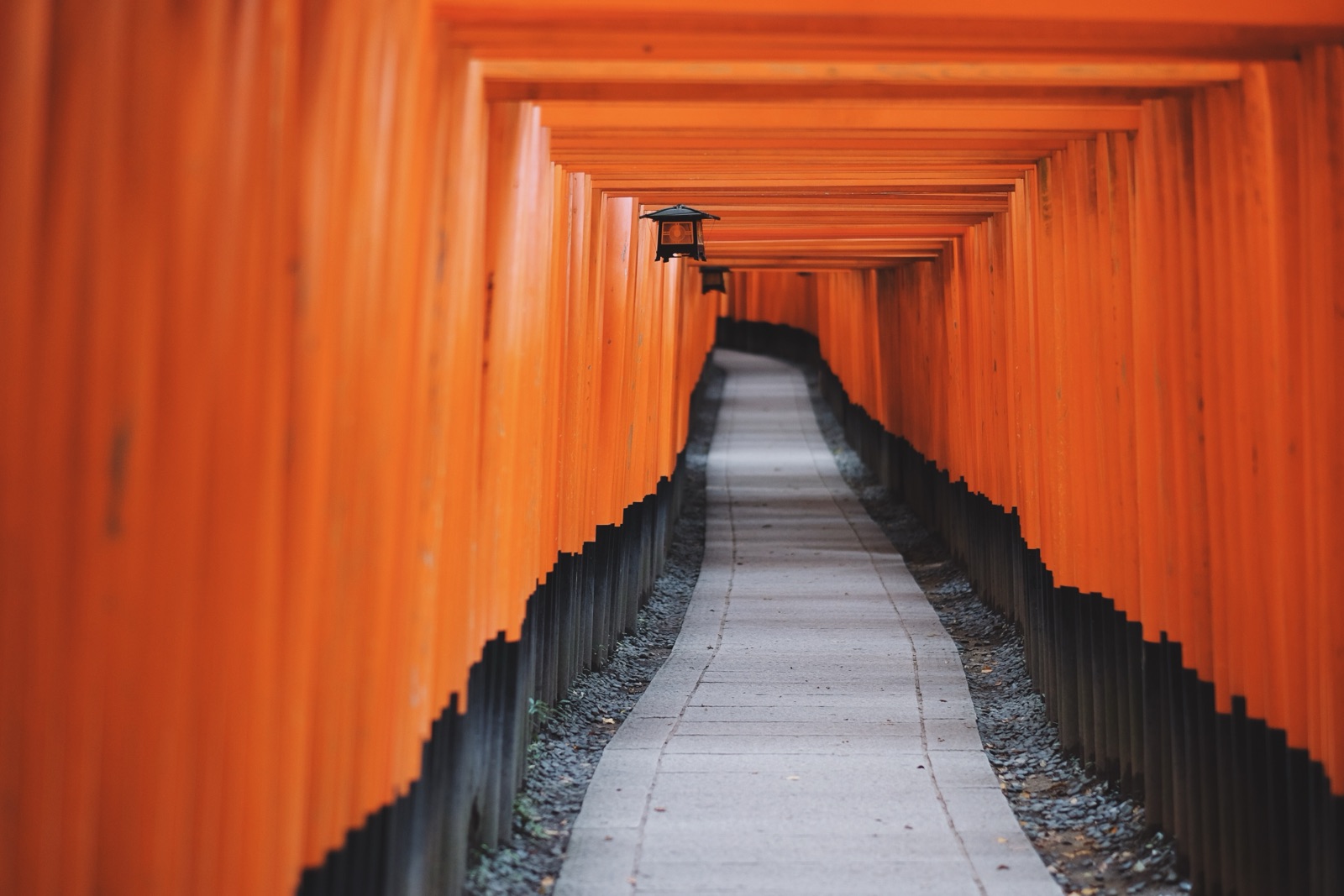
Wonderful photo shoot in Kyoto. He took his time to help us with poses and does the editing.
— Anthony N. on Soh
Up the Irohazaka to Lake Chuzenji
Behind the town the road climbs about four hundred and forty metres in forty-eight hairpins, split into two one-way roads, one up and one down, named for the characters of the old iroha syllabary. The bus from either station to Chuzenji Onsen takes roughly fifty minutes when the road is moving.
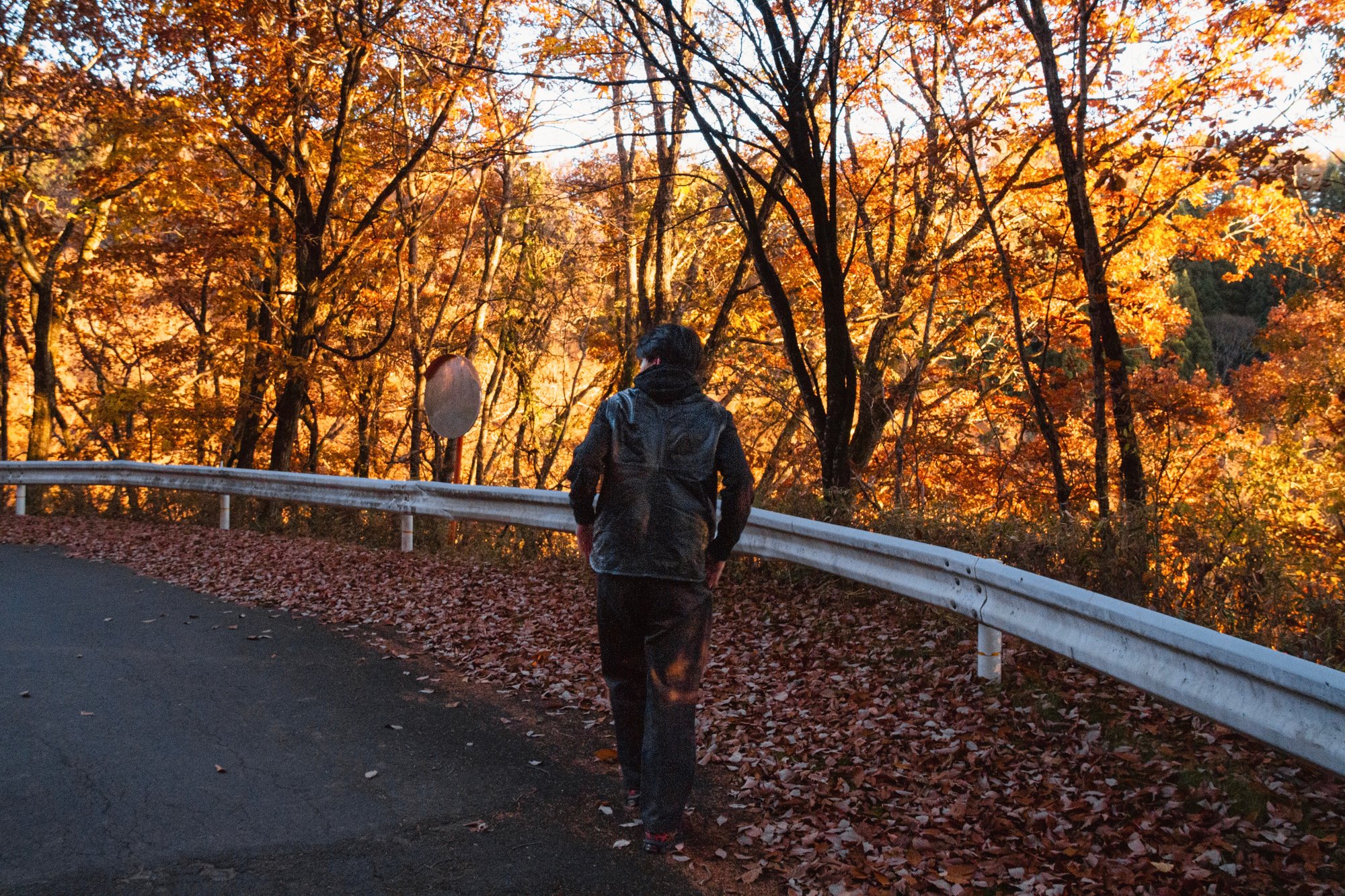
In the second half of October the road is not moving. On an autumn weekend a twenty-minute climb can take two or three hours, and the jam sits roughly between nine in the morning and three in the afternoon. Go on a weekday, be on one of the first buses, or do not go up at all that week. There is no clever back way.
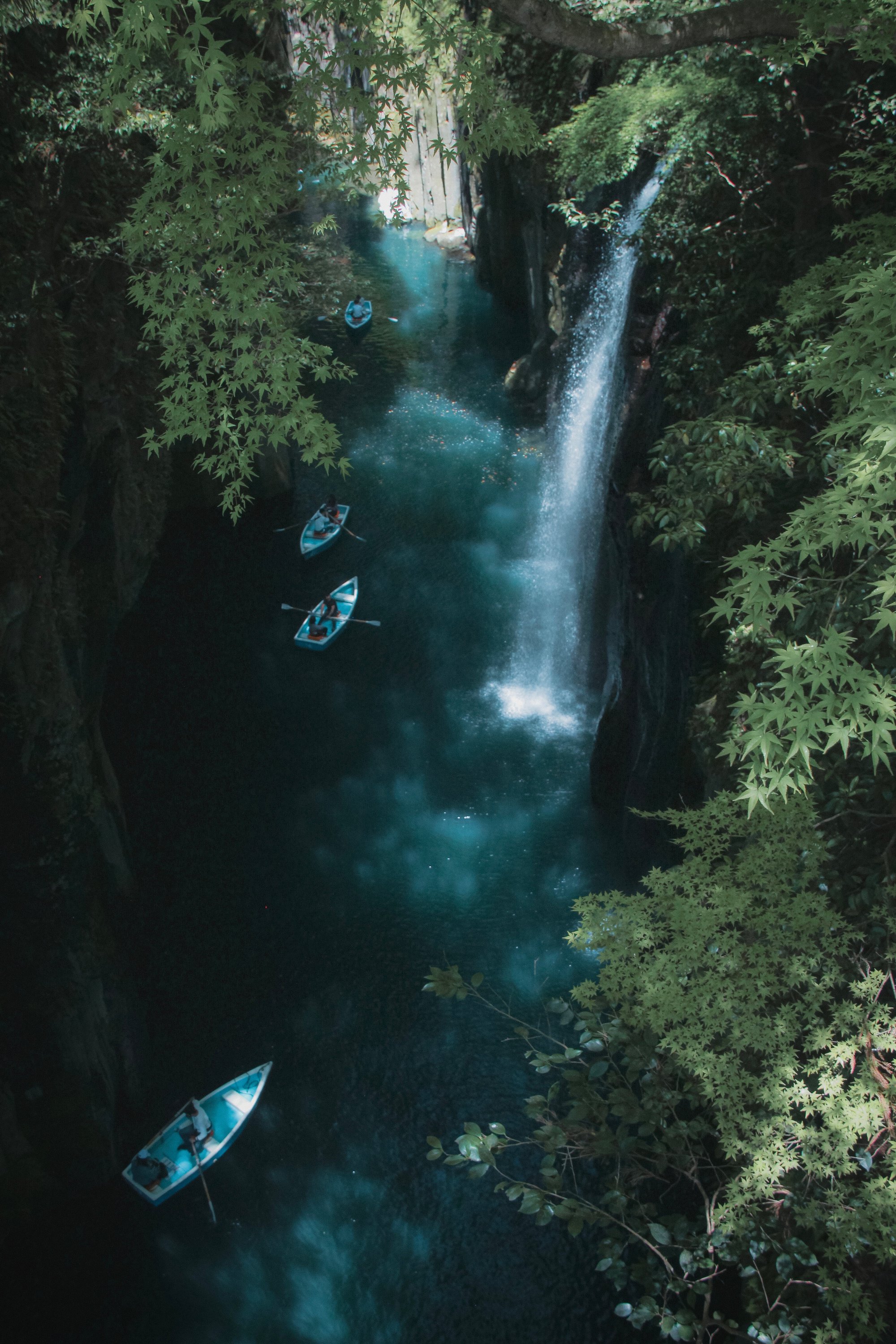
Near the top, Akechidaira has a public deck, and a ropeway of about three minutes lifts you to a higher one looking straight down the valley with Kegon Falls in the frame; ropeway seasons and maintenance windows change, so check. The lake sits at about 1,270 metres with some 25 kilometres of shoreline, dammed by an eruption of Mount Nantai, runs several degrees colder than the town, and is often in cloud when the town is clear.
Kegon Falls
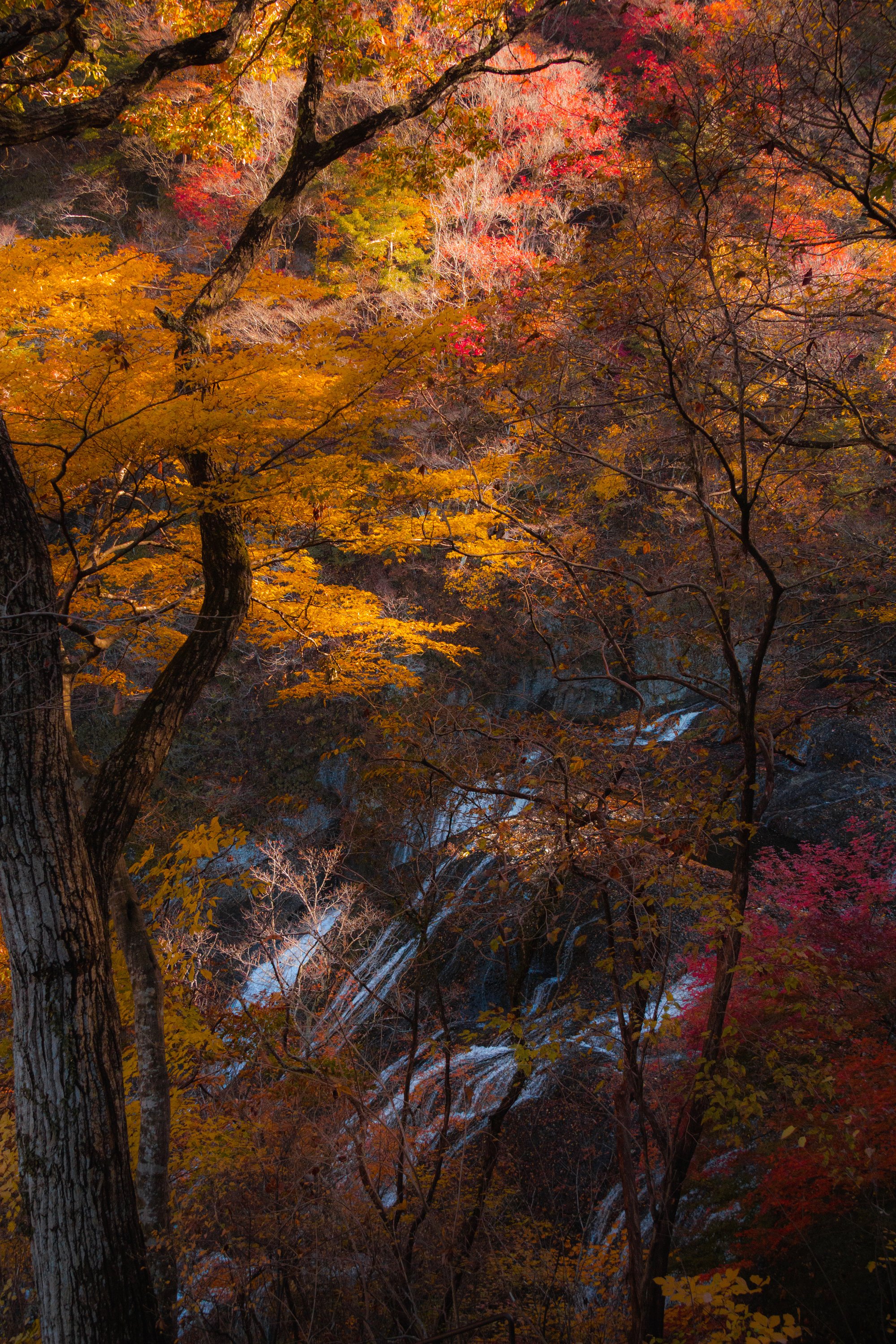
Kegon drops 97 metres out of the lake into a rock amphitheatre. There is a public deck at the top, a few minutes from the bus terminal, and a lift that runs about a hundred metres down through the rock to a platform facing the fall — ticketed, with hours that shorten in winter and stop for weather. Check before you build a session around it: in October the queue for that lift is the longest thing in Nikko. First thing in the morning, or not at all.
The amphitheatre holds shade for much of the day and the spray drifts across the lower platform, so a lens cloth is not optional. In January and February the side streams freeze into pale blue columns while the main fall keeps running, and the town above empties out.
What the seasons actually change
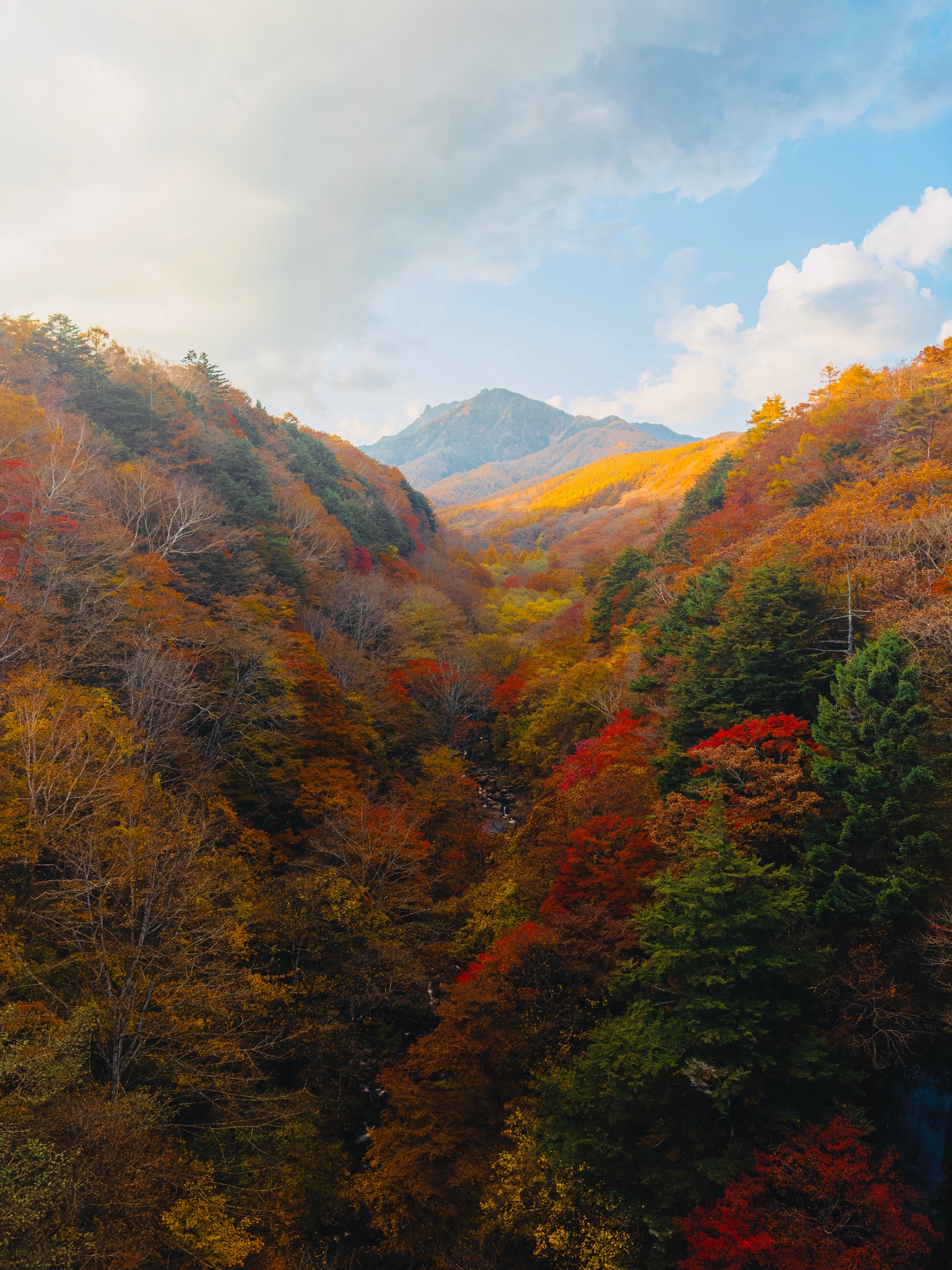
Autumn is why most people come and it works downhill: the lake and the Irohazaka from about the middle of October, the town and the gorge in the first half of November. Nikko sits high enough that spring runs late as well — blossom in the town is a fortnight or more behind Tokyo, and Chuzenji later again.
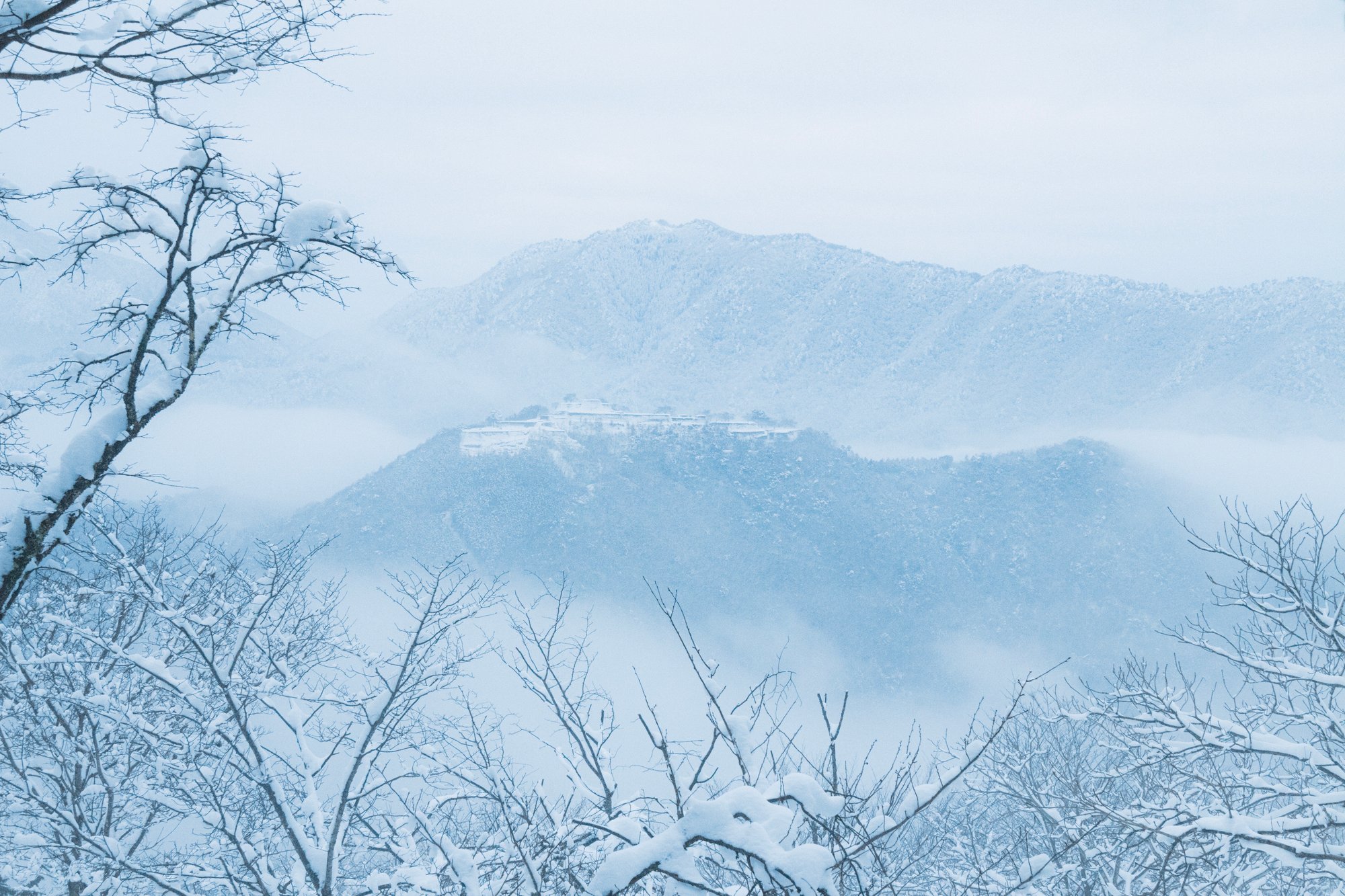
Summer is green, humid and loud with afternoon thunder over the mountains, and it is the coolest escape within reach of the capital: the cedars make the middle of the day workable when Tokyo is not. Winter is the connoisseur's Nikko — snow on the lacquer, half-frozen water, reduced bus timetables, restricted mountain roads and the last usable light gone by mid-afternoon. Check what is actually running before you commit a winter morning to the lake.
Getting there, and how long the day really is
The Tobu limited express from Asakusa takes about two hours to Tobu-Nikko; the JR route runs via the Tohoku Shinkansen to Utsunomiya and a local line in. From either station the shrines are twenty minutes uphill on foot or five minutes on the bus, and the same buses carry on up to the lake. Area passes exist and their terms change — worth checking whether one earns its keep for your route. Nothing here needs a car, and in October a car is a liability.
A day trip from Tokyo works if you pick one half, the shrines or the lake. Both in one day means starting before seven and finishing in the dark. A night in the town or at the lake buys the empty hour at each end, which is the whole game.
Planning a Nikko photoshoot
Decide first which Nikko you want. A session in the shrine forest is a flat-light, fine-detail affair — vermilion, gold, moss and cedar — and rain does not cancel it. A session at the lake is a landscape shoot at altitude that needs the weather to cooperate and the road to be moving, so give it a morning rather than an hour.
Sixty minutes covers the bridge, the riverbank and one precinct comfortably. Two hours adds Kanmangafuchi and a proper walk under the cedars, or the lake if you are already up there. When the session is an elopement or a honeymoon, the night up here is worth more than the extra hour: it buys the forest before the coaches and the bridge before the tripods.
A photographer who works in Nikko regularly knows which precinct is still in shade at eleven, which morning the road is moving and what the shrine will allow on the day — that knowledge is most of what you are booking. The destination page for Nikko has the rest, how it works covers the booking itself, and you can book a photographer online.
Want professional photos in Nikko?
Browse portfolios, compare packages, and book a verified local photographer in minutes.