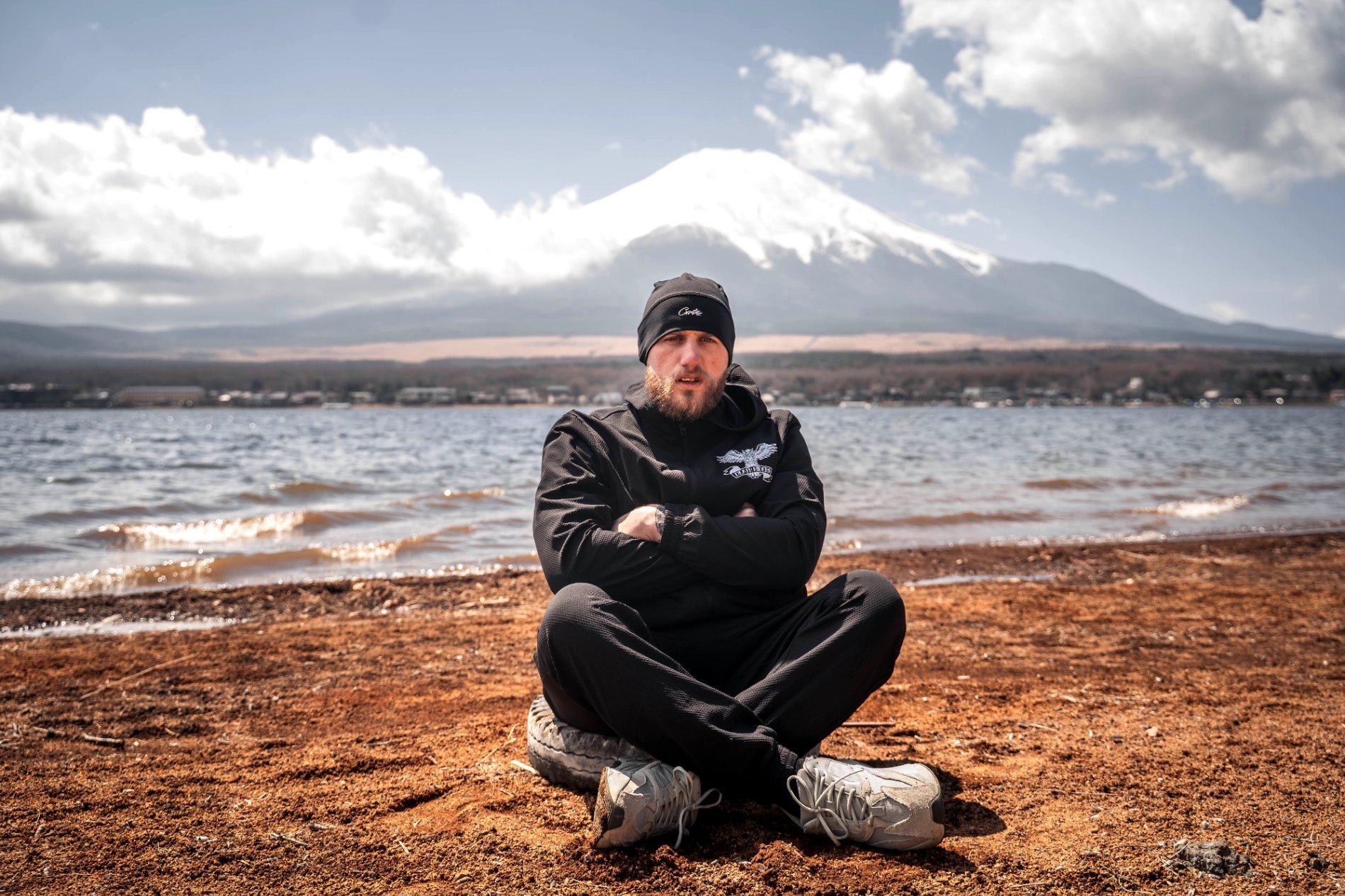
Mount Fuji from Lake Kawaguchi: the viewpoints, the clear months and Chureito Pagoda
Fuji is a probability, not a location. The mountain is 3,776 metres of exposed volcano standing alone above a plain, and it makes its own weather: cloud builds around the summit through the morning almost year-round, and the humid months hide it for weeks at a time. This is the one destination in Japan where a session is planned around odds rather than around light. The good news is that the odds are knowable, strongly seasonal, and best in the first hour after sunrise — which is why a night at the lake beats a day trip from the city, every time.
Real shots from Lake Kawaguchi
The months the mountain actually shows up
Cold and clear is the whole formula. From November to February the air over the Kanto plain is dry, the mountain wears snow down to the treeline, and clear dawns come in runs of several days. Those are the mornings that make the pictures you have seen.
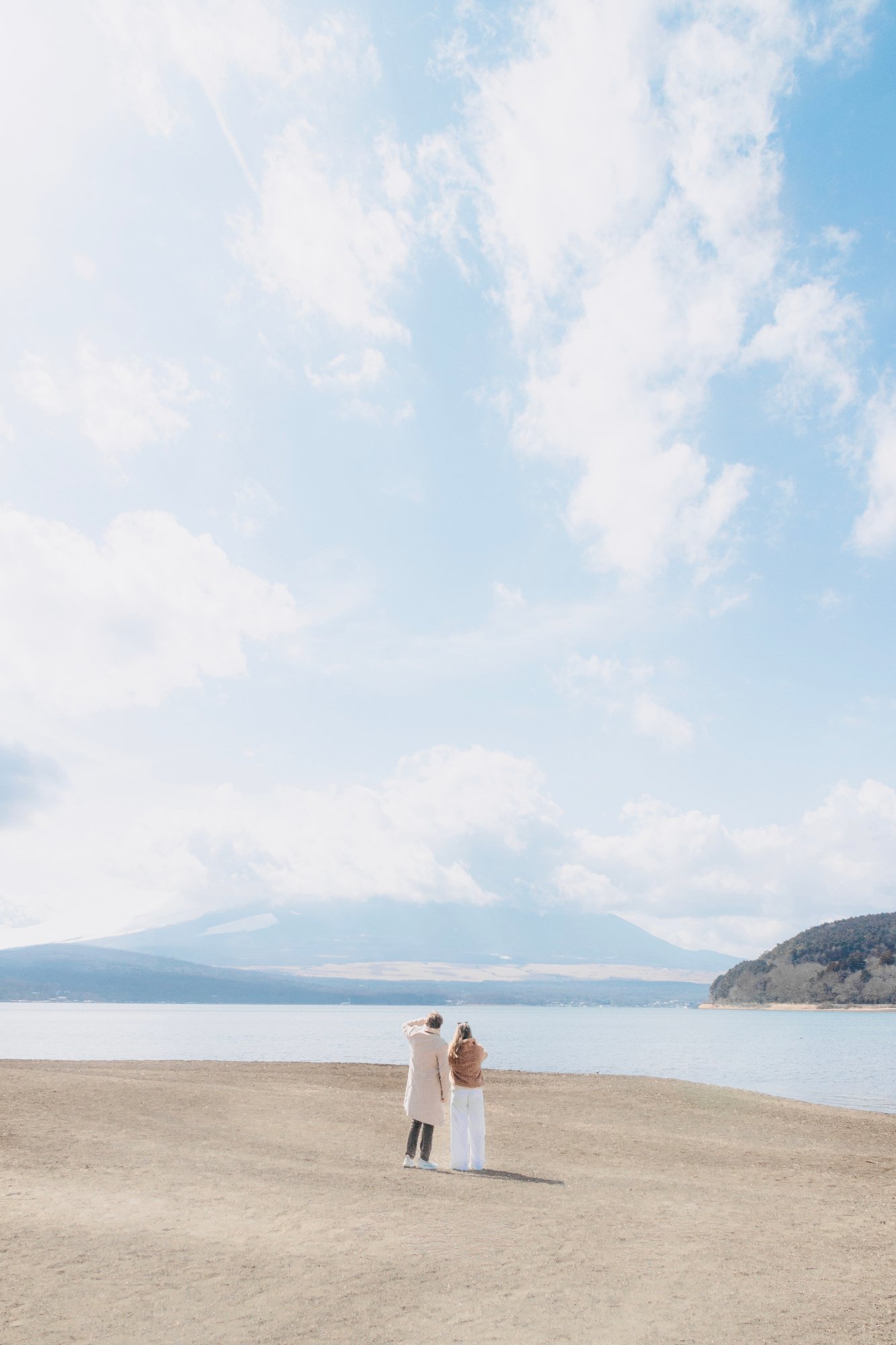
From June the rainy season closes the sky for weeks, and July and August add heat haze: Fuji can be invisible for a fortnight in high summer even when the sky above the water looks blue. Typhoon season runs from July into October and takes days out at short notice. Spring and autumn sit in between — variable, sometimes perfect, never assumed.
Two rules of thumb hold in every season. First, the mountain is most often clear between first light and about nine in the morning, and cloud builds from late morning; a session that starts at noon is a gamble with worse odds than one at dawn. Second, a lens-shaped cap cloud sitting on the summit is a fine photograph and a bad forecast — it usually means wind and a change coming.
The north shore and the upside-down mountain
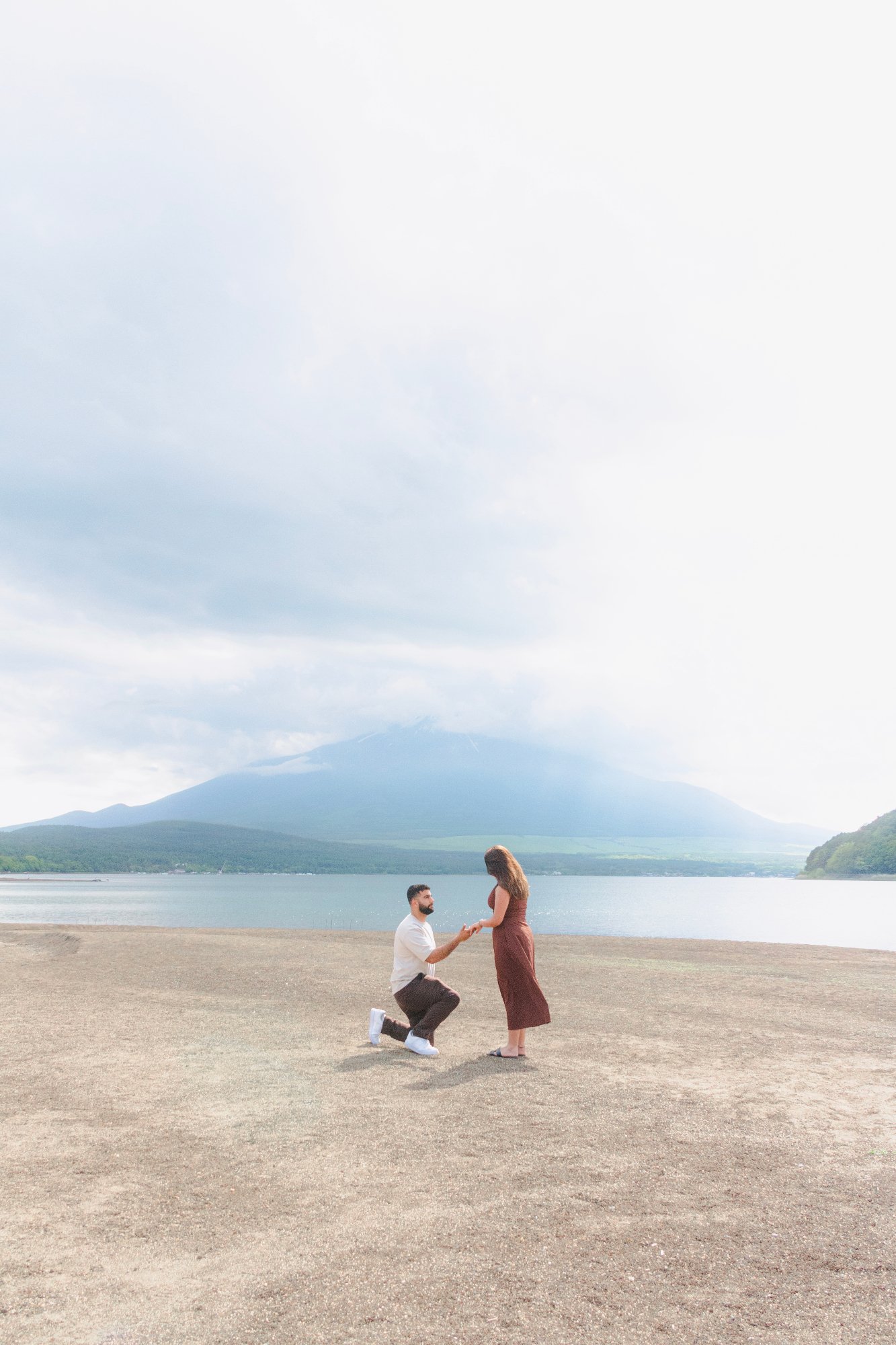
Lake Kawaguchi is the most accessible of the Fuji Five Lakes, and the reason photographers come to this one is geometry: the mountain stands clear across open water from the northern shore, with nothing between you and it. On a still morning the lake doubles it, the inverted reflection the Japanese call sakasa Fuji.
Reflection is a wind problem, not a light problem. The surface is usually glass before sunrise and roughens as the valley warms, often before eight. Check the wind forecast the night before rather than the cloud forecast, and go on the calm morning rather than the pretty one. The Kawaguchiko Ohashi bridge and the lakeside paths on either side of it give the wide version; the shoreline further west gives quieter, tighter frames with reeds and moored boats in the foreground.
The whole north shore faces south towards the mountain, so at dawn the light comes across your shoulder from the east and lights the snow first. By mid-morning it is flat and frontal, which is worse for the mountain but fine for faces.
Oishi Park through the year
Oishi Park sits on the north shore with a lakeside flower walk of a few hundred metres running straight towards the mountain, and something is planted in it from late spring to late autumn. Lavender is the famous one, in bloom from late June into mid-July, with a herb festival built around it — purple foreground, blue water, white summit, if the summit turns up. In autumn the kochia bushes redden from the middle of October and hold for a few weeks against the first snow on the peak.
It is a small park and it is busy. In lavender and kochia weeks the coach parties arrive mid-morning, so the working window is again the first hour. Stand on the lake side of the flowers so the water separates the foreground from the mountain, and keep the car park out of frame — it is closer than it looks.
Chureito Pagoda: four hundred steps, and what it actually is
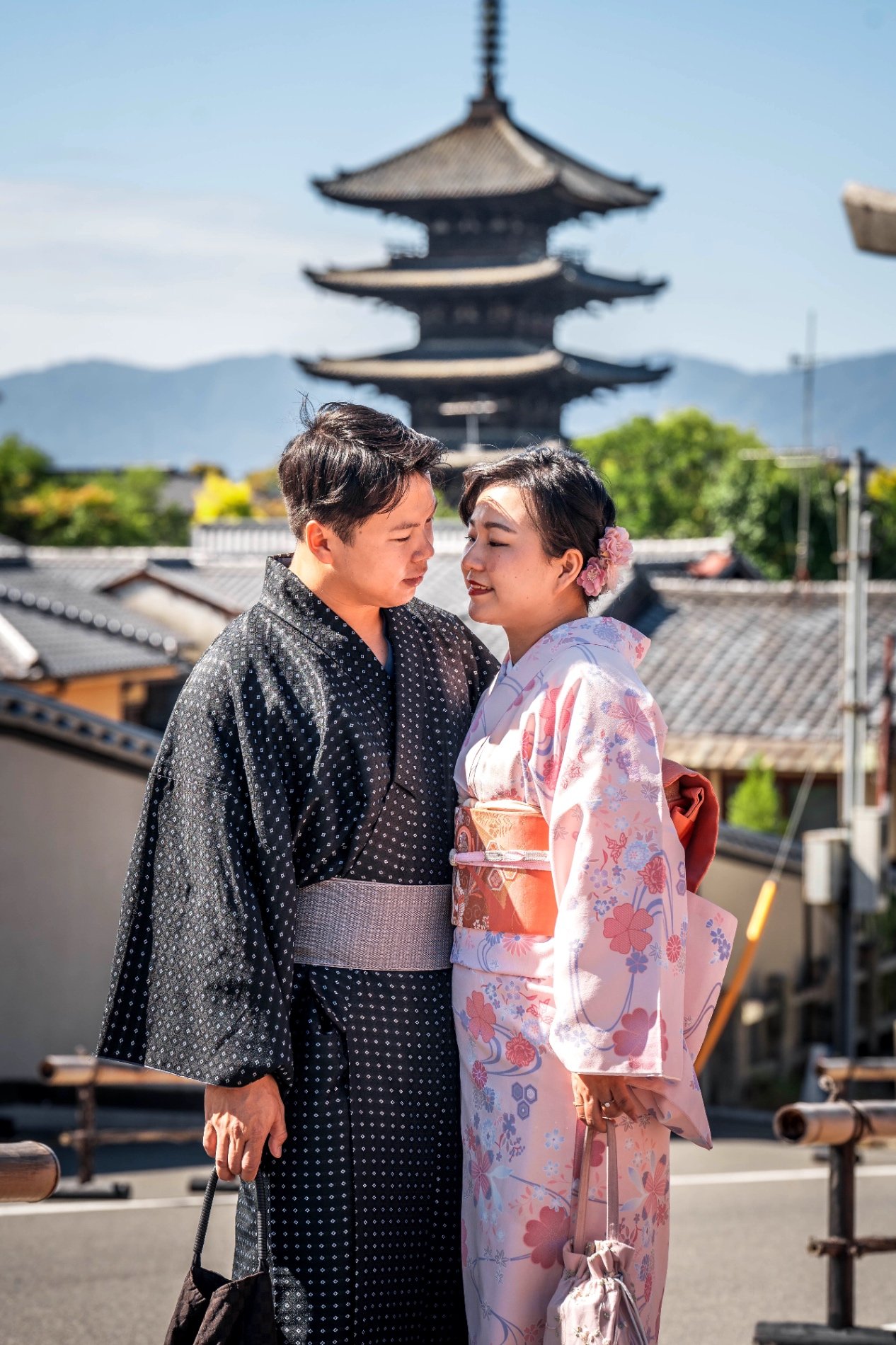
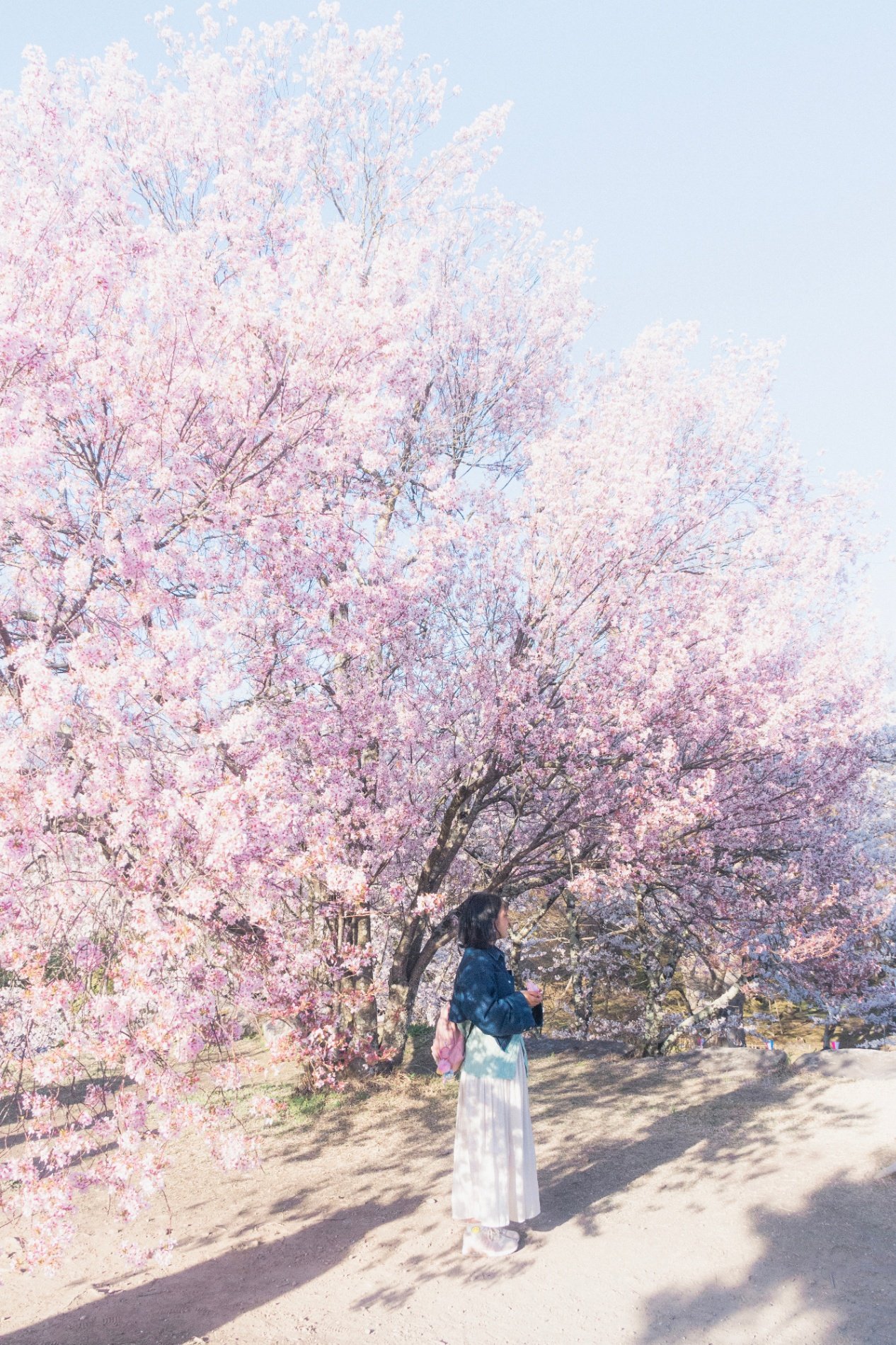
The frame everyone knows — pagoda, cherry blossom and Fuji stacked in one shot — is taken at Arakurayama Sengen Park, above the town of Fujiyoshida, on the far side of the valley from the lake. A little under four hundred steps climb from the shrine to the pagoda, and the classic viewpoint is the deck a little above it.
Know what you are photographing. The pagoda is not an ancient temple building: it was completed in the 1960s as a memorial to the townspeople killed in war, and people come to pay respects as well as to take pictures. Keep off the memorial itself, keep voices down, and do not block the deck for other people — it is small, and in blossom week there is a queue for the railing.
Blossom here runs later than in Tokyo, usually mid-April, and full bloom lasts about ten days that move by up to a fortnight from year to year. Autumn colour arrives in the first half of November. The rest of the year the frame still works with snow on the mountain and bare trees, and it is empty. Shimoyoshida station on the Fujikyuko line is about ten minutes' walk from the shrine gate; the park is open ground, but parking and access arrangements in the streets below change with the crowds, so check before you drive or send a taxi.
What clients say about this kind of shoot
We had such a great photography experience with OKINI PHOTO TOUR! If you’re looking for an Osaka photographer, especially for a couple photoshoot in Osaka, I would definitely recommend them. The photographer made us feel comfortable from the beginning and guided us naturally with poses, so even if you’re not used to being in front of a camera, the experience is very relaxed and fun. What I really liked was that this wasn’t just a typical photoshoot. We walked around Osaka and enjoyed the city while taking photos, so it felt like both a photo tour and a local Osaka experience. The photos around Dotonbori and Osaka’s neon streets were especially beautiful. The photographer knew where to shoot, how to use the city lights, and how to capture natural moments between us. For couples traveling in Japan, honeymooners, or anyone searching for couple photography in Osaka, an Osaka travel photographer, or a Dotonbori photoshoot, OKINI PHOTO TOUR is a great choice. A wonderful way to keep memories from our trip to Osaka. Highly recommended!
— 伊藤尚也 on Soh
Amazing service and perfect photos! Highly recommended—thank you.
— Inbar B. on Ryoji M.
Amazing service. I booked for an engagement photoshoot, and even though he had other commitments made himself available. Was extremely helpful in choosing locations and keeping in contact before with weather updates! Do not hesitate to book if considering a photographer in the area
— Ben F. on Ryoji M.
Soh was the best! He knew all the hidden gems in Tokyo and we had the best shoot with him! Super professional, on time and gave great creative direction!
— Cathy D. on Soh
Soh was INCREDIBLE! The shots he got for us were so awesome, he knew so many amazing off the beaten path spots for pictures. 10/10 if you want awesome photoshoots come here!!
— Yeremi H. on Soh
I had such a great photoshoot experience with Okini! 📸✨ It was honestly so much fun, and the photos turned out absolutely beautiful. The Tokyo Tower spots were perfect, and our 2-hour photoshoot gave us so many amazing shots. Everything felt fun, relaxed, and worth it from start to finish. Definitely such a memorable experience and one I’d recommend if you want beautiful photos in Tokyo! 🗼💕
— Maria D. on Soh
Above the lake: the ropeway on Mount Tenjo
From the eastern end of the lake a ropeway climbs in about three minutes to a viewpoint on Mount Tenjo, around 1,075 metres, with the whole lake below and Fuji across it. It is the fastest way to a high wide frame, and it is a cable car in an exposed place: high wind shuts it, and seasons, first and last cars and maintenance days all change. Check the day before, and have the shoreline as your fallback.
What is not a viewpoint
Two things worth saying plainly. The residential streets of Fujiyoshida and Fujikawaguchiko, and the car parks of convenience stores on the main road, are not viewpoints. They are people's streets and working shops, and the crowding there became a real problem: the town put up a screen to block one famous frame, later replaced it with a lower barrier, and manages the spot with signs and staff. What stands there changes; take the sentiment rather than the detail — do not stand in the road, do not park in a shop's spaces to photograph, and do not shoot into anyone's windows.
The second: drones are not an option here without permission, and a shrine or park may refuse tripods. If a frame needs either, it needs asking first.
When the mountain does not come out
Plan for it and the day is still yours. The lakeshore itself photographs well in flat light: reeds, moored boats, the long north shore path. In November a maple avenue near the north-east corner of the lake turns dark red and is lit in the evenings during the autumn festival — the dates move every year, so check. The shrine forest below Chureito is beautiful in rain.
If the trip is short and Fuji has been hidden for days, the honest alternative is to move the session: Hakone works in cloud, with its lake, its torii in the water and its cedar avenue, and it is an easy hop by bus.
Getting there, and why you stay the night
A direct limited express runs from Shinjuku to Kawaguchiko in a little under two hours on most days; otherwise take the JR Chuo line to Otsuki and change to the Fujikyuko line, or the highway bus from Shinjuku, which is about two hours when the road behaves and much longer on a holiday weekend. Around the lake, the sightseeing buses loop the shores and an IC card covers them. Rail passes and area tickets exist and their terms change — worth checking whether one earns its keep for your route.
A day trip from Tokyo can only reach the lake after the cloud has built. Staying the night is not a luxury here, it is the method: it buys the still water, the clear summit and the empty flower walk, all of which happen before the first train arrives.
Planning a Mount Fuji photoshoot
Book the first hour of the day and treat everything else as a bonus. Sixty minutes on the north shore covers the reflection and the flower walk if the session starts at first light. Two hours lets you add the pagoda steps, or the ropeway, or a second stretch of shoreline — but not all three, because the crossing between the lake and Fujiyoshida eats twenty minutes each way.
Give yourself two mornings if the trip allows it. Photographers who work here plan a second window precisely because the first one can be cloud, and a couples session that has two chances at a clear summit is a different proposition from one that has a single afternoon. In winter, dress for standing still at the waterside before sunrise: it is several degrees colder than the city and the wind comes off the lake.
A photographer who shoots this lake regularly reads the evening sky for the next morning and knows where to stand so the mountain is not a small grey triangle behind your heads. The destination page for Lake Kawaguchi has the rest, and you can book a photographer online.
Want professional photos on Lake Kawaguchi?
Browse portfolios, compare packages, and book a verified local photographer in minutes.