Miyajima Photoshoot Guide: the floating torii, the tides and the quiet evening
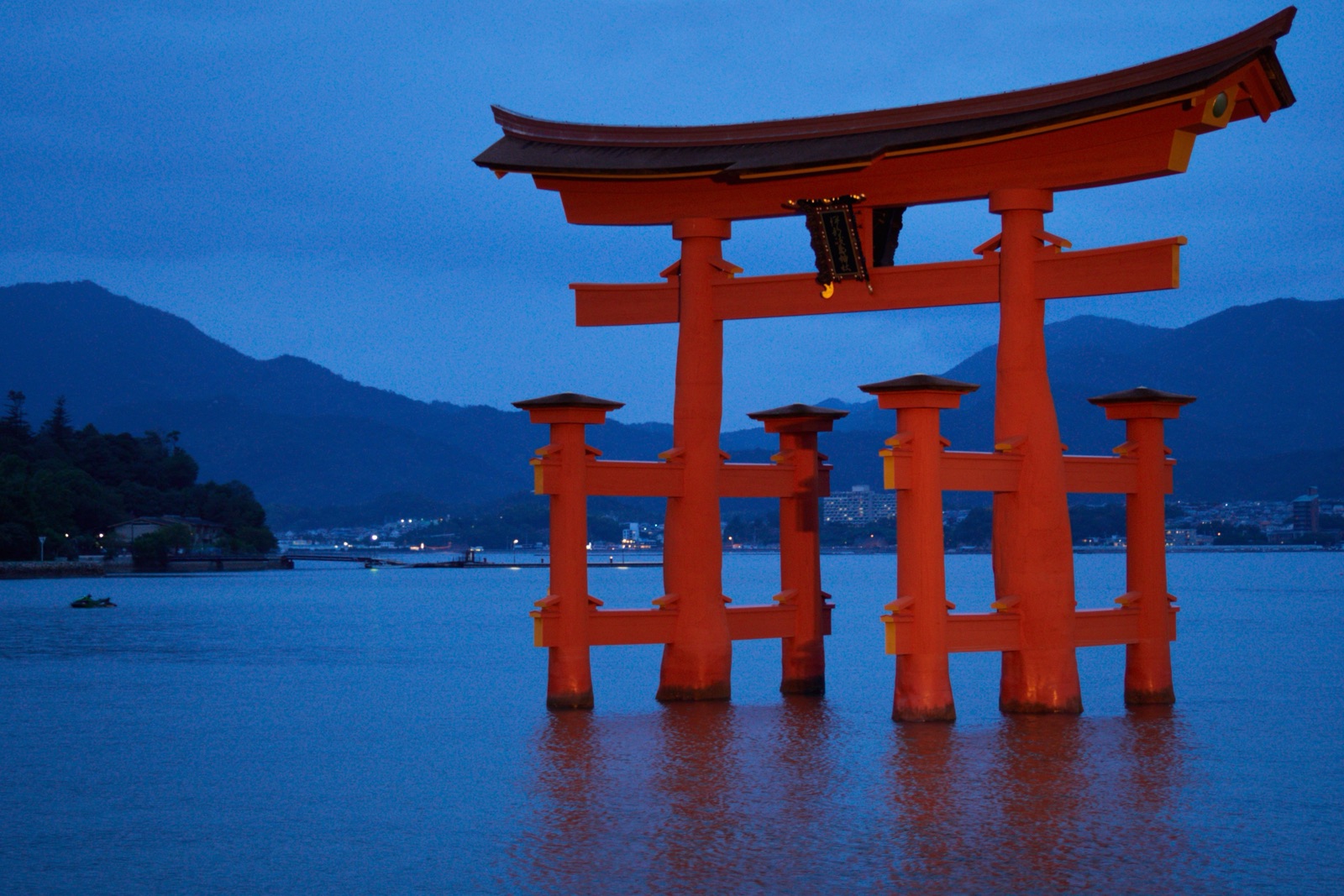
On Miyajima you do not book a session at a time. You book it at a tide. The island's great gate stands out in the water in front of Itsukushima Shrine, and twice a day the sea comes in around it and twice a day it drains away. At high water the gate floats, the shrine's corridors sit over the sea and, on a windless morning, the whole thing doubles in the surface. At low water the sand is exposed and you can walk out and stand at the gate's feet, which gives a sense of scale nothing else does — it is far larger up close than it looks from the shore. Neither is the better picture. They are different pictures, and the only real mistake is arriving without knowing which one you are getting.
Reading the tide before you book the hour
Tide tables for the island are published, and the local tourist association posts the level below which the walk out across the sand is possible. Two consequences follow, and both catch people out.
The tide runs on a cycle of roughly twelve and a half hours, so the good hour slides about fifty minutes later each day: a table that was right last week is wrong this week, and a friend's recommendation of "go at four" is worthless. And a high tide that happens to coincide with sunset is not a given in any particular month. If you want both at once, you look for the day and then book the session, rather than booking the session and hoping.
The shrine, and what you can and cannot do in it
Itsukushima Shrine is built on piles over the seabed — a run of vermilion corridors and railings with a stage out over the water — and it is a working shrine of real significance rather than a monument. It opens early, well before the day-trip ferries land, and the first hour inside it with almost nobody else there is the strongest single argument for staying the night. Hours shift with the season, so check them.
There are rules, and they belong to the shrine rather than to us. The short version: entry is ticketed; tripods and anything that reads as a production normally need permission; and a professional or arranged session on shrine ground is the shrine's decision, so ask in advance and in writing where you can. Do not assume that because the corridors feel public they are public. The walkways also close in rough weather and at extreme tides.
Sunset, and the hour after it
The classic frame is the gate in silhouette with the sun going down over the strait beyond it. Exactly where the sun drops changes through the year, and so does the stretch of beach you stand on for it — which is the sort of thing a photographer who works the island simply knows, and the sort of thing that costs you the picture if you guess.
After the sun has gone, the shrine and the gate are lit, and the blue hour over the water with the lights on is arguably the better photograph and definitely the emptier one. It is also the hour when everybody else has left: the evening ferries take the day crowd off, and what remains is an island with a few hundred people on it. Momijidani, the arcade and the shore road are a different place after that.
The pagoda, Senjokaku and the street behind the arcade
Up a short flight of steps behind the shrine stand the two buildings that make the best land-based frame on the island. The five-storey pagoda is vermilion and about twenty-eight metres tall, built in the early fifteenth century. Beside it, Senjokaku is a vast unfinished hall of bare wooden pillars and open sides, begun in the sixteenth century and never completed after its patron died. Senjokaku's floor is open to the breeze and light comes in sideways from three directions, which makes it the place to go when the tide is wrong and the sun is high.
At sea level, Omotesando is the covered arcade running from the ferry pier towards the shrine: loud, cheerful, full of oyster smoke and busy all day. One street inland, Machiya-dori is the quiet version — old town houses, galleries, tea rooms, lanterns and hardly anyone. Interiors belong to the people who own them, so ask before photographing inside a shop.
Daisho-in and Momijidani
Daisho-in sits on the slope at the foot of Mount Misen, ten minutes uphill from the shrine, and is the oldest temple complex on the island. The stairway up to it carries a row of spinning metal sutra wheels along the handrail; above are ranks of small stone rakan figures, many in knitted caps the temple changes. Far fewer visitors climb this far. It is a working temple: several halls ask for no photography inside, and some statues are not to be photographed at all. Read the signs and take them literally.
Behind the shrine, Momijidani is a maple valley along a stream, and in the second half of November it turns deep red — Miyajima and Kyoto colour at roughly the same time, which also makes it the island's busiest fortnight of the year. In spring the same valley is green, cool and nearly empty, which is a fair trade if you can take it.
Mount Misen and the ropeway
A ropeway climbs from the top of Momijidani in two stages, small gondolas first and a larger cabin second, to Shishiiwa station high on the mountain, with the islands of the inland sea spread out below. From the upper station the true summit is another twenty to thirty minutes on rock steps — a walk rather than a stroll, and not something to do in the shoes you wore to the shrine.
Two warnings. The ropeway shuts for wind, for scheduled maintenance and on a shortened winter timetable, and it is exactly the kind of thing that cancels a session that depended on it, so check before the day and keep a plan at sea level. And the mountain changed in 2026: Reikado, the hall on Misen that housed the flame said to have burned for centuries, was destroyed by fire in May and is to be rebuilt. Guidebooks written before that describe a summit that is not there now. Check what is standing and what is open.
The deer, and the levy
The deer on Miyajima are wild animals that have learned people carry food. Feeding them is prohibited, and that ban is why they now investigate bags rather than wait to be offered anything. They will eat paper — tickets, maps, permits, a lens cloth left on a wall — so everything that matters goes into a zipped bag before the session starts. They also walk into frame constantly, which is sometimes the photograph and sometimes the reason to move ten metres.
A small visitor levy is collected from arriving passengers on top of the ferry fare. How it works and how it is collected have changed since it was introduced, so check what applies on the day rather than being surprised at the gate.
Getting there
From Hiroshima the JR Sanyo line runs out to Miyajimaguchi in under half an hour, and the ferry across takes about ten minutes. Two companies sail from the same pier; on some daytime sailings one of them swings out closer to the gate, which is a free photograph if you are standing on the right side of the deck. There is also a tram from central Hiroshima, slower and more scenic, and a seasonal high-speed boat down the river from the Peace Memorial Park.
Coming from further east, Hiroshima is about an hour and a half from Shin-Osaka on the Sanyo Shinkansen, which makes the island a real add-on to a Kansai trip rather than a separate expedition — as long as you do not try it as a day trip with a fixed return train, because that is precisely the plan the tide breaks. If the rest of your route is built around Osaka, plan the night here and travel back the following morning.
Planning a Miyajima photoshoot
Start with the tide table, then the sunset time, then everything else. If the two line up, take that day even if it is inconvenient. If they do not, decide which you want: the gate floating at high water, or the walk out to its feet on the sand with the light low. Both are good. Choosing after you arrive is how people end up with neither.
Sixty minutes covers the shore and the shrine approach at one state of the tide. Two hours lets you add the pagoda, Senjokaku and Machiya-dori, or the climb to Daisho-in, and carries you through the changeover from sunset into the lit blue hour — the version most couples end up happiest with.
Stay the night if you possibly can. The island before the first ferry and after the last one is a different place, and it is the part almost nobody photographs. You can read the destination page for Miyajima, see what a honeymoon photoshoot or a proposal usually covers, and book a photographer online.
Want professional photos on Miyajima?
Browse portfolios, compare packages, and book a verified local photographer in minutes.