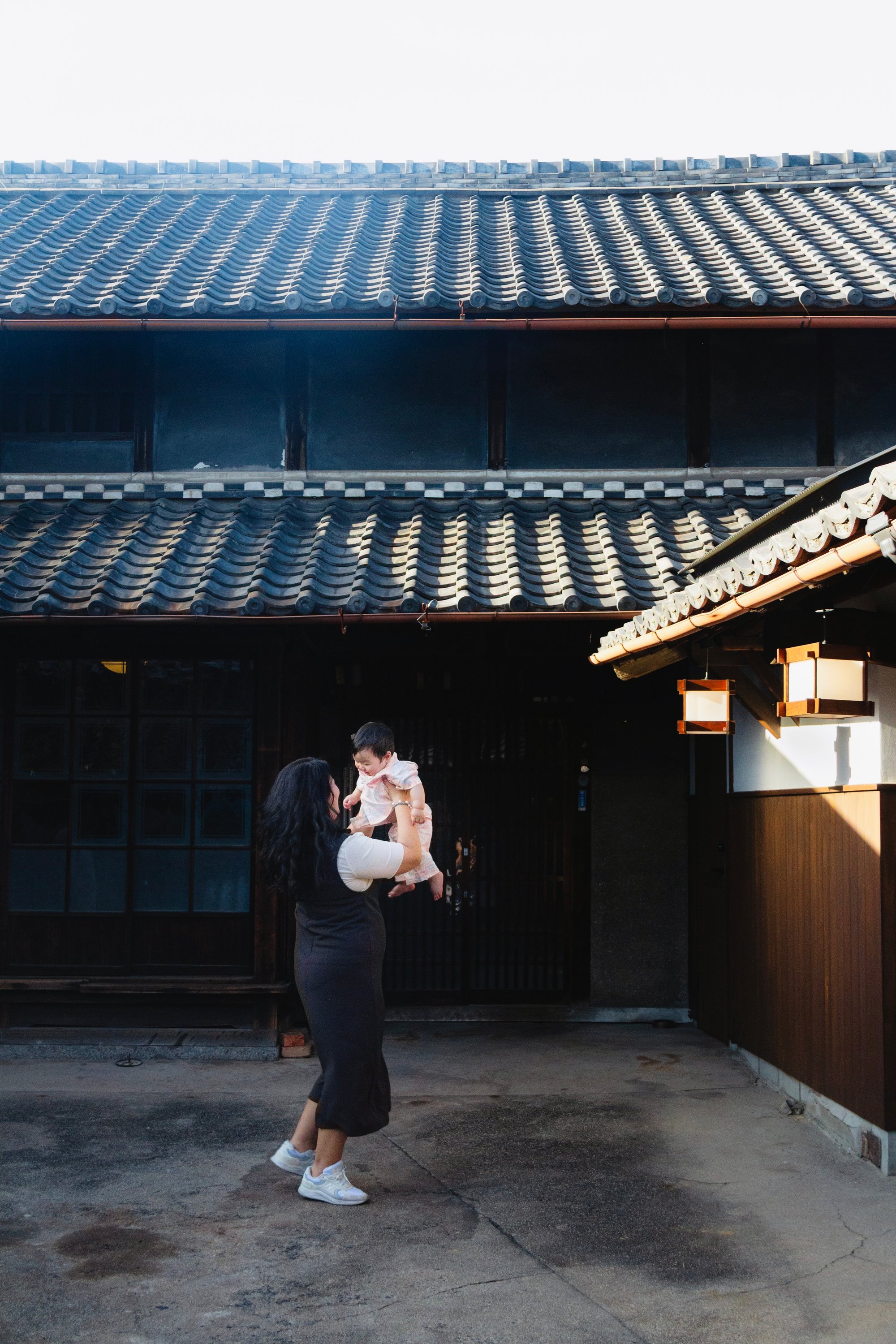
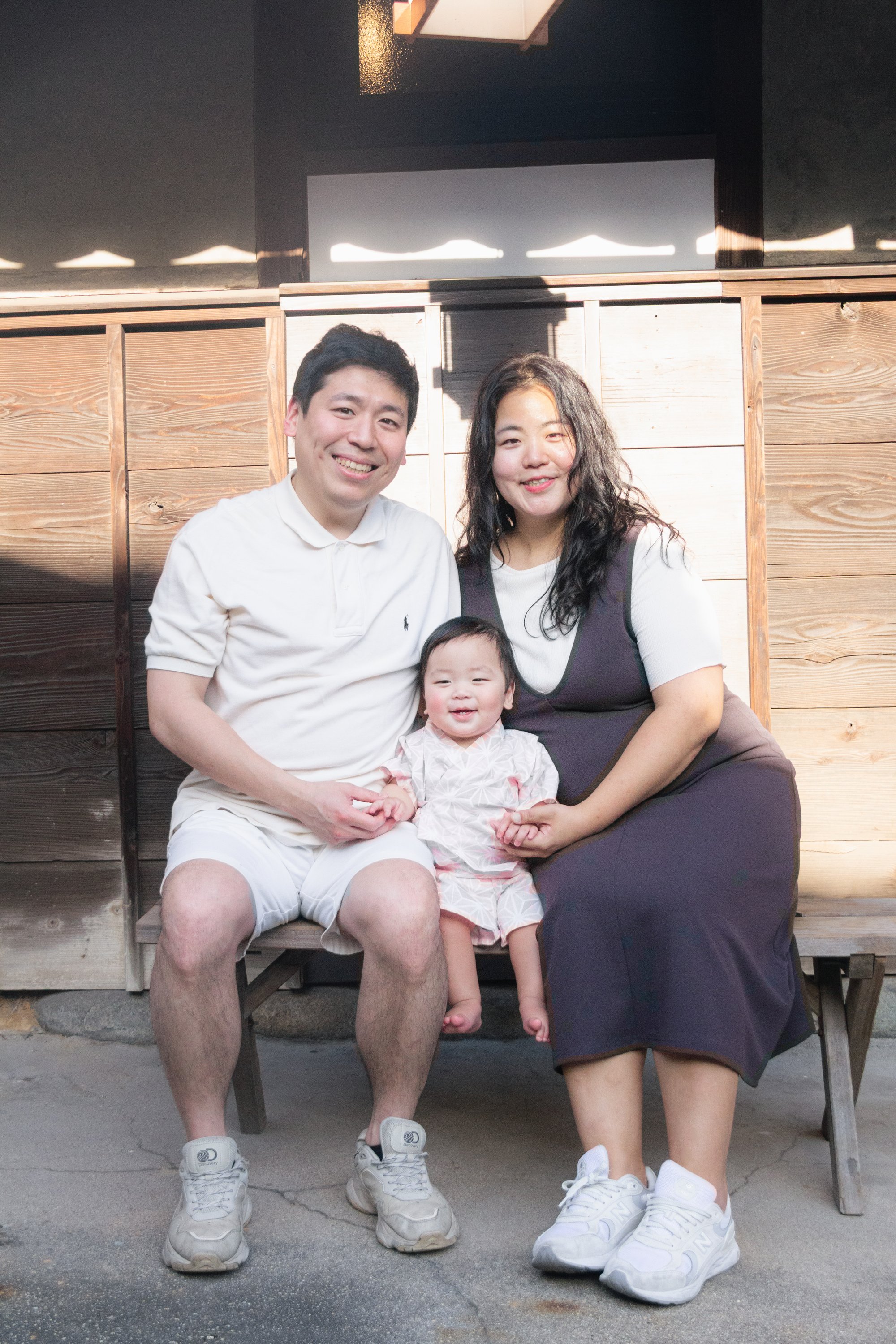
Family Photoshoot in Nara and Kyoto: deer, temple gardens and short walks
Nara is the easiest family session in Japan and the one that needs the clearest warnings. Everything a small child wants sits inside one flat park: animals they can walk up to, lawns to run on, a hall so large it turns the whole family into a scale model, and all of it ten minutes from a station. The warnings are about the animals. The deer in Nara Park are wild, they are not pets, and they have learned exactly what a paper-wrapped stack of crackers looks like. Get that right and the morning runs itself. Get it wrong and your pictures are of a frightened five-year-old surrounded by animals taller than he is.
Real shots from Nara
Nara Park before the trains arrive
Nara Park is open ground on the eastern side of the city: lawns, cedar, low stone walls and gravel paths, no gate and no closing time. Around fourteen hundred deer live across it, protected as a natural monument and used to people for centuries, which is why they walk straight up to you.
Be there before the visitors. Between seven and half past eight the park belongs to joggers, the school run and the deer, and the light comes in low and level from the east. The animals are calmer then, because nobody has fed them yet: they graze instead of crowding. A session from seven to nine gives you an empty park and a child who is still in a good mood. Day-trippers off the first trains land mid-morning, school groups build through the day, and by lunchtime the lawn in front of Todai-ji's great gate is a moving crowd.
The cracker rule, spelled out
Shika senbei — the flat brown deer crackers sold from stalls around the park — are the only thing you may feed the deer. The sale is licensed and the proceeds go to the foundation that looks after the herd; everything else, including your lunch, makes them ill.
Read the rest twice, because it decides the morning. The deer bow for crackers. They also shove. The moment a stack is out of its wrapper you are the most interesting thing in the field, and several animals arrive at once, nudging, pulling at sleeves and bags, occasionally nipping. Never put crackers into a small child's hands and never let a child carry the stack: an adult holds them and passes one piece at a time, at the last second, if at all. Do not hold a cracker up for the camera — teasing is what turns a nudge into a bite. Feed the stack quickly, keep bags zipped and loose paper out of reach, and do not touch a fawn, because the mother will defend it.
Photographically the answer is simple. Put the adult with the crackers just outside the frame and the child a metre away, and you get a child and a deer looking at each other rather than a scrum. Under about four, keep the crackers in your pocket and shoot the deer at a distance: hundreds lie about on the grass all morning, and a resting deer two metres behind a toddler is the better picture anyway.
Todai-ji: the gate, not the queue
Nandaimon, the great wooden gate on the approach to Todai-ji, is the frame that makes the point about scale. It stands in the open with the two guardian figures inside it, it is enormous, and you walk through without a ticket or a queue. Deer wander through it all day. Photograph the family small in the opening and the gate does the work.
Behind it, the Daibutsuden holds the bronze Buddha: ticketed, with a queue for most of the day, and an interior that is not a place for a shoot. With small children, photograph the gate and the approach and then decide whether anyone wants to stand in line. Hours and what is permitted inside change, so check before the day — and take it that anything arranged and professional on temple ground needs that temple's own permission.
Kasuga Taisha and the lantern path on a hot day
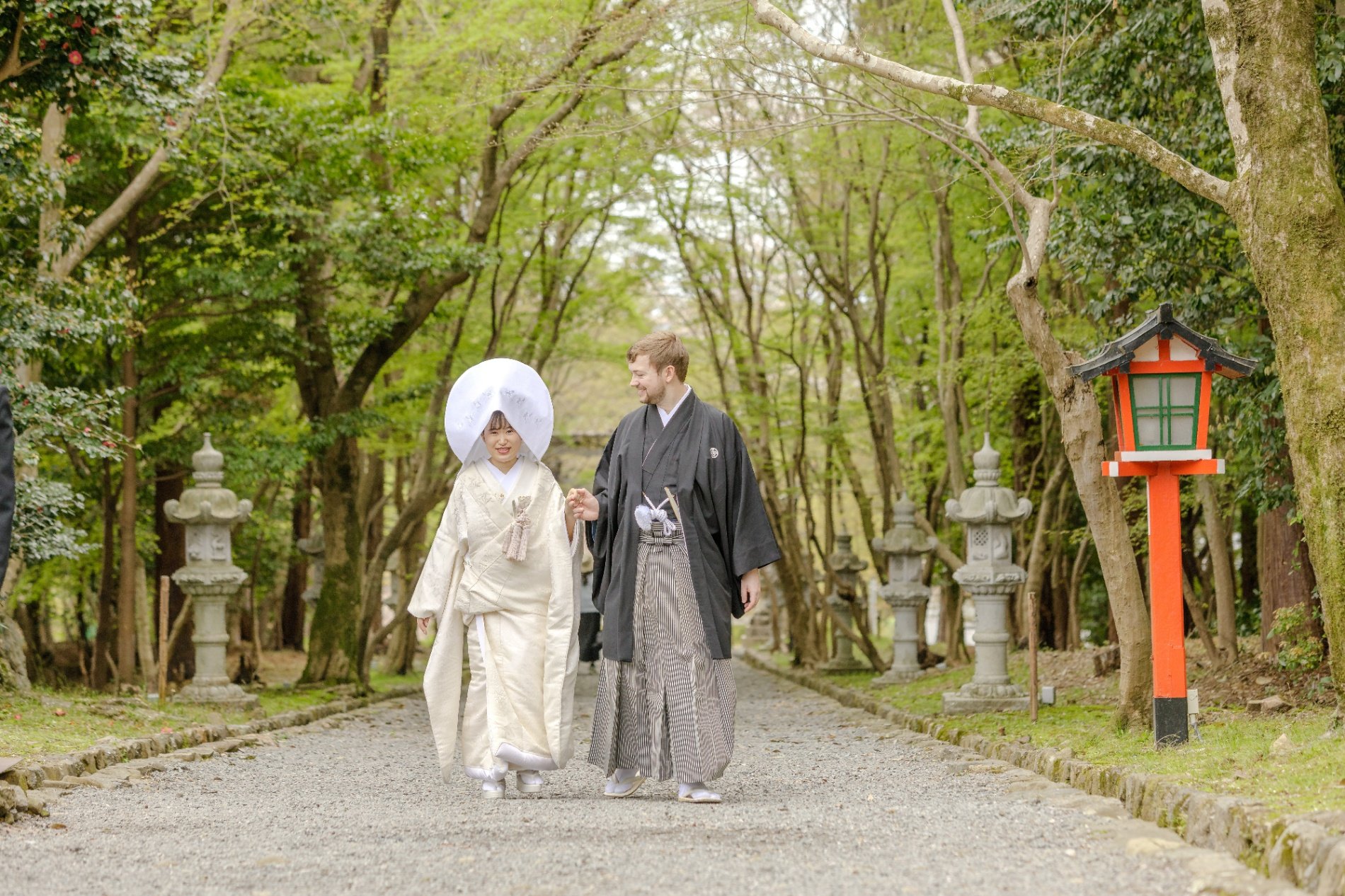
From Todai-ji the ground rises gently south-east towards Kasuga Taisha, and the approach runs through cedar forest lined with stone lanterns: hundreds of them, moss-covered, in green shade. That shade is why this belongs in the middle of a summer morning rather than at the start. It is several degrees cooler than the open lawns and there is no hard light anywhere on the path.
It is a real walk. Allow around half an hour on foot from Kintetsu Nara station to Todai-ji and about the same again up to the shrine, which is more than most four-year-olds have after an early start. Buses run along the park's main road and a taxi to the upper approach removes the climb entirely. The shrine's bronze lanterns are lit on a few evenings a year, and the dates are set annually, so check rather than plan around them.
What clients say about this kind of shoot
We had such a great photography experience with OKINI PHOTO TOUR! If you’re looking for an Osaka photographer, especially for a couple photoshoot in Osaka, I would definitely recommend them. The photographer made us feel comfortable from the beginning and guided us naturally with poses, so even if you’re not used to being in front of a camera, the experience is very relaxed and fun. What I really liked was that this wasn’t just a typical photoshoot. We walked around Osaka and enjoyed the city while taking photos, so it felt like both a photo tour and a local Osaka experience. The photos around Dotonbori and Osaka’s neon streets were especially beautiful. The photographer knew where to shoot, how to use the city lights, and how to capture natural moments between us. For couples traveling in Japan, honeymooners, or anyone searching for couple photography in Osaka, an Osaka travel photographer, or a Dotonbori photoshoot, OKINI PHOTO TOUR is a great choice. A wonderful way to keep memories from our trip to Osaka. Highly recommended!
— 伊藤尚也 on Soh
Soh was the best! He knew all the hidden gems in Tokyo and we had the best shoot with him! Super professional, on time and gave great creative direction!
— Cathy D. on Soh
Soh was INCREDIBLE! The shots he got for us were so awesome, he knew so many amazing off the beaten path spots for pictures. 10/10 if you want awesome photoshoots come here!!
— Yeremi H. on Soh
I had such a great photoshoot experience with Okini! 📸✨ It was honestly so much fun, and the photos turned out absolutely beautiful. The Tokyo Tower spots were perfect, and our 2-hour photoshoot gave us so many amazing shots. Everything felt fun, relaxed, and worth it from start to finish. Definitely such a memorable experience and one I’d recommend if you want beautiful photos in Tokyo! 🗼💕
— Maria D. on Soh
⭐⭐⭐⭐⭐ I can’t recommend Soh enough! He captured one of the most important moments of our lives—my surprise engagement at Tokyo Tower—and absolutely exceeded every expectation. From the moment we met, Soh made the entire experience feel natural, comfortable, and special. After capturing the proposal perfectly, he took us to several other incredible spots around Tokyo so we could get photos that truly captured the energy, beauty, and authentic feel of the city. Every location added something different, and he knew exactly where to go and how to capture the moment. The photos are more than just pictures—they’re memories we’ll have for the rest of our lives. Looking back at them instantly brings us back to that night in Tokyo. Hiring Soh was one of the best investments I made on this entire trip, especially for such an important moment. If you’re visiting Tokyo and looking for a photographer for an engagement, couples shoot, or just unforgettable memories of the city, book Soh. You will not regret it. Thank you, Soh, for helping make an already unforgettable night even more incredible! 🇯🇵💍❤️
— Rolando R. on Soh
Mr Bernard is very kind & profesional photographer.. He know every spot photo & know my angle too.. I like the result.. Thank you so much.. I love it...
— Agustin T. on Bernard L.
Getting there, and how far you really walk
Use Kintetsu Nara station. It sits at the western edge of the park, eight to ten minutes from the first lawns, and Kintetsu trains run from Kyoto in about forty-five minutes and from Osaka Namba in about forty. JR Nara is served from both cities but is a good twenty minutes further out on foot, and with a buggy that is the difference between one tired child and two. The park itself is flat and mostly paved or hard gravel, so a buggy is fine across the main lawns, the Nandaimon approach and the road towards the shrine. It is not fine on the last climb into Kasuga's inner precinct.
Kyoto with children: early bamboo, then the river
The Arashiyama bamboo grove is a ten-minute path, not an expedition, and it is genuinely quiet before eight; by ten it is a slow-moving line of people and no family picture is possible in it. Take the JR Sagano line from Kyoto station, about fifteen minutes to Saga-Arashiyama, and be on the path at first light. When the coaches arrive, leave.
Then go to the river. The Kamo runs the length of the city with wide grass banks, and at the delta near Demachiyanagi, where the Takano joins it, stepping stones cross the water, some carved as turtles and plovers. Children hop across them, locals sit on the bank for hours, and nobody minds anybody. It is the most relaxed half hour you will have in Kyoto with a child, and the pictures look like your family rather than a temple brochure. Keihan and Eizan trains stop at Demachiyanagi.
A garden with a bench instead of a temple with a queue
The temples people book are not built for families. The approach to Kiyomizu-dera up Ninenzaka and Sannenzaka is a stone staircase through a crowd; Fushimi Inari is steps for as long as you care to climb. Both are wonderful and neither is a buggy route.
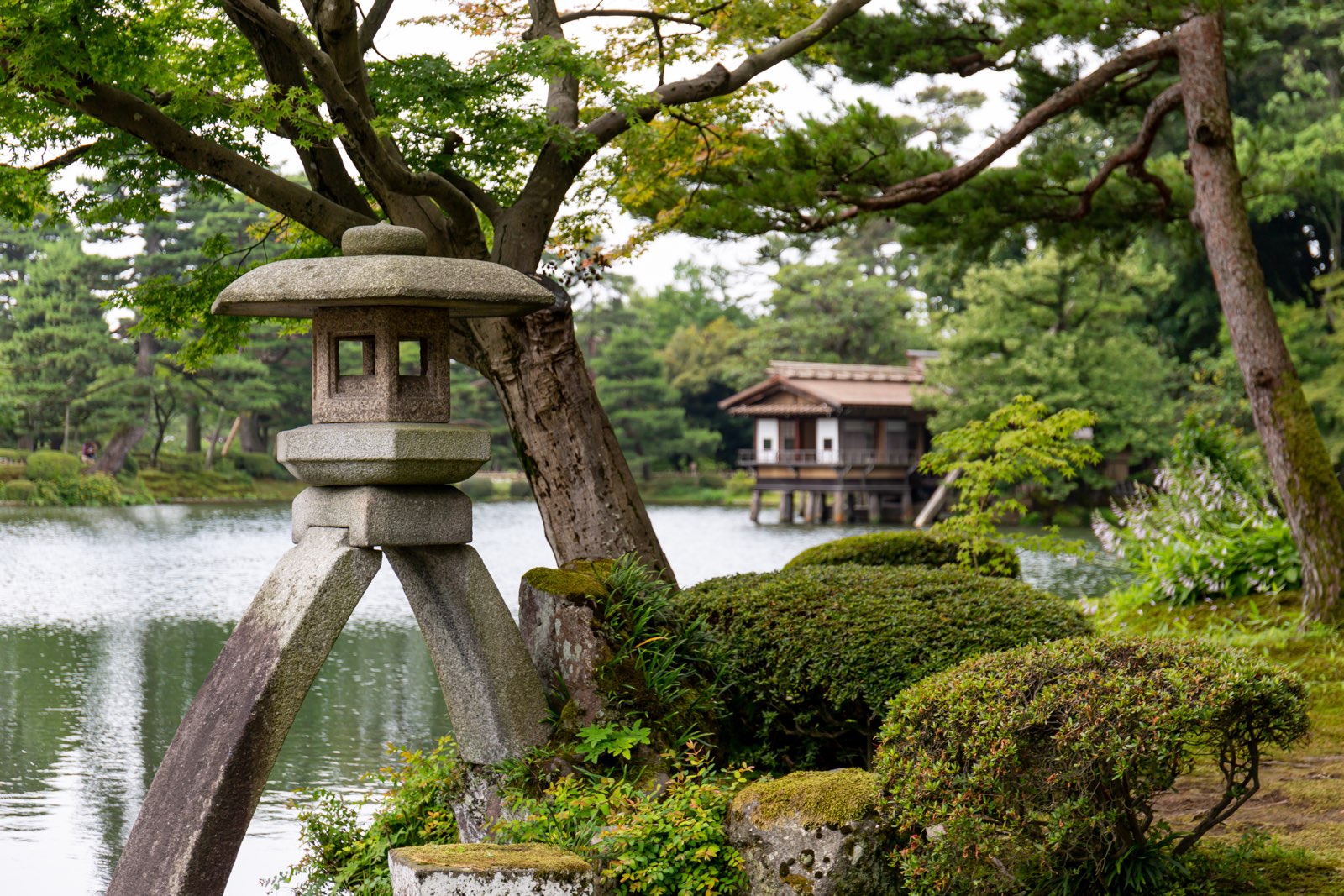
A large open garden works instead. Kyoto Gyoen, the walled park around the old Imperial Palace, is broad gravel walks, lawns, pine and plum, open without a ticket and big enough that one corner is always quiet; Imadegawa on the Karasuma subway line is the nearest stop. Umekoji Park gives you lawns, a pond and a playground a few minutes from Kyoto station, which is what you want on the day you also have luggage. Gravel is heavy going for small wheels, so keep to the main paths.
Heat, cold and what the seasons do
August beats every other consideration. Kansai in high summer is hot and humid from mid-morning, and a family session in the middle of the day is not a session, it is an argument. Shoot at seven, finish before nine, and keep to shade: the lantern path, the cedar approaches, the river bank under the trees.
Cherry blossom opens from late March into early April, and the deer lawns with blossom above them are the best family picture the region offers — and the busiest fortnight of the year, when the early start becomes the only option. Late November turns the maples in the park and along the Kasuga approach, with the same weekend crowds. Winter is cold, clear and empty, the low sun lasts all morning, and the deer are as active as ever: bring gloves and plan sixty minutes rather than two hours.
Planning a family photoshoot in Nara and Kyoto
Do it in the morning. One short session starting at seven in Nara Park is worth three hours of marching after lunch, and every parent who has tried both knows it. Sixty minutes covers the lawns, the deer and the Nandaimon gate. Ninety gets you the lantern path as well, with a bus or a taxi doing the climb instead of the children. Split the two cities across two mornings if you can: both in a day means a train in the middle of it and a child who has run out.
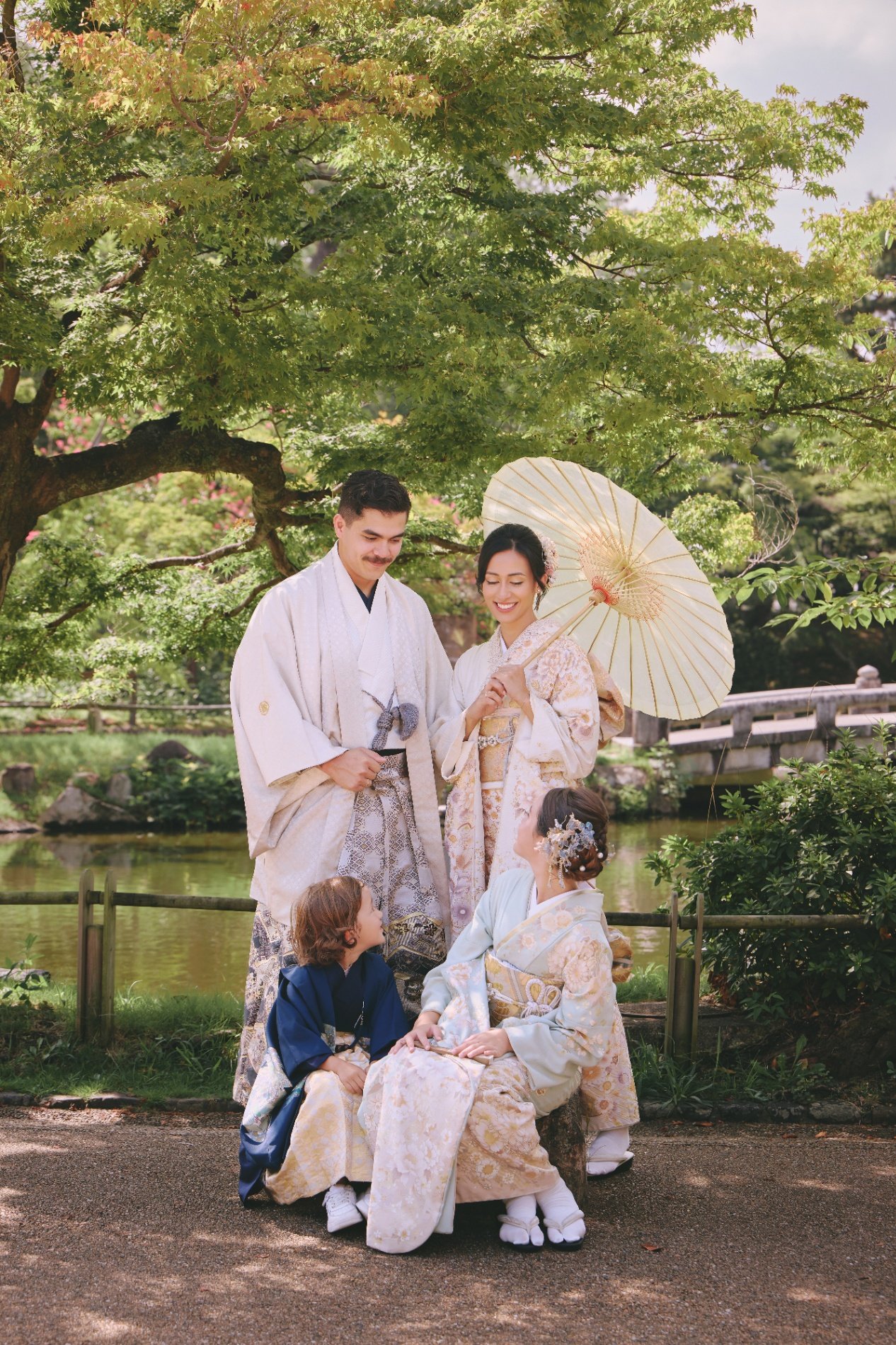
Tell the photographer the ages before anything else. A session with a two-year-old is planned in ten-minute blocks around a snack and a nap; one with a nine-year-old can walk. Somebody who works here regularly knows which gate is quiet on a Tuesday and where the shade sits at eight in August. You can read the destination pages for Nara and Kyoto, see what a family photoshoot usually covers, and book a photographer online. If you are based in Osaka, both are a short train ride and an early alarm away.
Want professional photos in Nara?
Browse portfolios, compare packages, and book a verified local photographer in minutes.